
Are Generic Drugs Really Just as Good as Brand-Name Medications? The Truth Behind the Cost Savings
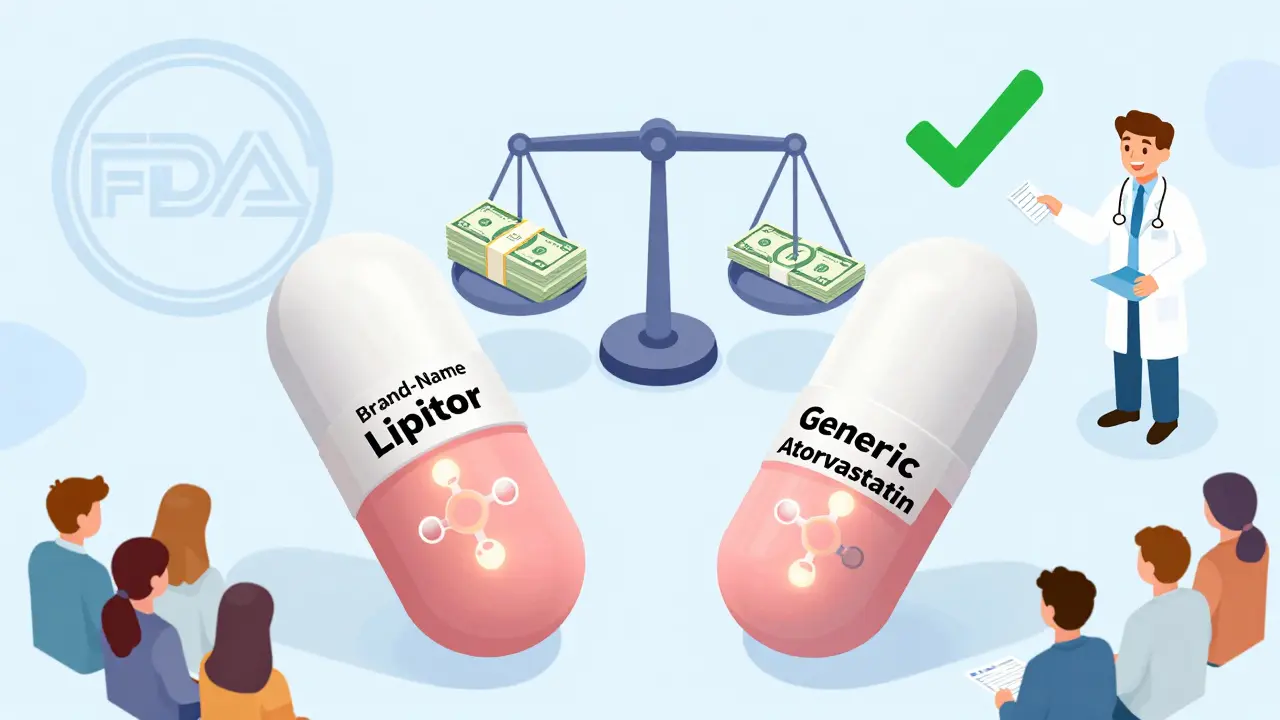
Every year, millions of people in the U.S. switch from brand-name drugs to generics because their insurance won’t cover the brand, or they simply can’t afford it. But a quiet doubt lingers: Are generic drugs really just as good? Some people swear they feel different after the switch. Others never notice a thing. So what’s really going on?
They’re Not Just Similar - They’re the Same Medicine
Here’s the first thing you need to know: generic drugs aren’t "close enough" or "kind of the same." They’re legally required to be identical in one crucial way - the active ingredient. That’s the part that actually treats your condition. Whether you take brand-name Lipitor or generic atorvastatin, the molecule in your bloodstream is exactly the same. The FDA doesn’t allow any wiggle room here.
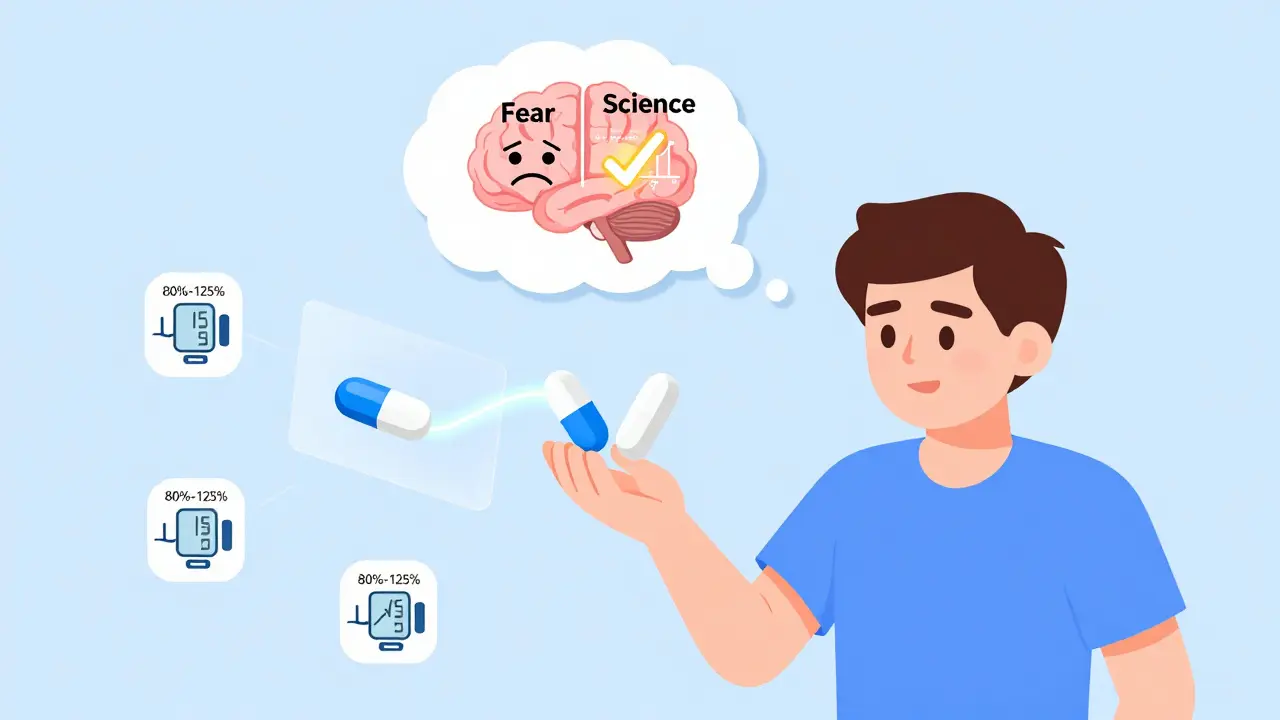
Generics must also match the brand in strength, dosage form (pill, capsule, injection), and how you take it (oral, topical, etc.). No exceptions. The FDA’s approval process for generics is just as strict as it is for brand-name drugs - maybe even more so in some ways. In 2022 alone, the agency approved over 1,000 generic drug applications. Each one had to pass bioequivalence tests using healthy volunteers. These tests measure how fast and how much of the drug enters your bloodstream. The standard? The amount absorbed has to fall within 80% to 125% of the brand-name drug’s levels. That’s not a guess. It’s science.
What’s Different? (And Why It Matters)
If the active ingredient is identical, what’s different? The fillers, dyes, and coatings. These are called inactive ingredients. They help the pill hold its shape, make it easier to swallow, or give it a color so you can tell it apart from other pills. But here’s the catch: because trademark laws require generics to look different, manufacturers can’t copy the brand’s appearance. So a generic version of a blue pill might be white, or shaped like a capsule instead of a tablet.
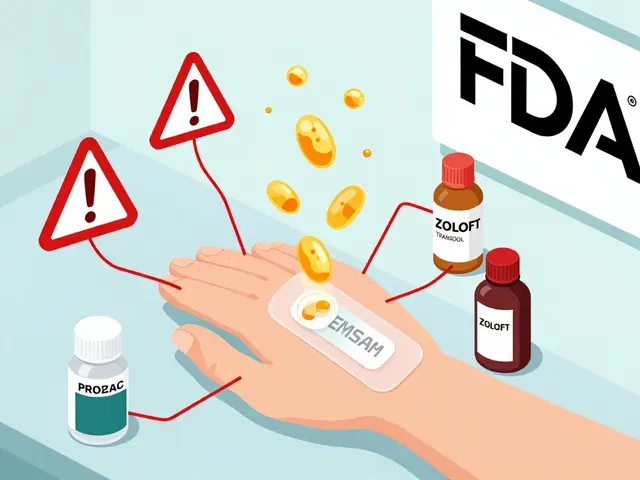
For most people, this doesn’t matter. But for some, it does. If you’re allergic to lactose, and your brand-name drug uses sucrose as a filler, but the generic uses lactose, you could have a reaction. Same goes for dyes - some people report headaches or rashes from certain coloring agents. That’s rare, but it happens. That’s why pharmacists are trained to ask about allergies when filling prescriptions.
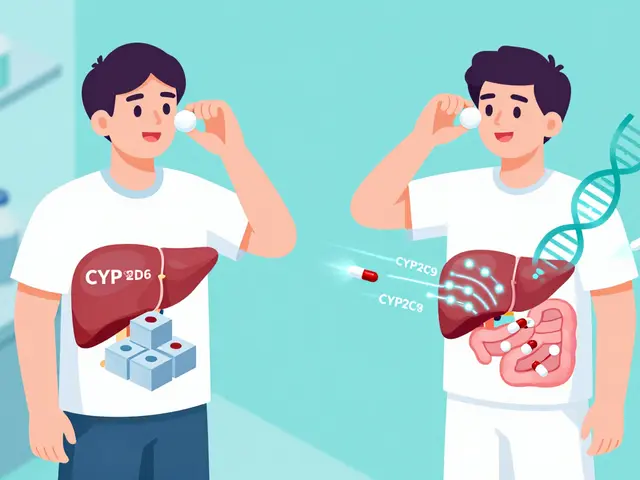
There’s another twist: narrow therapeutic index (NTI) drugs. These are medications where even a tiny change in blood levels can cause problems. Think warfarin (blood thinner), levothyroxine (thyroid hormone), or certain seizure medications. For these, the FDA requires tighter bioequivalence limits - 90% to 111% instead of 80% to 125%. That means the generic has to be even more precisely matched. Still, studies show that for most patients, switching between brand and generic NTI drugs works fine. A 2021 study in the Journal of Clinical Endocrinology & Metabolism found only 5-10% of thyroid patients needed to stick with the brand due to sensitivity. That’s a small number, but it’s real.
The Data Doesn’t Lie: Generics Work Just as Well
Let’s cut through the noise with hard evidence. In 2019, a massive study published in JAMA Internal Medicine looked at 3.5 million patients across 13 conditions - from high blood pressure to depression to osteoporosis. They compared outcomes between brand-name and generic versions. Result? No meaningful difference in effectiveness. Patients on generic amlodipine had the same drop in blood pressure as those on Norvasc. Those on generic escitalopram saw the same improvement in mood as those on Lexapro.
Even more surprising? A 2020 study in Nature Scientific Reports found that patients taking generic blood pressure drugs actually had better survival rates than those on the brand. But researchers didn’t conclude generics were superior. They pointed to something called "residual confounding" - meaning people who got generics might have been more health-conscious overall. Maybe they took their pills more regularly, ate better, or saw their doctor more often. The brand-name group might have been less likely to follow through on treatment because they could afford it. So the better outcomes likely had more to do with behavior than chemistry.
And here’s the kicker: when researchers looked at "authorized generics" - drugs made by the original brand but sold under a generic label - the outcomes were identical to the brand. That proves the active ingredient isn’t the issue. It’s everything else.
Why Do Some People Say They Feel Different?
It’s not all in your head. Some people genuinely feel worse after switching. Maybe they get a headache. Maybe they feel more anxious. Or their cholesterol didn’t drop as much. But here’s what usually happens: when they go back to the brand, they feel better. And they assume the generic didn’t work.
But psychology plays a big role. A 2017 study in the Annals of Internal Medicine found that patients who believed generics were inferior were 20% more likely to stop taking them - even if they felt fine. That’s the nocebo effect: expecting a negative outcome makes it more likely to happen. If you’ve been told your brand-name drug is "premium," you might subconsciously expect the generic to be weaker. And your body responds.
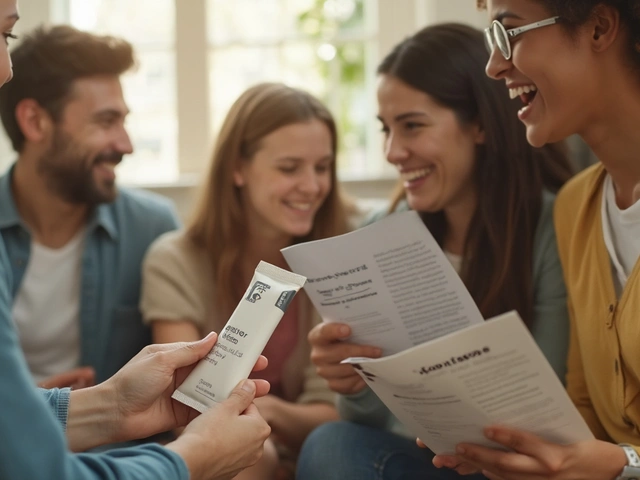
Another factor? Inconsistent switching. If you get your generic from one pharmacy one month and a different one the next, the pill might look different. That can cause confusion. A 2021 report from the Institute for Safe Medication Practices found that 12% of medication errors were tied to patients mixing up pills because they looked different. The solution? Stick with one pharmacy. Use apps like Medisafe to track your meds. Take a photo of your pill if you’re unsure.
The Real Winner: Cost
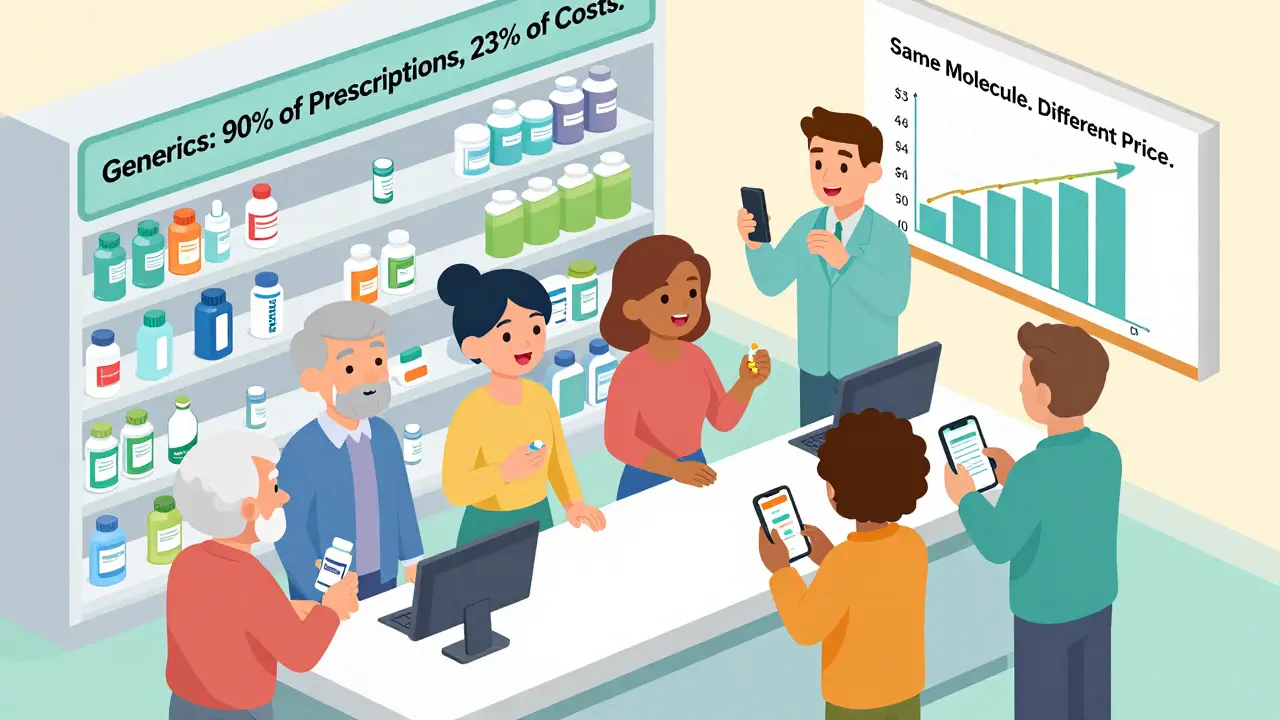
Let’s talk numbers. In 2022, generics made up 90% of all prescriptions in the U.S. But they accounted for only 23% of total drug spending. That’s because they cost 80-85% less than the brand. A brand-name statin might cost $685 out-of-pocket. The generic? $15. That’s not a typo. That’s why Medicare plans push generics so hard - they save billions. The Congressional Budget Office estimated generic drugs saved the U.S. healthcare system $373 billion in 2021 alone.
And it’s not just about money. For people on fixed incomes, generics make treatment possible. A diabetic who can’t afford brand-name insulin might skip doses. Switch to the generic? They can stick to their regimen. That’s not just savings - that’s life-saving.
When to Be Cautious
Generics are safe for almost everyone. But there are a few cases where extra care matters:
- NTI drugs: If you take warfarin, levothyroxine, or certain epilepsy meds, talk to your doctor before switching. Keep the same manufacturer if possible.
- Allergies: Check the inactive ingredients. Your pharmacist can help.
- Chronic conditions: If you’ve been stable on a brand for years, don’t switch unless you have to. Stability matters.
- Psychological resistance: If you’re convinced generics won’t work, tell your doctor. They can help you weigh the risk.
What Experts Say
Dr. Janet Woodcock, former head of the FDA’s drug review division, put it simply: "Generic drugs work the same as brand-name drugs and are just as effective." The American Medical Association agrees. So do most clinical guidelines.
But even experts admit the system isn’t perfect. Dr. Jerry Avorn from Harvard warned that the 80-125% bioequivalence window might be too wide for some patients. And while most studies show no difference, we don’t have long-term data on every single generic. That’s why the FDA is launching a new pilot program in 2024 to collect real-world data from diverse populations.
Final Takeaway
Yes, generic drugs are just as good as brand-name ones - for the vast majority of people. The science is clear. The data is overwhelming. The savings are massive. The only exceptions are rare: specific allergies, NTI drugs, or when your body reacts to a change in formulation.
If you’re switching from a brand to a generic, don’t panic. Monitor how you feel. Talk to your pharmacist. Keep your pharmacy consistent. And if something feels off - a new headache, a change in mood, a spike in blood pressure - call your doctor. But don’t assume the generic is to blame just because it’s cheaper. More often than not, the problem isn’t the medicine. It’s the fear.
Generics aren’t a compromise. They’re the same medicine - just without the marketing cost. And that’s a win for everyone.
Are generic drugs FDA-approved?
Yes. Every generic drug must be approved by the FDA before it can be sold. The approval process requires proof that the generic contains the same active ingredient, in the same strength and dosage form, and delivers the same amount of drug into the bloodstream as the brand-name version. The FDA inspects manufacturing facilities, reviews clinical data, and monitors post-market safety - just like it does for brand-name drugs.
Why do generic drugs look different?
Trademark laws require generic manufacturers to make their pills look different from the brand-name version. That means changing the color, shape, size, or markings. But the active ingredient and how it works in your body remain unchanged. The appearance has no effect on effectiveness - it’s just to avoid copying the brand’s design.
Can I trust generics made outside the U.S.?
Yes. About 78% of active pharmaceutical ingredients come from China and India, but every facility that supplies the U.S. market - no matter where it’s located - must pass FDA inspections. The FDA conducts regular audits and has the authority to block imports from non-compliant factories. A 2022 FDA report found that 97% of inspected generic drug facilities met U.S. standards.
Do generics take longer to work?
No. Bioequivalence testing requires that the generic reaches the same peak concentration in your blood (Cmax) and stays at effective levels for the same duration (AUC) as the brand. The FDA mandates that absorption rates fall within 80-125% of the brand. This means the drug works at the same speed and intensity. If you notice a delay, it’s likely due to factors like food intake, metabolism, or inconsistent dosing - not the generic itself.
What if I have a bad reaction to a generic?
If you experience a new side effect after switching to a generic, contact your doctor or pharmacist right away. It could be an allergy to an inactive ingredient - like lactose or a dye. Your pharmacist can check the pill’s ingredients and help you switch to another generic version or request the brand if medically necessary. You can also report adverse events directly to the FDA through MedWatch.
Comments (9)
Adebayo Muhammad
6 Mar 2026
Let’s be real: the FDA’s 80%-125% bioequivalence window? That’s not science-it’s a loophole dressed in a lab coat. Eighty percent? That means a generic could deliver just 4/5ths of the active ingredient-and still pass. You think that’s acceptable? I’ve seen patients on generic warfarin bleed out because their INR swung like a pendulum. The system isn’t broken-it’s designed to fail the vulnerable. And don’t get me started on Indian-manufactured APIs: 97% compliance? That’s like saying 97% of your condoms don’t break. The other 3%? That’s someone’s funeral.
Pranay Roy
7 Mar 2026
Did you know the original brand-name drug companies pay for the bioequivalence studies? That’s right. The same corporations that profit off brand-name drugs fund the very tests that prove generics are "equal." And then they sit back while the FDA approves them. Coincidence? I think not. There’s a whole shadow network-pharma lobbyists, FDA revolving doors, contract labs owned by Big Pharma. The generic you take? It’s probably made in the same factory as the brand. Same line. Same machines. Just a different label. You’re not saving money-you’re paying for a rebrand.
Joe Prism
8 Mar 2026
Generics work. Period.
People feel different because they expect to.
It’s not the pill. It’s the story we tell ourselves.
Change is scary. Even when it’s better.
Bridget Verwey
9 Mar 2026
Oh honey, you’re telling me you switched from Lexapro to citalopram and suddenly your soul is on fire? Sweetie. You’re not broken. You’re just scared. You’ve been told for years that your brand-name drug is your emotional security blanket. Now it’s gone. And your brain’s like, "Wait, we’re on a budget now? Who are we?"
Go to the pharmacy. Ask them to match the pill you had before. Take a photo. Use an app. Breathe. You’re not losing your mind-you’re learning to trust science instead of marketing. And that? That’s a win.
Andrew Poulin
11 Mar 2026
Stop overthinking. Generics are fine. If you’re having issues, it’s because you’re not taking them right. Or you’re a hypochondriac. Or both. The data is clear. The FDA doesn’t lie. Your doctor isn’t lying. Your pharmacist isn’t lying. You’re just mad because you’re paying $15 instead of $600. Grow up. Your life isn’t a pharmaceutical commercial.
Vikas Verma
12 Mar 2026
From a pharmacoeconomic standpoint, the adoption of generics represents a paradigm shift in healthcare delivery. The cost differential is not merely fiscal-it is structural. By reducing out-of-pocket expenditures by 85%, generics enable adherence, which in turn reduces hospitalization rates and downstream care utilization. This is not anecdotal-it is evidenced by multivariate regression models across longitudinal datasets. The narrative of inferiority is a cognitive bias, not a clinical reality. Compliance, not chemistry, is the variable.
Sean Callahan
13 Mar 2026
i switched to generic atorvastatin and now i feel like i’m in a fog… like my brain is wrapped in saran wrap… i dont know if its the generic or if i just got old or if i ate too much pizza last night… i just know i dont feel right anymore… and now i cant sleep… and i keep checking my blood pressure… and i think im gonna die…
Ferdinand Aton
14 Mar 2026
Actually, I read a study that said generics are worse. Not saying it’s true. But I also heard aliens are behind the FDA. So… who’s to say? Maybe the brand-name version has secret herbs. Maybe the generic is just placebo with a price tag. I’m not mad. I’m just curious.
Jeff Mirisola
14 Mar 2026
Look. I’ve been on generics for 12 years. Blood pressure. Cholesterol. Thyroid. Nothing’s changed. I didn’t feel worse. I didn’t feel better. I just felt… fine. And I saved $500 a month. That’s not nothing. That’s a vacation. That’s groceries. That’s peace of mind. If you’re stable, stay on it. If you’re scared, talk to your pharmacist. But don’t let fear make you pay more than you have to. We’re not in a movie. We’re just trying to live. And generics? They let us do that.