
Omeprazole and Clopidogrel: What You Need to Know About CYP2C19 Inhibition
PPI-Clopidogrel Interaction Checker
Check Your Medication Risk
Select your PPI and dose to see the estimated impact on clopidogrel effectiveness and your risk level.
Select your medications and click "Check Interaction Risk" to see results.
If you're taking clopidogrel to prevent blood clots after a heart attack or stent placement, and your doctor also prescribed omeprazole for acid reflux, you might be at risk for a hidden drug interaction. It’s not about one pill canceling out the other-it’s about how your liver processes them, and whether that process gets blocked. This isn’t theoretical. It’s been studied in tens of thousands of patients, debated in medical journals for over a decade, and changed how doctors prescribe these two common drugs.
Why Clopidogrel Needs Your Liver to Work
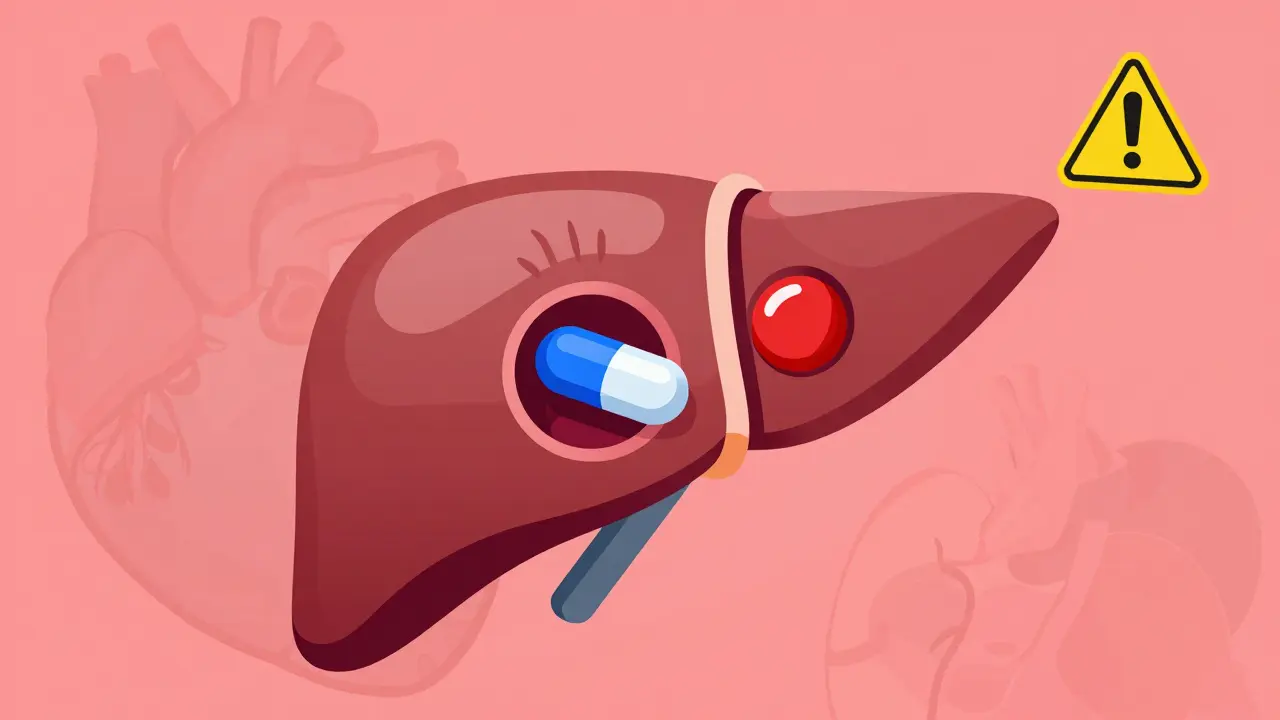
Clopidogrel doesn’t work right away. It’s a prodrug, meaning your body has to turn it into something active before it can do its job. That job? Stopping platelets from clumping together and forming dangerous clots. The enzyme responsible for this transformation is called CYP2C19. Without it, clopidogrel stays inactive. About 30% of people have genetic variants that make this enzyme less effective-especially those of East Asian descent. But even if your genes are normal, another drug can step in and block CYP2C19. That’s where omeprazole comes in.
Omeprazole Doesn’t Just Protect Your Stomach-It Blocks Your Liver
Omeprazole is a proton pump inhibitor (PPI), designed to reduce stomach acid. It’s one of the most prescribed drugs in the world. But here’s the catch: omeprazole is also metabolized by CYP2C19. And when it’s around, it doesn’t just get broken down-it actively blocks the enzyme. Think of it like two people trying to use the same keyhole. Omeprazole fits perfectly and won’t let clopidogrel in. Studies show that taking 80 mg of omeprazole daily reduces the amount of active clopidogrel in your blood by nearly half. Even the standard 20 mg dose cuts it by about a third.
Not All PPIs Are Created Equal
If you need a stomach acid reducer while on clopidogrel, you’re not out of options. The problem isn’t PPIs as a class-it’s which PPI you’re using. Omeprazole and its close cousin esomeprazole are the worst offenders. Lansoprazole is a bit better. Pantoprazole? Minimal interference. Rabeprazole? Mostly safe. And ilaprazole, a newer option, barely touches CYP2C19 at all.
Here’s the real-world breakdown:
| PPI | Dose | Reduction in Clopidogrel Active Metabolite | Clinical Risk Level |
|---|---|---|---|
| Omeprazole | 20 mg daily | 32% reduction | High |
| Omeprazole | 80 mg daily | 49% reduction | Very High |
| Esomeprazole | 40 mg daily | 40% reduction | High |
| Lansoprazole | 30 mg daily | 5% reduction | Low |
| Pantoprazole | 40 mg daily | 14% reduction | Low |
| Rabeprazole | 20 mg daily | 28% reduction (peak only) | Low-Moderate |
| Ilaprazole | 10 mg daily | No significant effect | Very Low |
So if you’re on clopidogrel and need a PPI, pantoprazole is your safest bet. Rabeprazole is a close second. Avoid omeprazole and esomeprazole entirely.

Does This Interaction Actually Cause More Heart Attacks?
This is where things get messy. Lab tests show clear interference. But does that translate to more heart attacks or strokes? Some studies say yes. A 2014 meta-analysis of over 270,000 patients found that people taking clopidogrel with a PPI had a 27% higher risk of cardiovascular events. Omeprazole alone raised the risk by 33%. But then came the COGENT trial-a large, randomized study of 3,761 patients. It found no difference in heart attacks or death between those taking omeprazole and those who didn’t.
And then there’s the FAST-MI Registry, which tracked nearly 3,000 patients. It showed no increased risk of heart events, even though two-thirds of them were on omeprazole. So why the contradiction? One big reason: genetics. If you’re a poor metabolizer of CYP2C19 (about 1 in 3 people in Asia, 1 in 5 in Europe), omeprazole can cut your clopidogrel effectiveness by over half. But if you’re a normal metabolizer, the effect is smaller-and might not matter clinically.
What Doctors Do Now
Guidelines have shifted. The American Heart Association and European Society of Cardiology now say: avoid omeprazole and esomeprazole with clopidogrel. Pantoprazole is preferred. If you can’t take a PPI at all, famotidine (an H2 blocker) is a good alternative. It doesn’t touch CYP2C19.
And here’s something surprising: timing doesn’t help. You can’t fix this by taking clopidogrel in the morning and omeprazole at night. The enzyme gets blocked for hours. The interaction isn’t about when you take the pills-it’s about whether they’re both in your system at the same time.
Genetic Testing Is Becoming Standard
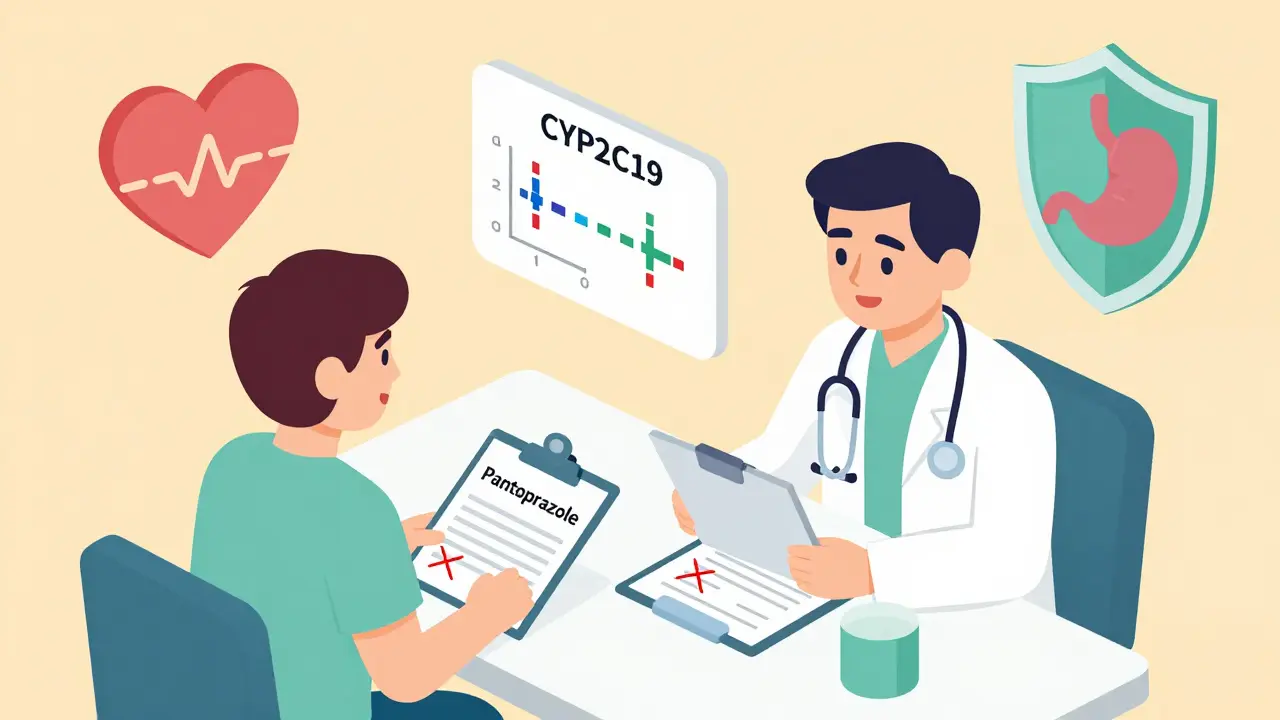
More cardiology clinics are now testing for CYP2C19 variants. If you’re a poor or intermediate metabolizer, clopidogrel might not be the right drug for you-regardless of whether you’re on a PPI. In those cases, doctors switch to prasugrel or ticagrelor. These newer antiplatelet drugs don’t rely on CYP2C19. They work faster, stronger, and aren’t affected by omeprazole.
The Clinical Pharmacogenetics Implementation Consortium (CPIC) recommends this exact approach: test the gene, then pick the right drug. If you’re on clopidogrel and need acid protection, and you’re a poor metabolizer, you shouldn’t be on omeprazole-you should be on a different antiplatelet.
What Should You Do?
If you’re taking both clopidogrel and omeprazole right now:
- Don’t stop either one on your own. Talk to your doctor or pharmacist.
- Ask: "Is there a safer PPI I can switch to?" Pantoprazole is usually the answer.
- If you’ve had a recent stent, heart attack, or stroke, ask about CYP2C19 genetic testing.
- If you’re on clopidogrel and have East Asian ancestry, this interaction is even more important to address.
- Don’t assume "it’s just heartburn"-protecting your stomach shouldn’t put your heart at risk.
For most people, switching from omeprazole to pantoprazole is a simple fix. No extra cost. No new side effects. Just better protection-for your stomach and your heart.
What’s Next?
The future of this interaction isn’t about choosing between two old drugs. It’s about moving beyond them. Three new antiplatelet drugs are in late-stage trials, designed to avoid CYP2C19 entirely. And researchers are developing next-gen PPIs that don’t inhibit the enzyme at all. In the meantime, the message is clear: if you’re on clopidogrel, don’t take omeprazole. There are better options. And knowing your genes might just save your life.
Can I take omeprazole and clopidogrel together if I space them out?
No. Taking clopidogrel in the morning and omeprazole at night doesn’t prevent the interaction. Omeprazole inhibits the CYP2C19 enzyme in your liver for many hours-long after you’ve taken the pill. The timing doesn’t matter; the presence of both drugs in your system does.
Is pantoprazole really safe with clopidogrel?
Yes. Multiple studies show pantoprazole has minimal effect on clopidogrel’s active metabolite-reducing it by only about 14%. It’s the preferred PPI when you need acid protection while on clopidogrel. Rabeprazole is also a good alternative.
Why is omeprazole still prescribed with clopidogrel if it’s risky?
Because many doctors aren’t aware of the interaction, or assume the risk is too small to matter. Also, omeprazole is cheap and widely available. But guidelines have changed since 2009. If you’re on both, ask your doctor if there’s a safer option.
Do I need genetic testing if I’m on clopidogrel?
It’s not required for everyone, but it’s strongly recommended if you’ve had a stent, heart attack, or stroke, or if you’re of East Asian descent. About 30% of people have genetic variants that make clopidogrel less effective-and omeprazole makes it worse. Testing helps identify who needs a different drug.
What if I can’t afford prasugrel or ticagrelor?
Switching to pantoprazole instead of omeprazole is a low-cost, high-impact fix. If you’re a poor metabolizer and can’t afford newer antiplatelets, pantoprazole + clopidogrel is still better than omeprazole + clopidogrel. Always discuss alternatives with your doctor-there are often options.





Comments (14)
Alex Warden
2 Jan 2026
Why are we still letting Big Pharma get away with this? Omeprazole is cheap and everywhere because they don’t want you switching to pantoprazole-it’s not patented. This isn’t science, it’s profit. Your heart doesn’t care about stock prices.
LIZETH DE PACHECO
4 Jan 2026
Thank you for breaking this down so clearly. I’ve been on both for years and had no idea. My doctor just kept prescribing omeprazole ‘because it’s what we’ve always done.’ Time to call them and ask about pantoprazole.
Lee M
6 Jan 2026
The real issue isn’t the drug interaction-it’s the medical system’s refusal to evolve. We’re still treating patients like lab rats with one-size-fits-all prescriptions while ignoring genetics, metabolism, and individual biology. This isn’t medicine. It’s industrial agriculture for the human body.
Bryan Anderson
6 Jan 2026
This is an excellent and well-researched summary. The distinction between PPIs is critical and often overlooked. I’ve seen multiple patients on clopidogrel with GI bleeding risk who were unnecessarily prescribed omeprazole-switching to pantoprazole eliminated their reflux symptoms without compromising cardiac protection. Evidence-based practice matters.
Liam George
7 Jan 2026
Did you know the FDA knew about this interaction since 2007? But they buried it because omeprazole makes billions. Now they’re pushing genetic testing like it’s a new idea-when it’s been proven for over a decade. This isn’t an accident. It’s a cover-up. They don’t want you to know your genes can save you from their mistakes.
sharad vyas
7 Jan 2026
In India, we see this all the time-doctors prescribe omeprazole like water. Many patients don’t even know what clopidogrel is for. This post is a wake-up call. We need more awareness in rural clinics too. Maybe someone should translate this into Hindi and Bengali.
Dusty Weeks
9 Jan 2026
bro i was on both for 2 years 😭 i just switched to pantoprazole last week and already feel better. also i’m not dying. 🙏
Sally Denham-Vaughan
10 Jan 2026
I love how this post doesn’t just say ‘avoid omeprazole’-it gives you real alternatives. So many health posts scare you without offering solutions. This one actually helps. Thank you.
Ann Romine
12 Jan 2026
Interesting that rabeprazole’s effect is only peak-related. I wonder if that means steady-state dosing reduces interference. Would be worth looking into the pharmacokinetic studies more closely.
Todd Nickel
13 Jan 2026
The COGENT trial’s null finding is not necessarily contradictory to the observational data-it likely reflects the heterogeneity of CYP2C19 metabolizer status across the population. In a cohort with high prevalence of poor metabolizers, the interaction becomes clinically significant, but in a mixed population, the signal gets diluted. This is why precision medicine is essential: blanket recommendations fail when biological variability is ignored.
Austin Mac-Anabraba
14 Jan 2026
Let’s be honest: most doctors are lazy. They prescribe omeprazole because it’s on autopilot. They don’t read the guidelines, they don’t check drug interactions, and they certainly don’t order genetic tests. This isn’t negligence-it’s systemic incompetence disguised as standard care.
Kristen Russell
15 Jan 2026
Switched to pantoprazole last month. No more heartburn. No more worry. Best decision I’ve made for my heart in years.
Matthew Hekmatniaz
16 Jan 2026
Great point. I’ve seen this in my clinic too-patients from South Asia and East Asia are at higher risk due to genetic prevalence. We now routinely test CYP2C19 for anyone on clopidogrel post-stent. It’s changed our outcomes. Knowledge is power, and testing is cheap.
Bill Medley
16 Jan 2026
It is imperative that clinicians adhere to current clinical guidelines regarding the concomitant use of proton pump inhibitors and clopidogrel. The evidence supporting pantoprazole as the preferred agent is robust and reproducible across multiple independent cohorts.