Acute Angle-Closure Glaucoma from Medications: Symptoms, Risks, and Emergency Care
Glaucoma Risk & Medication Checker
Anatomical Risk Factors
Select factors that apply to you:
Current Medications
Do you take any of these high-risk drugs?
Low Risk
Based on the inputs provided.
Recommended Action Plan
⚠️ Emergency Warning
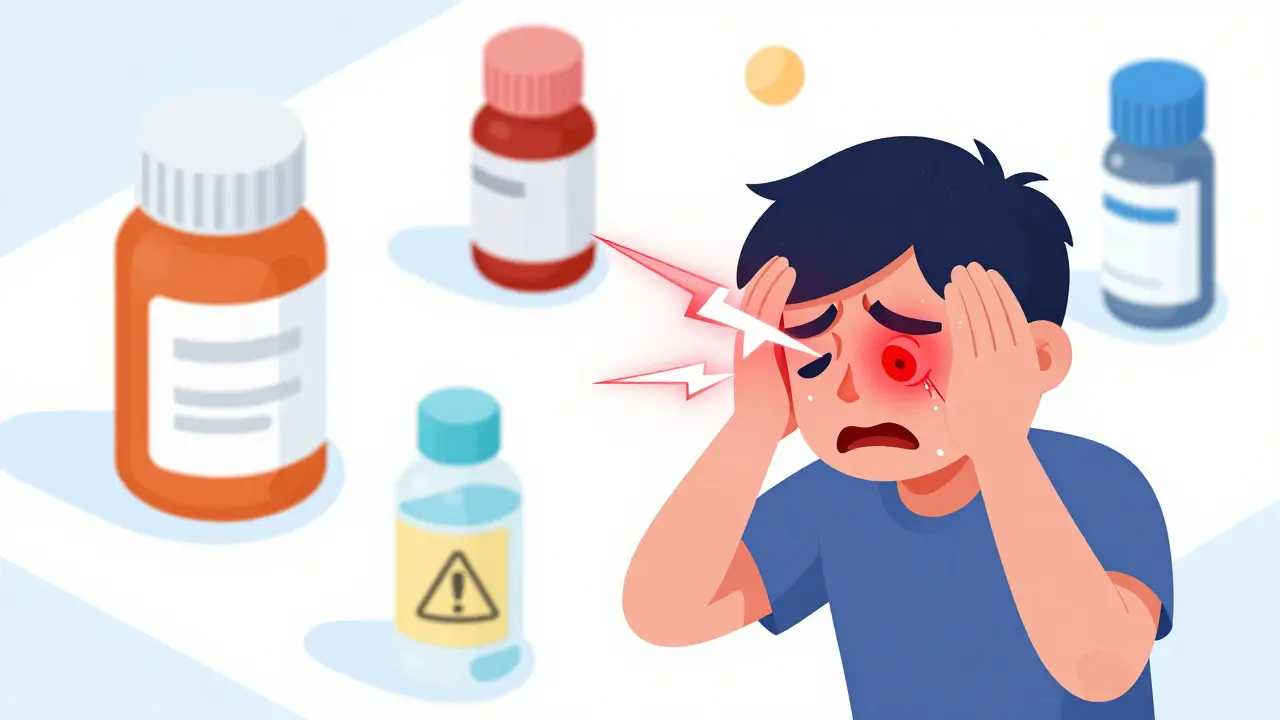
If you are currently taking these medications AND experience severe eye pain, halos around lights, nausea, or blurred vision, go to the ER immediately. Do not wait.
Imagine taking a routine pill for allergies or depression, only to wake up with blinding pain in one eye. This isn't a rare horror story; it is a documented medical reality known as acute angle-closure glaucoma. While most people associate this condition with aging or genetics, a significant portion of cases are triggered directly by common medications. If you have narrow eye angles-a structural trait many don't know they have-certain drugs can act like a trapdoor, shutting off the drainage system of your eye and causing pressure to spike dangerously fast.
This is not just discomfort. It is a sight-threatening emergency. Without treatment within 24 to 72 hours, permanent blindness can occur. The scary part? Many patients arrive at the ER misdiagnosed with migraines or sinus issues because doctors often overlook the link between their prescription list and their eye pain. Understanding which medications carry this risk and what symptoms to watch for could save your vision.
What Is Acute Angle-Closure Glaucoma?
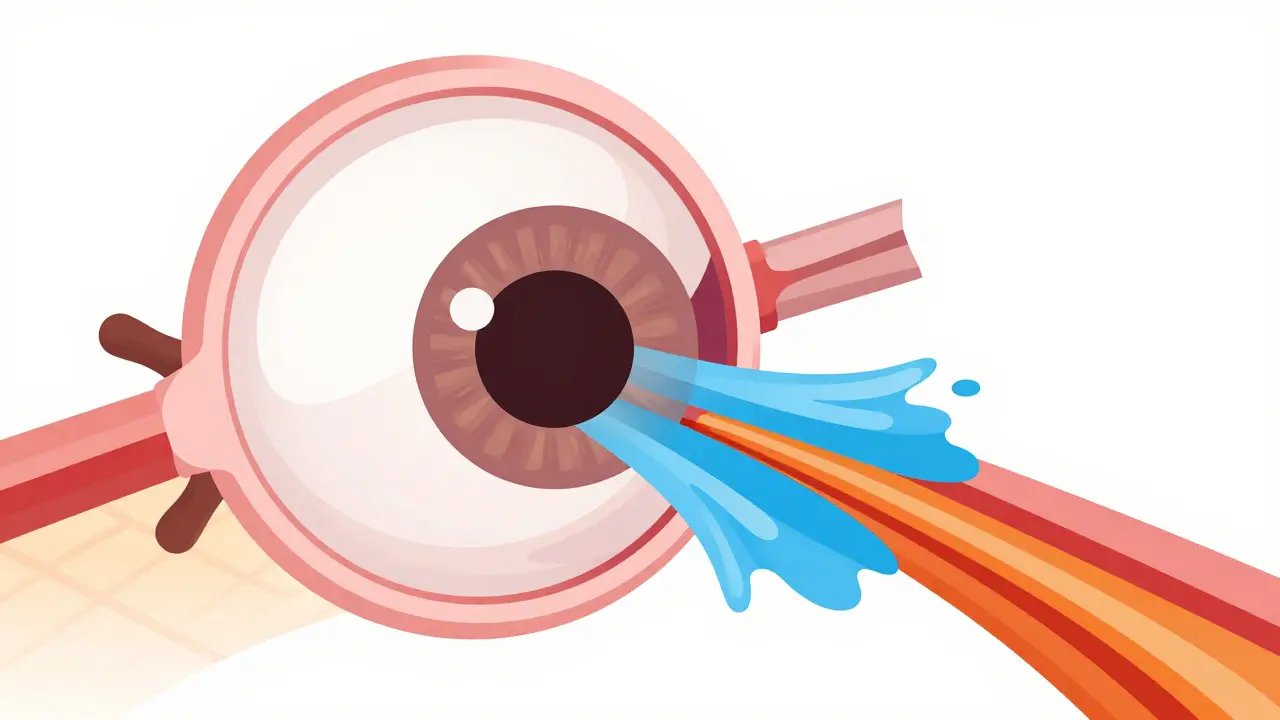
To understand why medications cause this crisis, we need to look inside the eye. Your eye produces a fluid called aqueous humor that nourishes internal structures. Normally, this fluid drains out through a mesh-like structure called the trabecular meshwork, located in the "angle" where the iris meets the cornea. Think of this angle like a gutter on a roof. If the gutter is wide open, water flows away easily. If it’s narrow, debris can block it.
In people with anatomically narrow angles, the space is already tight. When certain medications cause the pupil to dilate (widen) or the ciliary body to swell, the iris bows forward, physically closing that gutter. Fluid gets trapped behind the lens, pressure builds rapidly, and the optic nerve starts to die from lack of blood flow. This is acute angle-closure glaucoma (AACG). Unlike primary open-angle glaucoma, which creeps up silently over decades, AACG hits like a thunderclap.
The International Committee for Classification of Angle-Closure Diseases formally classified drug-induced AACG in 2011, recognizing it as a distinct clinical entity. Today, it accounts for approximately 10-15% of all AACG cases globally. The key takeaway here is anatomy: if your eyes are predisposed to narrow angles, specific drugs become dangerous triggers.
High-Risk Medications That Trigger Eye Emergencies
Not every pill is a threat, but several common classes of medications are well-documented culprits. These drugs typically work by affecting neurotransmitters or smooth muscle tone, which inadvertently impacts the eye's drainage angle.
- Adrenergic Agents: These include decongestants and some asthma medications. Phenylephrine, found in nasal sprays and eye drops, is responsible for about 35% of documented drug-induced cases. Ephedrine, once common in bronchodilators, also carries high risk.
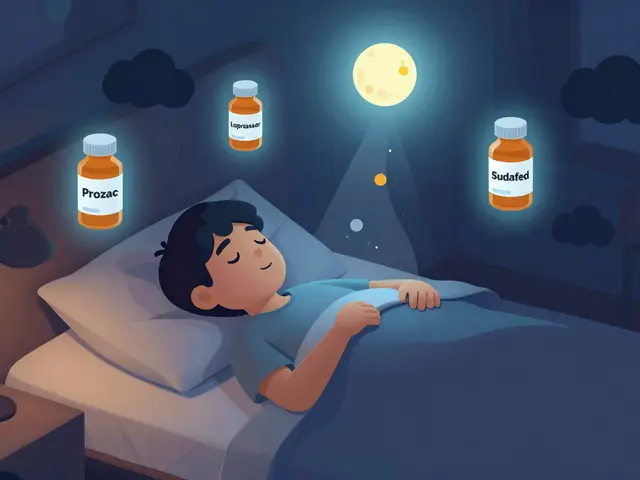
- Anticholinergics: These block acetylcholine, leading to pupil dilation. Tropicamide, used routinely during eye exams to dilate pupils, causes roughly 28% of these incidents. Other anticholinergics include diphenhydramine (Benadryl), oxybutynin (for bladder control), and tricyclic antidepressants like amitriptyline.
- Sulfonamides: Often called "sulfa drugs," these antibiotics and diuretics can cause swelling in the ciliary body, pushing the lens-iris diaphragm forward. Acetazolamide, ironically used to treat glaucoma, can sometimes trigger angle closure in susceptible individuals via this mechanism.
- Serotonergic Antidepressants: SSRIs (like paroxetine) and SNRIs can induce mild mydriasis (pupil dilation) and have been linked to 12% of cases.
- Antihistamines and Decongestants: Common over-the-counter allergy meds represent about 10% of cases due to their anticholinergic properties.
It is crucial to note that these medications do not cause glaucoma in everyone. They only trigger the attack in eyes that are already anatomically predisposed. However, since many people are unaware of their narrow angles until an attack occurs, the risk remains real.
Recognizing the Symptoms: Don't Wait
The onset of drug-induced AACG is sudden and severe. You won't feel a gradual change in vision; you will feel acute distress. According to clinical reviews by Dr. E.Y. Ah-kee and colleagues, the classic presentation includes:
- Severe Eye Pain: Often described as deep, boring, or throbbing. It may radiate to the forehead or temple.
- Halos Around Lights: Due to corneal edema (swelling of the clear front window of the eye), lights appear surrounded by rainbow-colored rings.
- Blurred Vision: Sudden loss of clarity in the affected eye.
- Nausea and Vomiting: The intense pain and vagal response often cause stomach upset, leading to frequent misdiagnosis as food poisoning or migraine.
- Red Eye: Conjunctival hyperemia makes the eye look very red and angry.
- Fixed, Mid-Dilated Pupil: The pupil becomes unresponsive to light and stays slightly enlarged (4-6 mm).
If you experience these symptoms after starting a new medication-even if it's just an over-the-counter cold remedy-do not wait. Do not assume it's a headache. Go to the nearest emergency department immediately. Time is vision. Irreversible optic nerve damage can begin within 6 to 12 hours of symptom onset.
Who Is Most at Risk?
Anatomy plays the biggest role. You are more likely to have narrow angles if you:
- Are older (risk increases significantly after age 40).
- Are female (women tend to have smaller eyes and shallower anterior chambers).
- Have East Asian ancestry. Studies from the Singapore Eye Research Institute show that 8.5% of Asians have narrow angles compared to 3.8% of White populations. East Asians face a 2.2 times higher risk.
- Are farsighted (hyperopic). Farsighted eyes are typically shorter and more crowded internally.
- Have a family history of angle-closure glaucoma.
Dr. M.C. Yang’s 2019 review highlights that only 25% of patients knew they were at risk before their first attack. This means 75% walked into the storm blind. Regular eye exams that include gonioscopy (an examination of the angle) can identify this risk long before a drug triggers a crisis.
Emergency Treatment: What Happens Next
If you reach the hospital with suspected AACG, the goal is to lower the intraocular pressure (IOP) immediately to save the optic nerve. Normal IOP is 10-21 mm Hg. In an acute attack, it can soar to 40-80 mm Hg. Here is the standard protocol:
- Medication to Lower Pressure: Doctors will administer topical drops like pilocarpine (to constrict the pupil and pull the iris away from the angle), beta-blockers, and alpha-agonists. Intravenous mannitol or oral acetazolamide may be given to reduce fluid production rapidly.
- Laser Peripheral Iridotomy (LPI): Once the pressure is lowered and the cornea clears, an ophthalmologist will perform a laser procedure. A tiny hole is made in the peripheral iris, creating a bypass channel for fluid to flow around the blocked angle. This is usually done within 24 hours.
- Addressing the Culprit Drug: The offending medication must be stopped immediately. In some cases, such as sulfa-induced swelling, waiting for the inflammation to subside is necessary before performing the laser.
European Glaucoma Society guidelines emphasize that LPI is definitive treatment for pupillary block, but alternative mechanisms like plateau iris or malignant glaucoma may require different surgical approaches. This is why specialist care is non-negotiable.

Prevention: Screening and Safe Alternatives
The best way to handle drug-induced AACG is to prevent it entirely. Prevention relies on two pillars: screening and substitution.
Screening: The American Academy of Ophthalmology recommends that all patients over 40 undergo gonioscopy before being prescribed high-risk medications. This test takes only 5-7 minutes per eye using a special contact lens. If you have never had your angles checked, ask your optometrist or ophthalmologist. Optical Coherence Tomography (OCT) is another advanced tool that can assess angle width with 94% sensitivity.
Substitution: If you are known to have narrow angles, you and your doctor can choose safer alternatives. For example:
| Avoid (High Risk) | Consider Instead (Lower Risk) | Reason |
|---|---|---|
| Diphenhydramine (Benadryl) | Loratadine (Claritin) or Cetirizine (Zyrtec) | Second-generation antihistamines have minimal anticholinergic effects. |
| Pseudoephedrine (Sudafed) | Saline nasal spray or steroid nasal sprays | Avoids adrenergic stimulation that can dilate pupils. |
| Tropicamide (Eye Drops) | Cyclopentolate or avoid dilation if possible | Some agents have less mydriatic effect; consult ophthalmologist. |
| Epinephrine (Asthma) | Formoterol or Albuterol (Beta-2 agonists) | Selective beta-2 agonists affect lungs more than eyes. |
Always inform every healthcare provider-primary care, dentist, pharmacist-that you have narrow angles. Carry a medical alert card if necessary. The FDA has mandated black box warnings on high-risk drugs like topiramate and sulfonamides since 2021, but patient awareness remains the final line of defense.
The Diagnosis Gap: Why Misdiagnosis Happens
Despite clear guidelines, delays in diagnosis remain common. A 2021 JAMA Ophthalmology study of 4,327 emergency cases found that non-ophthalmologists correctly diagnosed AACG in only 38% of initial presentations. Why? Because nausea and vomiting overshadow the eye pain. Patients report feeling "sick," so ER doctors treat for gastroenteritis or migraine.
User 'VisionWarrior42' shared on the Glaucoma Research Foundation forum: "After taking pseudoephedrine for allergies, I experienced severe eye pain and halos around lights but was misdiagnosed with migraine at the ER initially-lost 20% of my peripheral vision before correct diagnosis 36 hours later." Stories like this highlight the critical need for patients to advocate for themselves. If your head hurts and your eye looks red, insist on an eye exam.
BrightFocus Foundation’s 2022 survey revealed that 62% of patients experienced initial misdiagnosis, with an average delay of 17 hours. During those 17 hours, the optic nerve is under siege. Education is vital. Know your risk factors. Know your medications.
Advancements in Detection and Care
Technology is improving our ability to catch this condition before it strikes. OCT scans now allow for detailed mapping of the iridocorneal angle without contact lenses. Genetic research is also advancing; the GLAUGEN Consortium identified 17 genetic markers associated with narrow angles in 2022. While genetic screening isn't yet routine, it promises a future where risk is predicted before symptoms ever appear.
Integrated health systems like Kaiser Permanente have shown that coordinated care between primary care physicians and ophthalmologists can reduce medication-induced AACG cases by 75%. The future lies in better communication. Electronic health records now include mandatory glaucoma risk alerts for high-risk prescriptions, a step forward in preventing these emergencies.
Can over-the-counter allergy meds cause glaucoma?
Yes. Over-the-counter antihistamines like diphenhydramine (Benadryl) and decongestants like pseudoephedrine contain anticholinergic or adrenergic properties that can dilate the pupil and trigger acute angle-closure glaucoma in people with narrow eye angles. Safer alternatives include loratadine or cetirizine.
How quickly does vision loss occur in acute angle-closure glaucoma?
Irreversible optic nerve damage can begin within 6 to 12 hours of symptom onset. Permanent visual field loss is likely if intraocular pressure remains above 40 mm Hg for more than 24 hours. Immediate emergency care is essential to prevent blindness.
What is the difference between open-angle and angle-closure glaucoma?
Open-angle glaucoma develops slowly over years as the drainage meshwork becomes less efficient, often with no early symptoms. Angle-closure glaucoma is a mechanical blockage where the iris physically closes the drainage angle, causing a rapid, painful spike in pressure. It is a medical emergency.
Should I avoid eye dilation tests if I have narrow angles?
You should inform your eye doctor that you have narrow angles before any dilation. They may use prophylactic drops to lower pressure beforehand or choose a weaker dilating agent. Never hide this information, as dilation is a known trigger for attacks in susceptible individuals.
Which ethnic groups are at higher risk for drug-induced angle closure?
East Asian populations have a significantly higher risk due to anatomical differences, specifically shallower anterior chambers and narrower angles. Studies show 8.5% of Asians have narrow angles compared to 3.8% of White populations, making them 2.2 times more likely to develop this condition.
What is laser peripheral iridotomy (LPI)?
LPI is a quick, outpatient laser procedure where a tiny hole is created in the peripheral iris. This allows fluid to bypass the blocked angle and drain properly, relieving pressure. It is the standard treatment for preventing recurrent attacks of pupillary block angle-closure glaucoma.