
Antibiotics and Myasthenia Gravis: What You Need to Know About Neuromuscular Weakness Risks
Myasthenia Gravis Antibiotic Risk Calculator
Calculate Your Antibiotic Risk
This tool helps assess the risk of worsening myasthenia gravis symptoms based on your medical history and the specific antibiotic.
Risk Assessment Results
When you have myasthenia gravis (MG), even a simple infection can become a dangerous situation-not just because of the illness itself, but because the antibiotics used to treat it might make your muscle weakness worse. This isn’t just a theoretical concern. Real patients, in real clinics, have ended up in crisis after taking common antibiotics that seemed harmless at first glance. The truth is, not all antibiotics are created equal when you have MG. Some are relatively safe. Others can push you toward a myasthenic crisis-where breathing becomes impossible without emergency help.
Why Antibiotics Can Worsen Myasthenia Gravis
Myasthenia gravis attacks the connection between nerves and muscles. Your body’s immune system mistakenly destroys acetylcholine receptors-the spots on muscle cells that receive signals from nerves to contract. Fewer receptors mean weaker muscles. That’s why people with MG struggle with drooping eyelids, trouble swallowing, or weak arms and legs. Some antibiotics interfere with this already fragile system. They don’t cause MG, but they can make it worse by blocking the remaining acetylcholine receptors or stopping the release of the neurotransmitter altogether. Think of it like trying to start a car with a weak battery, then someone unplugs the starter motor. The car won’t turn over, even if the battery isn’t completely dead. This isn’t just about one or two drugs. At least six classes of antibiotics have been linked to MG flare-ups. The most dangerous ones block the neuromuscular junction directly. Others mess with calcium channels or alter how nerves fire. The result? Muscle weakness that can escalate quickly-sometimes within hours of taking the first dose.High-Risk Antibiotics: What to Avoid
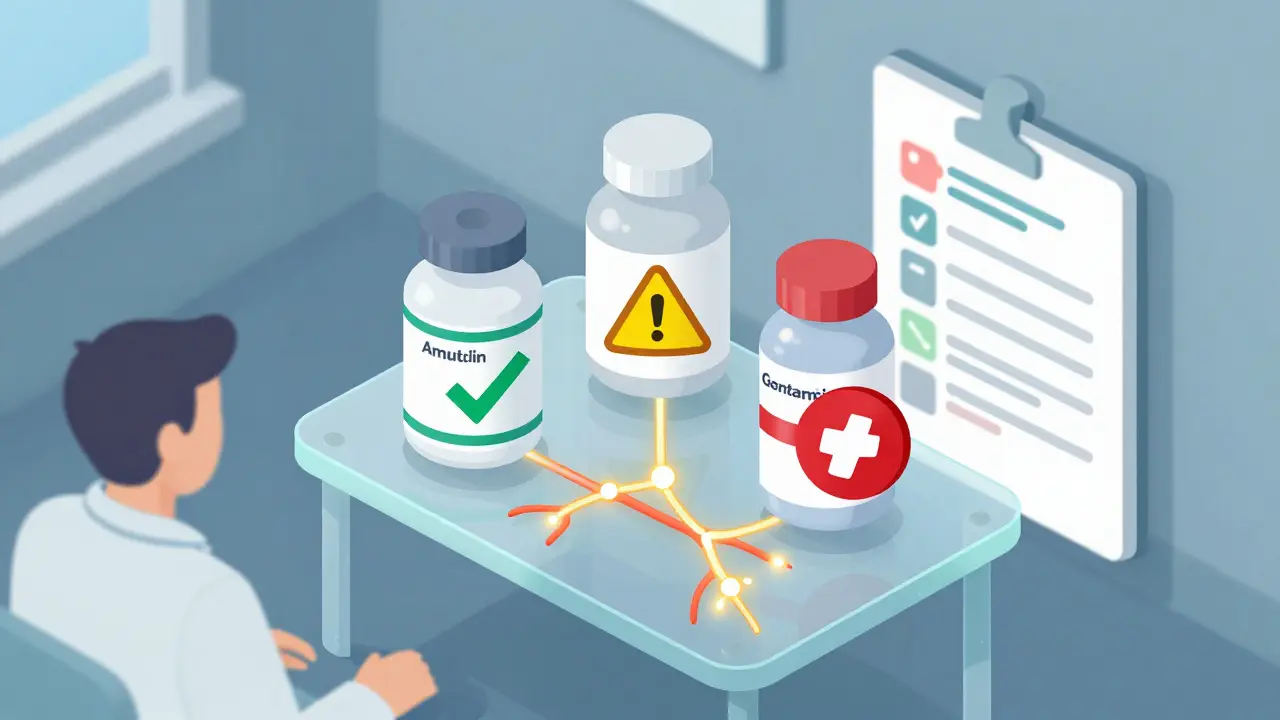
Certain antibiotics carry clear red flags for MG patients. These aren’t just theoretical risks. They’ve caused real emergencies.- Aminoglycosides (gentamicin, tobramycin, neomycin): These are the most dangerous. They directly block acetylcholine receptors at the muscle end. Even a single IV dose can trigger respiratory failure. They’re often used for serious infections like pneumonia or sepsis, but in MG patients, they’re generally off-limits unless there’s no other option-and even then, only under constant monitoring.
- Fluoroquinolones (ciprofloxacin, levofloxacin, moxifloxacin): These were once routinely avoided in MG patients. The FDA even added black box warnings to them. But new data shows the risk isn’t as high as once thought. A 2023 NIH study found ciprofloxacin caused MG worsening in 2.4% of cases, levofloxacin in 1.6%. That’s low-but not zero. And when it happens, it can be severe.
- Macrolides (azithromycin, clarithromycin, erythromycin): These are commonly prescribed for sinus infections and bronchitis. Studies show a 1.5% exacerbation rate. They’re not as dangerous as aminoglycosides, but they still carry risk, especially in people with unstable MG.
- Telithromycin: This drug was pulled from the market in many countries because it caused fatal MG crises. It’s a hard warning: never use this if you have MG.
The Safer Options: Which Antibiotics Are OK?
The good news? Many antibiotics are considered low-risk and can be used safely in MG patients. The 2024 Cleveland Clinic study, which looked at 918 antibiotic courses in 365 MG patients, found that penicillins had the lowest rate of worsening symptoms-at just 1.3%.- Penicillins (amoxicillin, ampicillin, penicillin V): These are the go-to choice for most infections in MG patients. They don’t interfere with neuromuscular transmission. If you need an antibiotic for strep throat, a urinary tract infection, or a skin infection, amoxicillin is often the best bet.
- Cephalosporins (cefazolin, cephalexin): These are also considered low-risk. They’re often used when someone is allergic to penicillin.
- Vancomycin: Used for serious infections like MRSA, this drug doesn’t affect the neuromuscular junction. It’s a safe alternative when you need something strong.
- Metronidazole: Commonly used for anaerobic infections and C. diff, it’s generally safe in MG.
Who’s Most at Risk?
Not everyone with MG reacts the same way to antibiotics. Some people can take ciprofloxacin with no issues. Others develop trouble breathing after one pill. Why? The Cleveland Clinic research identified three major risk factors:- Recent hospitalization or ER visit (within the last 6 months): If you’ve been hospitalized for MG in the past half-year, your system is already fragile. Any additional stress-like an antibiotic-can tip you into crisis.
- Female sex: Women with MG are more likely to experience worsening symptoms after antibiotics. The reason isn’t fully understood, but it’s consistent across studies.
- Diabetes: High blood sugar can impair nerve function. Combine that with MG and an antibiotic that affects neuromuscular signaling, and the risk multiplies.
What to Do Before Taking Any Antibiotic
You don’t have to avoid antibiotics entirely. But you need to be smart about them.- Always tell every doctor and pharmacist you have MG. Write it on your medical alert bracelet. Put it in your electronic health record. If your primary care doctor doesn’t know you have MG, they might prescribe a risky drug without realizing the danger.
- Consult your neurologist or MG specialist before starting any new antibiotic. Don’t rely on a walk-in clinic or urgent care alone. They may not know the nuances.
- Ask: “Is there a safer alternative?” If they suggest ciprofloxacin, ask if amoxicillin or cephalexin would work just as well. Most infections can be treated with low-risk options.
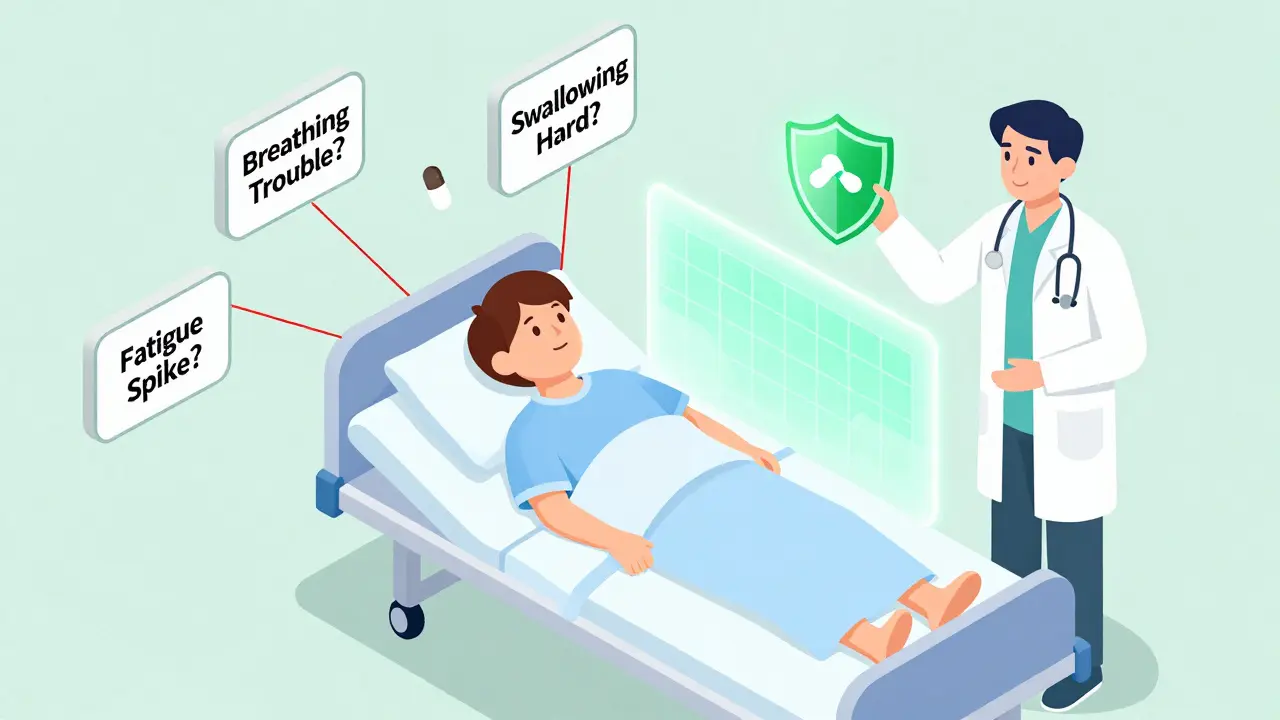
- Watch for warning signs in the first 72 hours: worsening eyelid drooping, trouble swallowing, slurred speech, shortness of breath, or fatigue that feels different from your usual MG symptoms. If you notice any of these, stop the antibiotic and call your doctor immediately.
- Don’t delay treatment for infection. Infections themselves are the #1 trigger for MG flare-ups. In fact, 88% of MG worsening after antibiotics was actually caused by the infection-not the drug. So if you have pneumonia or a bad UTI, you need treatment. The goal isn’t to avoid antibiotics-it’s to choose the safest one.
Why the Guidelines Are Changing
For years, doctors were told to avoid fluoroquinolones and macrolides entirely in MG patients. That advice came from small case reports and fear. But the 2024 Cleveland Clinic study-based on nearly 1,000 antibiotic courses-is the largest of its kind. It found that the actual risk of worsening is low, especially in stable patients. This isn’t a green light to use any antibiotic freely. But it does mean blanket bans are outdated. The new approach is personalized: assess the patient, assess the infection, assess the drug. The Myasthenia Gravis Foundation of America still lists fluoroquinolones as “cautious use, if at all.” But neurologists are starting to shift. If you’re stable, have no recent hospitalizations, and need a broad-spectrum antibiotic for a serious infection, levofloxacin might be the best choice-even if it’s not the first one you’d pick.What Happens If You Have a Reaction?
If you start feeling worse after taking an antibiotic-especially if your breathing gets harder or you can’t swallow-this could be a myasthenic crisis. That’s a medical emergency.- Call 999 or go to the ER immediately.
- Bring a list of all your medications, including the antibiotic you just took.
- Let them know you have MG and suspect the antibiotic made it worse.
Final Advice: Balance, Not Fear
Living with MG means constantly weighing risks. Antibiotics are one of those areas where fear can lead to worse outcomes. Avoiding treatment for a urinary tract infection because you’re scared of ciprofloxacin might leave you with sepsis. That’s far more dangerous than a 2% chance of temporary weakness. The key is informed caution. Know your risk factors. Know your safe options. Talk to your specialist. And never assume a drug is safe just because it’s common. Your body already fights hard enough. Don’t let a well-intentioned antibiotic make it harder.Can I take amoxicillin if I have myasthenia gravis?
Yes, amoxicillin is considered one of the safest antibiotics for people with myasthenia gravis. Studies show it has a very low risk of worsening symptoms-around 1.3%. It’s often the first choice for common infections like strep throat, sinus infections, or urinary tract infections in MG patients.
Are fluoroquinolones like ciprofloxacin always dangerous for MG patients?
Not always, but they require caution. While fluoroquinolones were once avoided entirely, newer research shows the risk of worsening MG is low (around 2%) and similar to safer antibiotics like amoxicillin. However, they’re still risky for people who’ve had recent hospitalizations, are female, or have diabetes. Use them only if no safer alternative exists, and monitor closely for weakness.
What should I do if I start feeling weaker after taking an antibiotic?
Stop the antibiotic and contact your neurologist or go to the emergency room immediately. Symptoms like trouble breathing, swallowing, or speaking, or sudden fatigue beyond your usual MG levels could signal a myasthenic crisis. This is life-threatening and needs urgent treatment with IVIG or plasma exchange.
Why do some antibiotics make MG worse?
Some antibiotics interfere with the neuromuscular junction-the point where nerves signal muscles to contract. In MG, you already have fewer acetylcholine receptors. Antibiotics like aminoglycosides or macrolides can block the remaining receptors or stop the release of acetylcholine, making muscle signals even weaker. This can lead to sudden, dangerous weakness.
Should I avoid all antibiotics if I have MG?
No. Infections are the most common trigger for MG flare-ups. Avoiding antibiotics because you’re afraid of side effects can be more dangerous than taking them. The goal is to choose the right antibiotic for your infection and your personal risk level. Penicillins, cephalosporins, and vancomycin are generally safe. Always consult your MG specialist before starting any new antibiotic.



Comments (15)
swati Thounaojam
8 Jan 2026
amoxicillin is my go-to. never had an issue. just tell every doc you have mg. simple.
christy lianto
10 Jan 2026
I’ve seen two friends in the ICU because their ER doc gave them cipro. One nearly died. This isn’t ‘risk management’-it’s negligence. Why are we still letting lazy prescribers hand out fluoroquinolones like candy? Myasthenia isn’t a footnote in the prescription guide-it’s a red flag that should scream.
Ken Porter
10 Jan 2026
Why do Americans always act like every drug is a death sentence? In India, we use gentamicin all the time. If you’re weak, you’re weak-blame the disease, not the medicine.
Manish Kumar
11 Jan 2026
It’s fascinating how we’ve turned medicine into a minefield of binary choices-safe or dangerous, good or evil. But the body isn’t a switchboard. It’s a symphony of systems, and MG is just one instrument out of tune. Antibiotics don’t ‘worsen’ MG-they interact with a fragile equilibrium. The real question isn’t which drug to avoid, but how to restore the harmony. We treat symptoms, not the underlying chaos. Maybe the solution isn’t avoiding antibiotics… but rebuilding the body’s resilience. That’s the real frontier.
Dave Old-Wolf
12 Jan 2026
So if I’m stable and got a UTI, can I take cipro? Or is that still a no-go? I don’t wanna end up in the ER, but I also don’t wanna let a bug take me down.
Prakash Sharma
12 Jan 2026
India doesn’t need your Western overcaution. We’ve treated infections for decades with these drugs. Your ‘crisis’ is your privilege. Stop overmedicalizing everything.
Donny Airlangga
12 Jan 2026
I’m so glad someone finally broke this down clearly. I’ve been scared to take any antibiotic for years. Knowing amoxicillin is safe is a relief. Thanks for the clarity.
Molly Silvernale
13 Jan 2026
Antibiotics… the silent saboteurs of neuromuscular grace… a chemical whisper that drowns out the last fragile echo of a signal… and suddenly-you can’t lift your eyelid… can’t swallow your own saliva… can’t breathe… and you’re just… there… trapped in a body that forgot how to obey.
Kristina Felixita
15 Jan 2026
just told my dr i have mg and they said 'oh yeah, avoid cipro'... i felt so heard. also, i wrote it on my fridge with sharpie. because you never know who's looking at your chart.
Joanna Brancewicz
16 Jan 2026
Neuromuscular junction interference is the key mechanism. Aminoglycosides are noncompetitive antagonists at the postsynaptic membrane. Macrolides inhibit presynaptic acetylcholine release. The data is clear-risk stratification matters.
Evan Smith
17 Jan 2026
so let me get this straight… the same drug that’s fine for your 20-year-old with strep is a death sentence for me because i have a brain glitch? cool. thanks for the heads up, science.
Lois Li
17 Jan 2026
My sister had a crisis after azithromycin. We didn’t know the link until it was too late. Now I carry a laminated card in my wallet. Everyone deserves to know this. Thank you for writing this.
Annette Robinson
18 Jan 2026
As someone who manages MG daily, I appreciate the nuance here. But let’s be honest-most primary care providers don’t know the difference between a cephalosporin and a carbapenem. We need better education, not just patient vigilance.
Luke Crump
19 Jan 2026
Oh, so now the FDA’s black box warning is ‘outdated’? Because a study with 900 cases says so? What about the 3 people who died last year? You think numbers make suffering disappear? This isn’t statistics-it’s survival.
Aubrey Mallory
21 Jan 2026
My neurologist said the same thing: if you’re stable, don’t panic. But if you’ve been hospitalized in the last six months? Play it safe. Penicillins first. Always. And if you feel off? Stop. Call. Don’t wait.