
Fish Oil and Omega-3s: What the Science Really Says About Heart Health
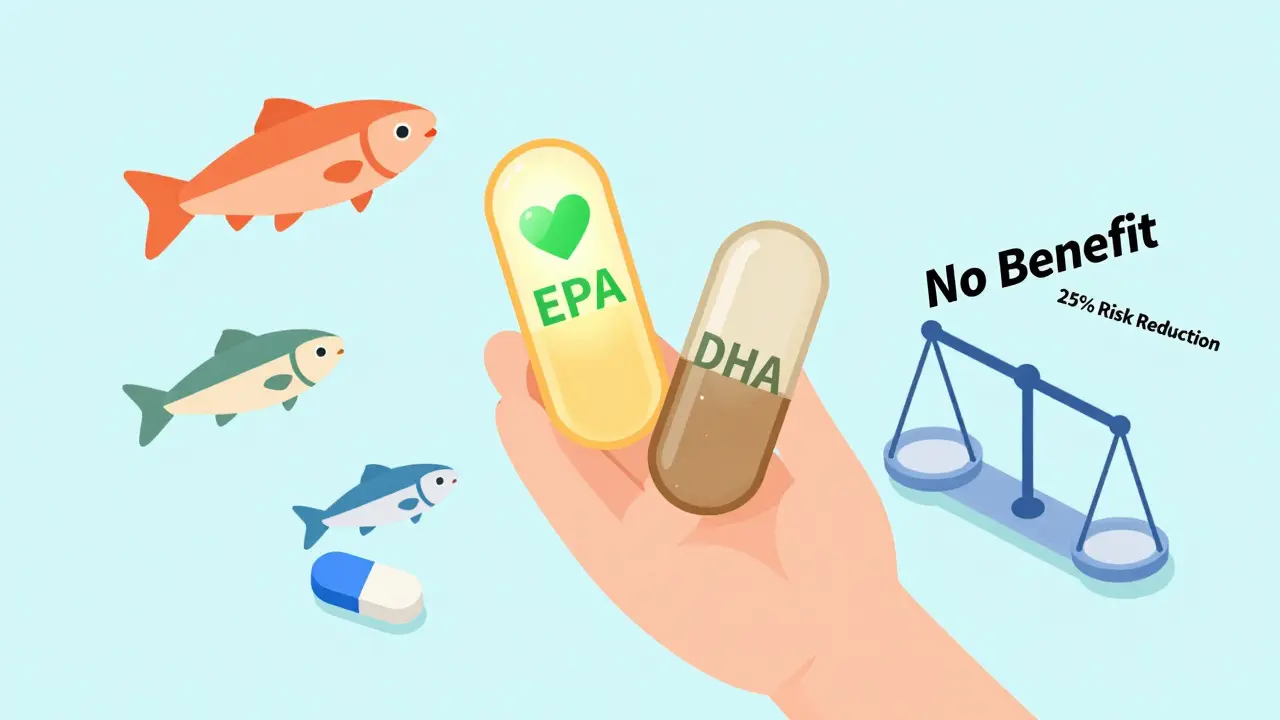
For years, fish oil supplements have been marketed as a simple, natural way to protect your heart. But today, the science is no longer clear-cut. Some studies say they work wonders. Others say they do almost nothing. So what’s the truth? If you’re taking fish oil for your heart, you deserve to know exactly what the evidence shows - not just the hype.
What Exactly Are Omega-3s?
Omega-3 fatty acids are essential fats your body can’t make on its own. You need to get them from food or supplements. The two most important types for heart health are EPA (eicosapentaenoic acid) and DHA (docosahexaenoic acid). These are found mostly in fatty fish like salmon, mackerel, sardines, and herring. There’s also ALA (alpha-linolenic acid), found in flaxseeds, chia seeds, and walnuts, but your body converts very little of it into EPA or DHA - so it’s not a reliable replacement.
Most over-the-counter fish oil capsules contain about 300-500 mg of combined EPA and DHA per capsule. To hit the doses used in major studies, you’d need to take 4-8 capsules a day. That’s expensive, messy, and hard to stick with. Prescription versions like Vascepa (icosapent ethyl) and Lovaza are concentrated, but they’re not the same thing. Vascepa is pure EPA. Lovaza has both EPA and DHA. And that difference matters more than you think.
The Big Studies: Contradictory Results
Two landmark trials in recent years gave us nearly opposite answers.
In 2018, the REDUCE-IT trial shocked the medical world. It studied over 8,000 people with high triglycerides and existing heart disease or diabetes. All were already on statins. Half took 4 grams daily of purified EPA (Vascepa). The other half took a placebo (mineral oil). After nearly five years, the EPA group had a 25% lower risk of major heart events - heart attacks, strokes, and death from heart disease. The results were so strong, the FDA approved Vascepa specifically for reducing cardiovascular risk in high-risk patients.
Then came the STRENGTH trial in 2020. It tested a 4-gram daily dose of a combination of EPA and DHA (Epanova) in a similar group of high-risk patients. The results? No benefit at all. The trial was stopped early because it clearly wasn’t working. Why the difference? Researchers now suspect DHA might cancel out some of EPA’s benefits. No large study has ever tested pure DHA alone, so we still don’t know if DHA is neutral, harmful, or just not useful for heart protection.
And then there’s the 2023 Cochrane review, the most comprehensive analysis ever done. It looked at 79 randomized trials involving over 112,000 people. The conclusion? Long-chain omega-3s (EPA and DHA) have little to no effect on heart attacks, strokes, or death from heart disease. This isn’t a fluke - it’s the best evidence we have.
Who Might Actually Benefit?
Not everyone. But some groups show real, measurable benefits.
People with very high triglycerides (above 500 mg/dL) do benefit from prescription omega-3s. Lovaza is FDA-approved for this exact use. At 2-4 grams daily, EPA and DHA can lower triglycerides by 25-30%. That’s a proven effect.
The VITAL trial (2018) found something surprising: among people taking 1 gram daily of fish oil, heart attacks dropped by 28%. But here’s the kicker - the benefit was strongest in African Americans. Their heart attack risk dropped by 77%. Researchers think this may be tied to genetic differences in how the body processes omega-3s. If you’re African American and have a family history of heart disease, this could be relevant.
For people with heart failure, the American Heart Association says omega-3s may reduce deaths from heart disease by about 10% at 1 gram daily. That’s modest, but meaningful if you’re already at high risk.
Prescription vs. Over-the-Counter: What’s the Difference?
| Product | Type | Active Ingredient | Dose | Approved Use | Cost (Monthly) |
|---|---|---|---|---|---|
| Vascepa | Prescription | Pure EPA | 4 grams daily | Reduce heart events in high-risk patients | $250-$300 |
| Lovaza | Prescription | EPA + DHA | 4 grams daily | Treat severe high triglycerides (≥500 mg/dL) | $200-$280 |
| Standard Fish Oil | Over-the-counter | EPA + DHA | 300-500 mg per capsule | Not FDA-approved for any condition | $10-$50 |
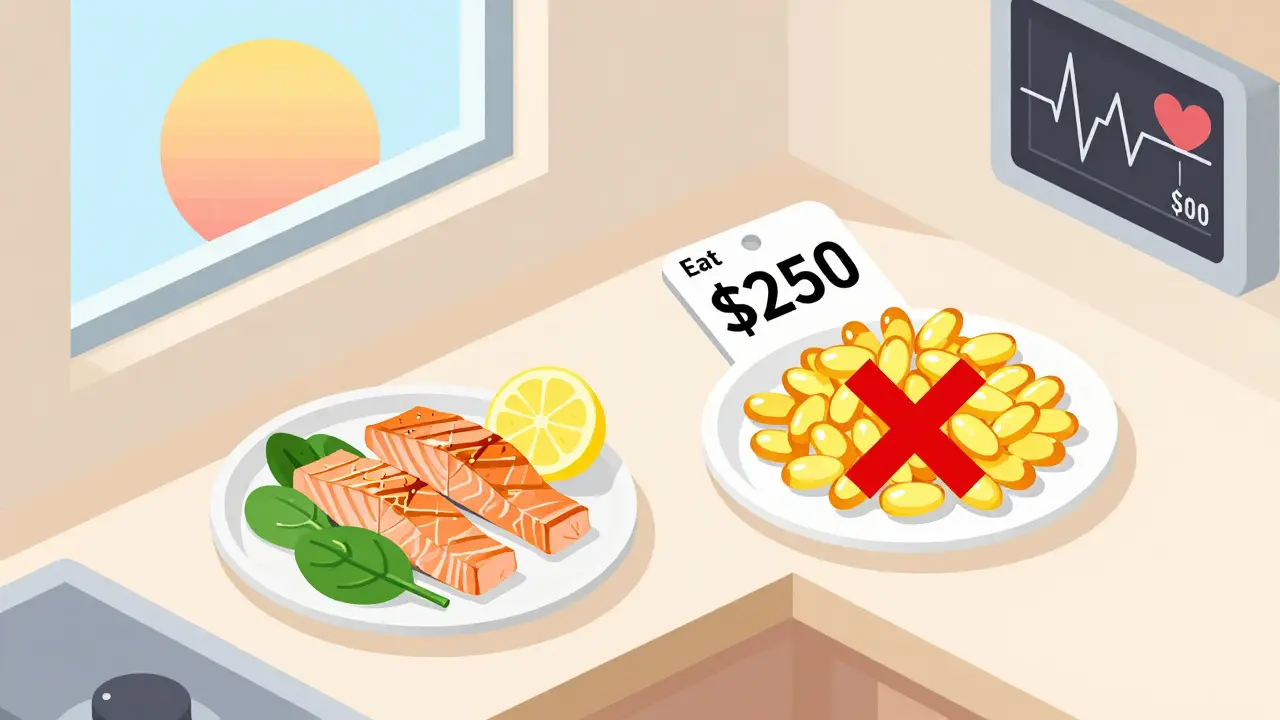
Most people buy over-the-counter fish oil. But here’s the problem: you’d need 8-10 capsules daily to match the dose used in REDUCE-IT. That’s expensive, hard to swallow, and often poorly absorbed. Plus, many brands don’t even contain what they claim. Consumer Reports found 12 out of 35 tested products had oxidation levels that could mean rancid oil - which might even be harmful.
What About Eating Fish Instead?
The best way to get omega-3s? Eat fatty fish.
The National Heart, Lung, and Blood Institute (NHLBI) recommends two 3.5-ounce servings of salmon, mackerel, or sardines per week. That gives you about 500 mg of EPA and DHA daily - enough for general heart health. You get other nutrients too: vitamin D, selenium, high-quality protein. No pills needed.
And here’s the thing: people who eat fish regularly have lower rates of heart disease - not because of supplements, but because of their overall diet. They’re more likely to eat less processed food, fewer sugary drinks, and more vegetables. That’s the real secret.
The Risks and Side Effects
Fish oil isn’t risk-free. At high doses (above 3 grams daily), it can:
- Increase the risk of atrial fibrillation (an irregular heartbeat). A 2022 meta-analysis found a 0.4% absolute increase in risk - small, but real.
- Interact with blood thinners like warfarin. While it doesn’t cause dangerous bleeding on its own, combining it with anticoagulants needs monitoring.
- Causes gastrointestinal issues. About 27% of users report fishy burps, bloating, or diarrhea. Some brands use enteric coatings to reduce this, but not all.
Mercury is rarely a concern. Most reputable brands test for heavy metals and stay below 0.1 ppm - well under the FDA’s safety limit. But if you’re buying cheap, untested supplements from unknown brands, you’re taking a gamble.
What Should You Do?
Here’s the bottom line, based on the latest evidence:
- If you have severe high triglycerides (≥500 mg/dL), talk to your doctor about prescription omega-3s like Lovaza.
- If you’re at high risk for heart disease and already on a statin, ask about Vascepa. It’s the only omega-3 product with strong evidence for preventing heart events.
- If you’re healthy and just taking fish oil to "prevent heart disease," stop. The evidence doesn’t support it. You’re not getting meaningful protection.
- If you’re African American and have heart disease risk factors, discuss omega-3s with your doctor - the VITAL trial data suggests you might benefit.
- For everyone else: eat fatty fish twice a week. Skip the pills. Save your money.
And if you do take supplements, choose a brand that’s been independently tested. Look for certifications from NSF International, USP, or ConsumerLab. Avoid anything that smells rancid or leaves a greasy residue on your fingers.
What’s Next?
The science is still evolving. The American Heart Association is updating its guidelines in late 2024. A new trial called STRENGTH2 is planned for 2025, testing a different EPA/DHA formulation. Researchers are also exploring whether genetic testing could one day tell us who will benefit from omega-3s - and who won’t.
For now, the message is clear: not all fish oil is the same. Not everyone needs it. And eating fish is still the best way to get the benefits - without the cost, the pills, or the confusion.
Do fish oil supplements prevent heart attacks?
For most people, no. Large studies like the 2023 Cochrane review show little to no benefit in preventing heart attacks in the general population. However, high-dose purified EPA (Vascepa) reduced heart attacks by 25% in high-risk patients already on statins. The 2018 VITAL trial also found a 28% drop in heart attacks among all users, with an even stronger effect (77%) in African Americans.
Is EPA better than DHA for heart health?
Evidence suggests EPA is the more effective component for reducing cardiovascular events. The REDUCE-IT trial, which used pure EPA, showed major benefits. The STRENGTH trial, which used EPA + DHA, showed no benefit. Researchers believe DHA may interfere with EPA’s protective effects. No large study has tested pure DHA alone, so we don’t know if it’s neutral or potentially harmful for heart health.
Should I take fish oil if I have high triglycerides?
Yes - but only if your triglycerides are very high (≥500 mg/dL). In that case, prescription omega-3s like Lovaza or Vascepa are FDA-approved and effective. For triglycerides between 150-499 mg/dL, lifestyle changes (weight loss, exercise, cutting sugar) are the first step. Fish oil supplements may help, but they’re not a substitute for these changes.
Can fish oil replace statins?
No. Statins reduce major heart events by about 25% and are backed by decades of evidence. Fish oil supplements, even at high doses, have not been shown to be as effective. They are not a replacement. In fact, Vascepa is only approved for use alongside statins - not instead of them.
Are there better alternatives to fish oil supplements?
Yes - eating fatty fish twice a week. You get EPA and DHA naturally, plus other heart-healthy nutrients like vitamin D and protein. For people who don’t eat fish, a daily 1-gram omega-3 supplement might offer modest benefit, but it’s not as effective as changing your overall diet. Cutting sugar, exercising regularly, and managing blood pressure are far more impactful than any supplement.



Comments (8)
Justin Archuletta
20 Mar 2026
I started taking fish oil after my dad had a scare, and honestly? It felt like a placebo at first. But then I started eating salmon twice a week, and my triglycerides dropped like crazy. No pills needed. Just real food. 🙌
Sanjana Rajan
21 Mar 2026
People keep buying these supplements like they're magic beans. Have you seen the ingredient list on some of these? Half of them are just fish grease with a side of soybean oil. And you wonder why studies say 'no benefit'? Because you're not even getting what you think you're getting.
Kyle Young
22 Mar 2026
It's fascinating how the REDUCE-IT and STRENGTH trials diverged so dramatically. The fact that pure EPA showed benefit while EPA+DHA did not suggests something profound about biological interaction-not just dosage, but synergy or antagonism. This isn't merely about nutrition; it's about biochemistry in context. We need more studies isolating DHA.
Aileen Nasywa Shabira
24 Mar 2026
Oh wow, so the FDA approved a $300/month drug... that's basically just a fancy fish capsule? And we're supposed to believe this is 'science' and not Big Pharma playing 4D chess with triglycerides? Meanwhile, eating sardines costs $5 and comes with a side of existential peace. 🤡
Kendrick Heyward
26 Mar 2026
I’ve been taking fish oil for 8 years. My heart feels... better? I don’t know. But I trust my gut. 😔 Also, I cried when I read about African Americans benefiting 77%. Why does this feel so personal? I just want everyone to be healthy. 💔
lawanna major
28 Mar 2026
The most compelling takeaway here is not about supplements at all-it’s about diet as a system. The people who eat fatty fish regularly don’t just consume omega-3s; they consume less processed food, less sugar, more vegetables, and more mindful meals. The benefit isn’t in the EPA-it’s in the lifestyle that makes the EPA possible. Supplements are a Band-Aid on a systemic wound.
Ryan Voeltner
28 Mar 2026
It is important to recognize that while pharmaceutical interventions may offer targeted therapeutic value, they should not supplant foundational dietary and behavioral practices. The evidence suggests that whole-food consumption of marine omega-3s remains the most sustainable, equitable, and physiologically aligned approach to cardiovascular wellness.
Emily Hager
29 Mar 2026
The Cochrane review’s conclusion is methodologically robust, yet the REDUCE-IT results remain statistically significant. This contradiction is not an error-it is a reflection of population heterogeneity. We are not studying one disease; we are studying many subtypes of cardiovascular risk. One-size-fits-all supplementation is a myth.