
Green Coffee Extract and Stimulant Medications: What You Need to Know About Blood Pressure Risks
Stimulant Load Calculator
Stimulant Load Calculator
Calculate your total daily stimulant load from medications and green coffee extract to assess blood pressure risks. The European Food Safety Authority warns that exceeding 300mg of total daily caffeine increases cardiovascular risks for sensitive individuals.
Total Daily Stimulant Load
Loading...0 mg
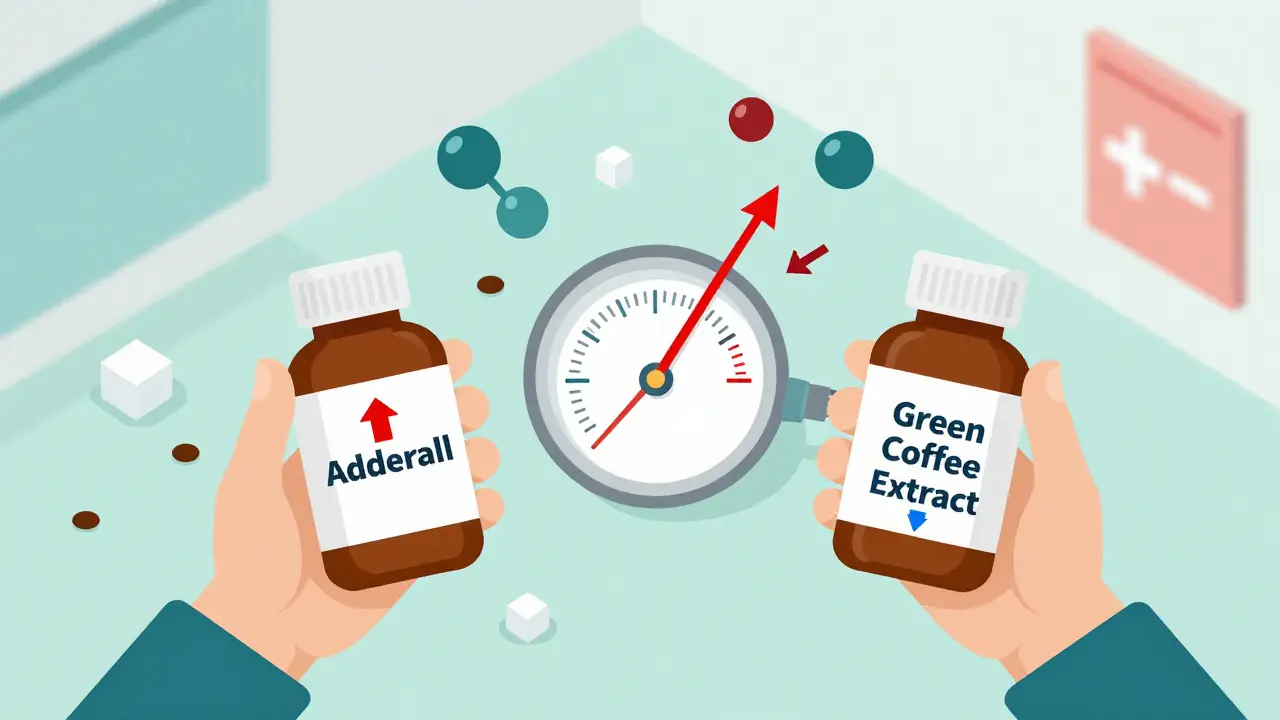
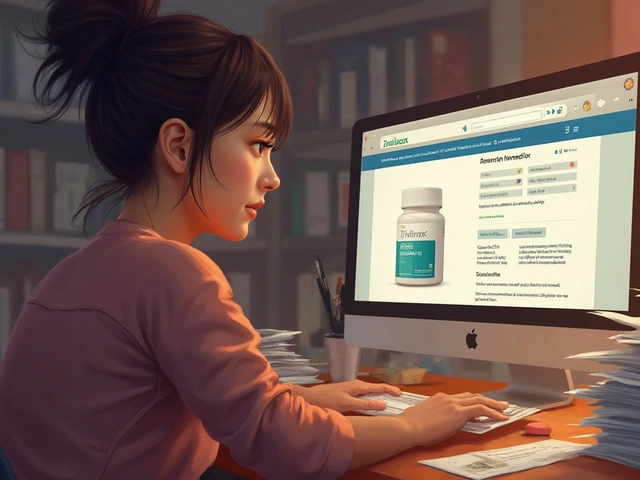
Combining green coffee extract with stimulant medications like Adderall, Vyvanse, or Ritalin isn’t just a harmless mix-it’s a potential recipe for unstable blood pressure. You might think of green coffee extract as just a natural weight loss aid or a healthier caffeine source. But when you’re already taking a prescription stimulant, that supplement can turn into a hidden risk. And most people don’t realize it until their blood pressure starts acting up.
What Exactly Is Green Coffee Extract?
Green coffee extract comes from unroasted coffee beans. Unlike the coffee you drink, which is roasted and loses most of its chlorogenic acids, this supplement keeps them intact. These acids are what make green coffee extract interesting to researchers. They’re not just antioxidants-they actively affect how your body regulates blood pressure.
Studies show chlorogenic acids in green coffee extract can lower blood pressure by blocking an enzyme called ACE, which normally tightens blood vessels. One 2006 study with 117 men with mild high blood pressure found that taking 93 mg or 185 mg of green coffee extract daily lowered systolic pressure by nearly 5 mmHg and diastolic by about 3-4 mmHg. That’s similar to the effect of some low-dose blood pressure medications.
But here’s the twist: green coffee extract also contains caffeine. Most supplements have between 50 and 200 mg per serving-roughly half to two cups of coffee. Caffeine raises blood pressure, at least temporarily. So why does the net effect of green coffee extract go down? Because the chlorogenic acids overpower the caffeine at typical doses. But that balance can shift if you’re already on something else that affects your system.
How Stimulant Medications Affect Blood Pressure
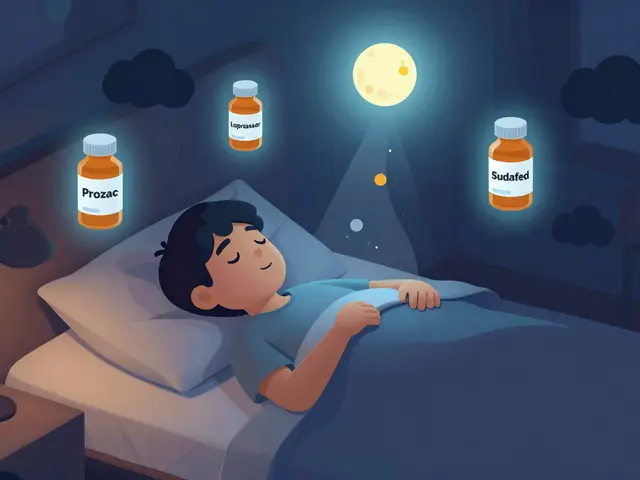
Stimulant medications for ADHD-methylphenidate (Ritalin, Concerta) and amphetamines (Adderall, Vyvanse)-are designed to increase alertness and focus. One unavoidable side effect? They raise your blood pressure. The FDA says these drugs can bump systolic pressure up by 2 to 13 mmHg and diastolic by 1 to 9 mmHg. That might sound small, but for someone already at risk, it’s enough to matter.
The American Heart Association recommends regular blood pressure checks for anyone on these meds. Why? Because even mild, consistent increases can strain your heart and arteries over time. For patients with existing hypertension, heart disease, or a family history of cardiovascular issues, these increases aren’t just inconvenient-they’re dangerous.
And here’s where things get complicated: stimulants don’t just raise blood pressure directly. They also make your body more sensitive to other stimulants. So if you add caffeine-whether from coffee, energy drinks, or supplements-you’re stacking the deck.
The Dangerous Mix: When Green Coffee Extract Meets Stimulants
At first glance, it seems like green coffee extract could help. If stimulants raise blood pressure and green coffee extract lowers it, maybe they cancel each other out. But biology doesn’t work that way.
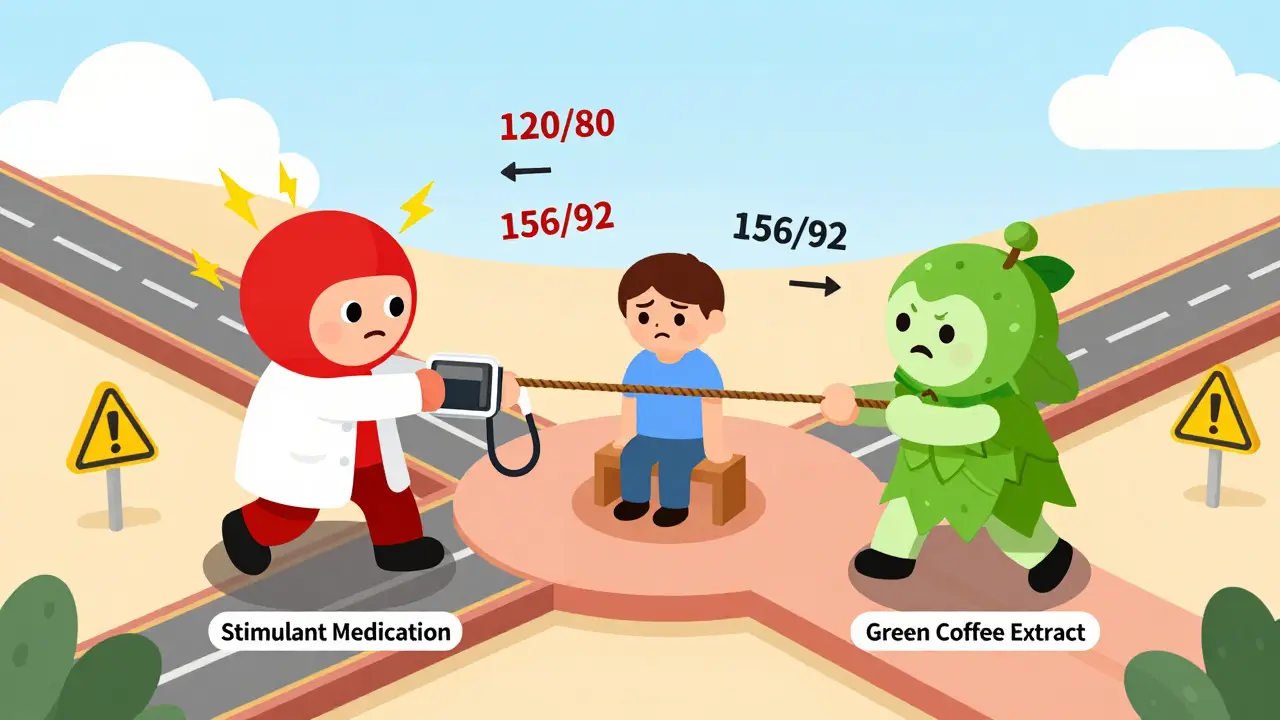
Your body doesn’t see them as opposites. It sees them as two different forces acting on the same system. One drug tightens blood vessels. Another relaxes them. The result? Unpredictable swings. Blood pressure doesn’t stabilize-it fluctuates.
A 2021 case report in the Journal of Clinical Hypertension described a 34-year-old man on Adderall XR who started taking a green coffee extract supplement with 180 mg of caffeine. His systolic pressure jumped from 120 to 156 mmHg within days, then dropped unpredictably. He ended up needing his ADHD medication adjusted just to get his numbers under control.
It’s not just one case. ConsumerLab’s 2023 safety report flagged 17 blood pressure-related adverse events tied to green coffee extract. Nine of those involved people also taking stimulant medications. On Reddit and PatientsLikeMe, users report dizziness, heart palpitations, and sudden spikes after adding green coffee extract to their routine. One user on r/ADHD said their cardiologist told them to stop immediately after seeing their erratic readings.
Why does this happen? It’s not just caffeine. Chlorogenic acids interact with enzymes in your body that regulate stress hormones and blood vessel tone. When you add stimulants on top, you’re creating a tug-of-war between two systems that weren’t designed to work together.
Why Supplements Aren’t Safe Just Because They’re Natural
Many people assume supplements are harmless because they’re “natural.” But green coffee extract is a potent bioactive compound-not a tea. And unlike prescription drugs, it’s not tightly regulated.
ConsumerLab tested 15 popular brands in 2023 and found chlorogenic acid levels ranged from 28.7% to 51.3%. Caffeine content varied from 3.2% to 18.7%. That means two bottles labeled “green coffee extract” could have completely different effects. One might give you 60 mg of caffeine. Another could deliver 190 mg. There’s no way to know unless you test it.
And that’s the problem. You can’t just read the label and assume safety. If you’re on Adderall and take a supplement with 150 mg of caffeine, you’re hitting close to 300 mg of total stimulant load per day. The European Food Safety Authority says that’s the threshold where cardiovascular risks start rising in sensitive people.
What Doctors and Experts Are Saying
Dr. James Lane from Duke University says combining prescription stimulants with green coffee extract creates “unpredictable hemodynamic responses.” That’s medical jargon for: your blood pressure could go wild.
The American Society of Hypertension warned in 2022 that chlorogenic acids can interfere with both stimulants and blood pressure meds. The American College of Cardiology now advises people with heart conditions to avoid green coffee extract entirely if they’re on stimulants.
Pharmacists are catching on too. A 2024 survey of 1,200 pharmacists showed 68% now routinely ask patients about green coffee extract use when dispensing ADHD meds-up from 32% in 2021. The FDA and European Medicines Agency have both added warnings to their databases.
The message is clear: this isn’t theoretical. It’s happening in real patients. And the number of reported cases is rising fast. Between 2020 and 2023, reports to the FDA’s adverse event system involving green coffee extract and blood pressure rose by 217%. Nearly half of those involved stimulant medications.
What Should You Do?
If you’re taking a stimulant medication and considering green coffee extract, stop. Don’t start. If you’re already taking it, don’t quit cold turkey-talk to your doctor.
Here’s what to do next:
- Stop taking green coffee extract. Even if you feel fine, the risk isn’t worth it.
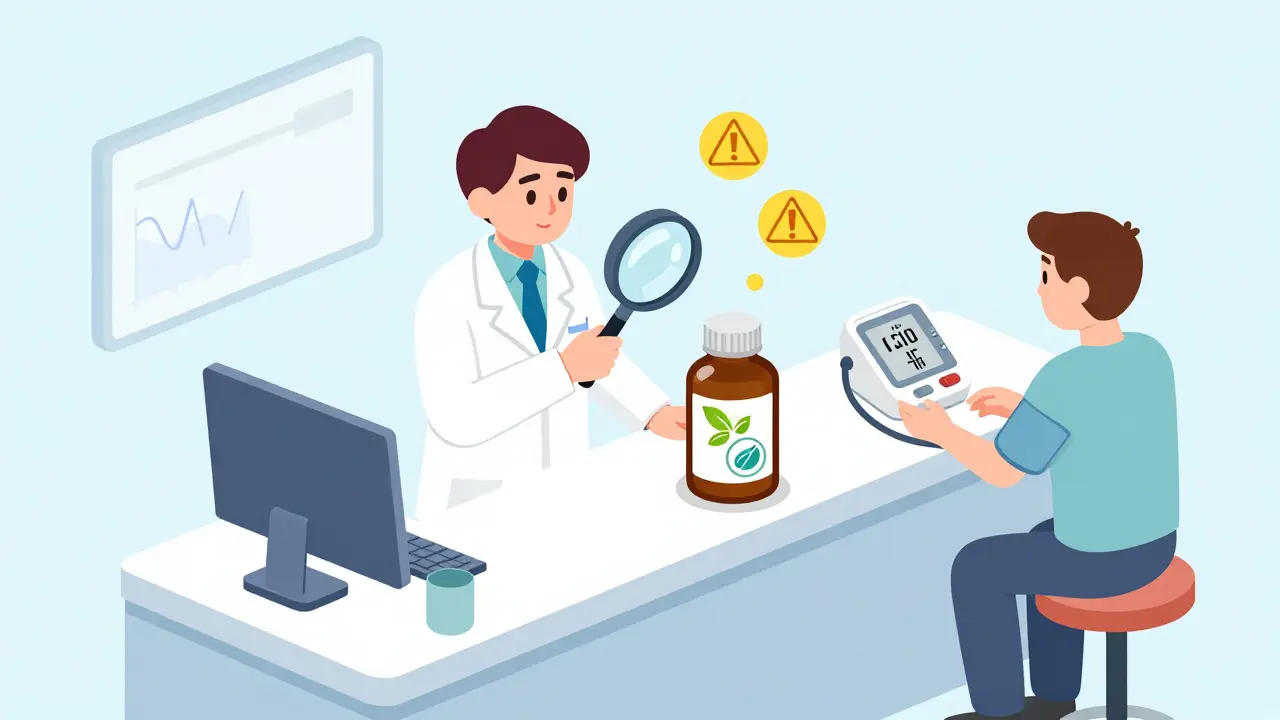
- Track your blood pressure. Use a home monitor for 5-7 days. Write down morning and evening readings. Look for patterns-spikes, drops, or wild swings.
- Bring your log to your doctor. Don’t just say “I took a supplement.” Name it. Show the bottle. Tell them how much you took and for how long.
- Ask about alternatives. If you’re using green coffee extract for weight loss, talk to your doctor about safe, evidence-backed options that won’t interfere with your meds.
For patients who absolutely need both-say, someone with severe ADHD and hypertension who’s trying to manage weight-do not self-manage. Your doctor may recommend twice-daily blood pressure monitoring for at least two weeks after starting or stopping the supplement. The goal? Keep readings below 140/90 and limit daily variation to under 10 mmHg systolic.
The Bottom Line
Green coffee extract isn’t evil. Stimulant medications aren’t evil. But together, they create a risk most people don’t see. You’re not being paranoid if you’re worried. You’re being smart.
There’s no study that says “green coffee extract causes heart attacks when taken with Adderall.” But there are enough real cases, expert warnings, and biological mechanisms to say this: don’t mix them.
If you’re taking stimulant meds, your body is already under extra stress. Adding an unregulated supplement with variable caffeine and active compounds is like driving with one foot on the gas and one on the brake. You might get somewhere-but you won’t get there safely.
Stick to what’s been tested. Stick to what’s prescribed. And if you’re unsure? Ask your doctor before you take another pill.


Comments (10)
Sonal Guha
12 Jan 2026
Green coffee extract is just caffeine with a fancy label and zero regulation
Audu ikhlas
12 Jan 2026
Who the hell lets a supplement like this fly under the radar in America? In Nigeria we know better - if it's not in a pharmacy bottle with a prescription, it's a scam. This is why Westerners keep dying from 'natural' stuff. Chlorogenic acids? Sounds like a PhD made it up to sell more bottles. You're not healing, you're gambling with your heart. And don't tell me 'it's just caffeine' - you think your body doesn't know the difference between a coffee bean and a lab-extracted chemical cocktail? No wonder your hospitals are full.
Sumit Sharma
13 Jan 2026
The pharmacokinetic interaction here is non-trivial: chlorogenic acids inhibit CYP1A2 and UGT1A9, which are responsible for metabolizing amphetamines and methylphenidate. This leads to elevated plasma concentrations of stimulants, amplifying adrenergic receptor stimulation. Combined with caffeine's antagonism of adenosine receptors, you're triggering a sympathetic cascade that elevates peripheral vascular resistance and cardiac output - which explains the BP lability in the case reports. This isn't anecdotal - it's biochemistry. If you're on Vyvanse and taking 'natural' supplements, you're essentially self-administering a variable-dose drug interaction study. Stop. Just stop.
laura manning
14 Jan 2026
It is, without question, a profoundly irresponsible practice - one that is both medically and ethically indefensible - to combine unregulated, unstandardized botanical extracts with prescription psychostimulants. The variability in chlorogenic acid content, coupled with the unpredictable pharmacodynamic effects of caffeine, creates a scenario in which the patient is exposed to a pharmacological roulette wheel. The American College of Cardiology’s advisory is not merely a suggestion - it is a necessary safeguard. Furthermore, the absence of labeling standards in the dietary supplement industry renders informed consent impossible. This is not ‘natural health’ - it is uncontrolled experimentation on human subjects.
TiM Vince
15 Jan 2026
I used to take green coffee extract with my Adderall - thought it was helping me focus and lose weight. Didn't realize my heart was racing at 2 a.m. until my girlfriend said I sounded like a jackhammer. Went to my doc, he asked if I was taking anything else. I said 'just the coffee thing.' He looked at me like I'd just admitted to juggling chainsaws. Cut it out. My BP stabilized in three days. Honestly? I miss the energy boost, but I'd rather not have a stroke at 31.
Alice Elanora Shepherd
16 Jan 2026
Thank you for this. I’m a nurse in Boston, and in the last six months, I’ve seen three patients - all on stimulants - come in with unexplained BP spikes and palpitations. Two were taking green coffee extract. One didn’t even know it had caffeine. The labels say ‘natural,’ so they assume it’s safe. We need better public education - not just warnings on bottles, but clear messaging in pharmacies, on social media, even in ADHD support groups. This isn’t just about individual choices - it’s about systemic failure in health literacy.
Prachi Chauhan
18 Jan 2026
It’s funny how we treat chemicals differently based on where they come from. A pill from a pharmacy? Sacred. A plant extract? 'Natural, so harmless.' But your body doesn’t care if it came from a lab or a forest. It just reacts. Green coffee extract isn’t magic - it’s just another molecule with a story. And when you mix molecules without knowing how they dance together? You’re not being wise. You’re being lucky. So far.
Katherine Carlock
19 Jan 2026
Okay but what if you just take one capsule a week? Like, for weight loss? I know someone who does that and swears they’re fine. Is it still dangerous? Or is it only when you go full supplement mode? Asking for a friend… who is me.
Jay Powers
20 Jan 2026
Hey, I get it - we all want to optimize. I used to stack everything. But this isn’t about willpower or discipline. It’s about your body having a conversation with two strangers who don’t know each other. One says 'go faster.' The other says 'slow down.' And your heart? It’s stuck in the middle. You don’t need to be a scientist to know that’s a bad idea. Just listen to your body. And if it’s screaming, stop listening to the internet. Talk to your doctor. Seriously. They’ve seen this before.
Christina Widodo
22 Jan 2026
Wait - so if green coffee extract lowers BP and stimulants raise it… why doesn’t it just balance out? I feel like I’m missing something. Like, wouldn’t that be a good thing? I’m confused. Can someone explain this like I’m five? (And yes, I took it for a month. Now I’m scared.)