
Opioid Itching vs. Allergy: How to Tell the Difference and What to Do
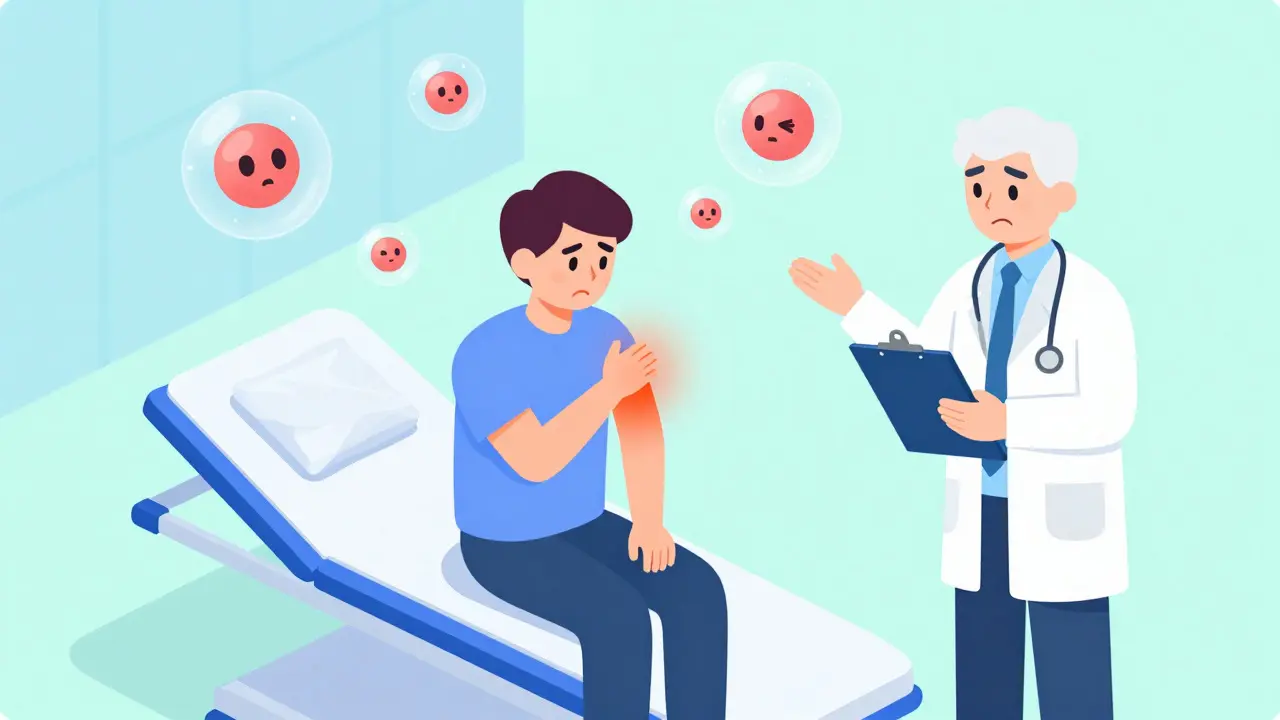
That familiar itch after taking pain medication can be terrifying. You scratch at your skin, panic sets in, and you wonder if this is a life-threatening allergic reaction. Most people assume that any rash or itch means they are "allergic" to the drug. But here is the surprising truth: for most patients, that itchy feeling isn't an allergy at all. It’s a side effect called a pseudoallergic reaction, and treating it like a true allergy could leave you in unnecessary pain.
Mislabeling these reactions restricts your options for effective pain management. Understanding the difference between a harmless (though annoying) side effect and a dangerous immune response is crucial for staying comfortable and safe. Let's break down exactly what is happening in your body, how to spot the red flags, and what steps you can take to manage symptoms without stopping your treatment entirely.
The Quick Truth: Itch Is Usually Not an Allergy
When doctors talk about drug reactions, they separate them into two main buckets: true allergies and pseudoallergies. The distinction matters because one requires avoiding the drug forever, while the other just needs a little tweaking of your dose or a simple antihistamine.
Pseudoallergic reactions are responses that mimic allergies but do not involve the immune system. Instead of your body recognizing the drug as an enemy, the drug directly triggers mast cells in your skin to release histamine. Think of it like spilling water on the floor; the slip hazard exists regardless of whether you intended it. In contrast, a true opioid allergy isa rare immune-mediated response where the body creates antibodies against the drug.
According to data from the Palliative Care Network of Wisconsin, about 70% to 80% of reported "opioid allergies" are actually these pseudoallergic reactions. True IgE-mediated allergies are surprisingly rare, affecting only about 0.1% to 0.3% of patients exposed to opioids. This means if you are experiencing itching, odds are heavily stacked in your favor that you can still use the medication with proper management.
How to Spot the Difference: Symptoms Breakdown
You don't need a lab test to get a good idea of what you are dealing with. The symptoms tell a very different story depending on which mechanism is at play. Pay attention to where the sensation is coming from and what else is happening in your body.
| Feature | Pseudoallergic Reaction (Common) | True Allergic Reaction (Rare) |
|---|---|---|
| Primary Symptom | Itching (pruritus), flushing, sweating | Hives (raised welts), swelling (angioedema) |
| Respiratory Issues | Sneezing, mild wheezing (if asthmatic) | Bronchospasm, difficulty breathing, throat tightness |
| Blood Pressure | Mild drop (often unnoticed) | Severe hypotension (dangerous drop) |
| Timing | Often dose-dependent; worsens with higher doses | Can occur with tiny amounts; rapid onset (minutes) |
| Skin Appearance | Redness, warmth, no raised bumps | Raised hives, maculopapular rash, pustules |
If you have smooth, red skin that feels hot and itchy, especially around your face or chest, you are likely looking at histamine release. If you see raised, bumpy welts (hives) or feel your throat closing up, treat it as a medical emergency. The Mayo Clinic notes that true allergies often involve multiple organ systems simultaneously-skin, lungs, and heart-all reacting at once.
Why Some Opioids Cause More Itching Than Others
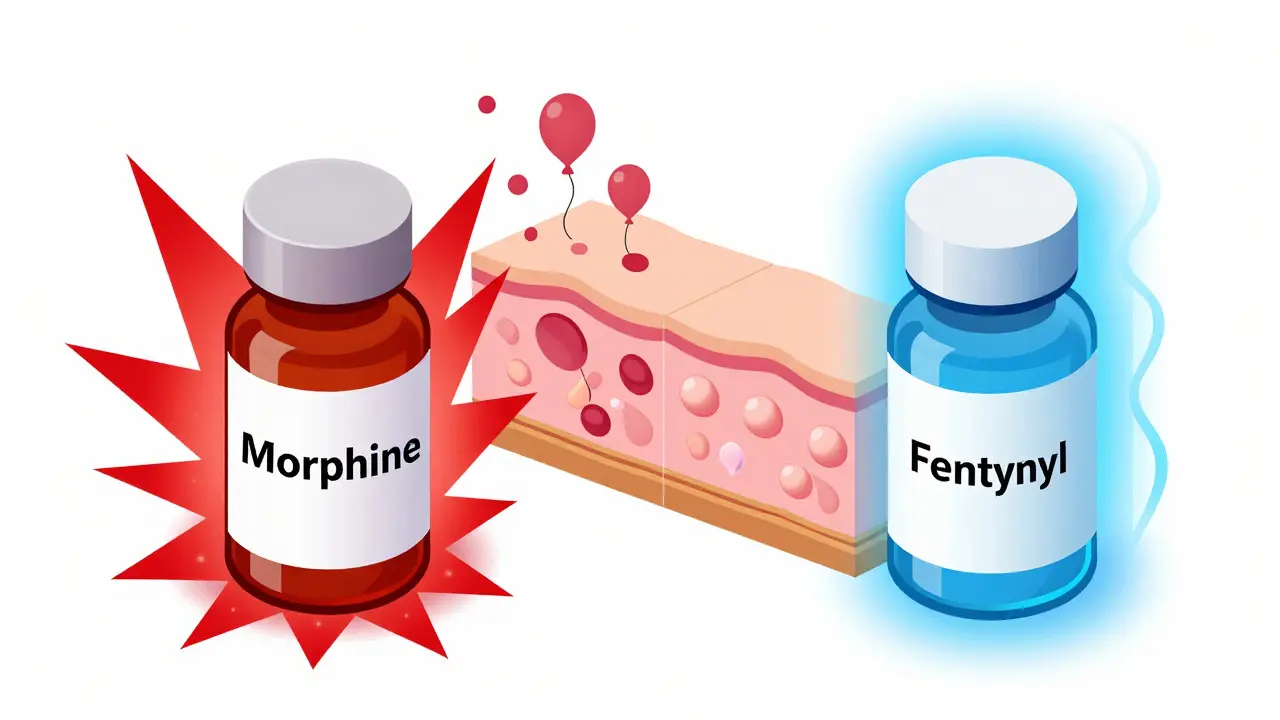
Not all painkillers are created equal when it comes to histamine release. The chemical structure of the opioid determines how likely it is to trigger those mast cells. This is why switching medications can sometimes solve the problem instantly.
Natural opioids like morphine andcodeine are notorious for causing itching. Morphine, in particular, releases significant amounts of histamine at standard doses. Synthetic opioids, however, behave differently. Fentanyl andmethadone rarely cause histamine release because their molecular structure lacks the specific group that triggers mast cell degranulation.
Here is how they compare in terms of risk:
- High Histamine Release: Morphine, Codeine, Meperidine. These phenanthrene-class drugs are more likely to cause flushing and itching, especially when given intravenously or at high doses.
- Low Histamine Release: Fentanyl, Methadone, Oxycodone (to a lesser extent). These are often better tolerated by patients who complain of itching on morphine.
Research published in Anesthesia & Analgesia shows that morphine releases three to four times more histamine than equianalgesic doses of hydromorphone. This doesn't mean morphine is "bad," but it does explain why rotating to fentanyl or methadone can reduce itching incidence from 30-40% down to just 5-10%.
What to Do When the Itching Starts
If you are experiencing mild itching or flushing, don't panic and don't immediately stop your medication. There are several evidence-based strategies to manage this side effect while keeping your pain under control.
- Slow Down the Dose: Pseudoallergic reactions are often concentration-dependent. If you receive IV opioids, ask your nurse to slow the infusion rate. For oral meds, splitting the dose so you take smaller amounts more frequently can help keep histamine levels lower.
- Use Antihistamines: H1 blockers like diphenhydramine (Benadryl) or cetirizine (Zyrtec) can block the effects of the released histamine. Taking an antihistamine 30 minutes before your opioid dose can prevent the itch in 80-90% of cases, according to the American Academy of Family Physicians.
- Cool Compresses: Since the skin is often warm and flushed, cool cloths can soothe the nerve endings and reduce the urge to scratch.
- Rotate Medications: If antihistamines aren't enough, talk to your doctor about switching to a low-histamine opioid like fentanyl or methadone. This is known as "opioid rotation" and is a standard practice in pain management.
For severe cases where you must stay on a specific opioid due to its efficacy, allergists can perform desensitization protocols. This involves giving tiny, increasing doses of the drug over several hours to temporarily "calm" the immune system. Studies show this has a 95% success rate for patients who truly need that specific medication.

When to Seek Emergency Care
While itching is usually benign, you must know the signs of a true allergic reaction, specifically anaphylaxis. This is a life-threatening condition that requires immediate epinephrine and hospital care.
Call emergency services if you experience:
- Trouble breathing, wheezing, or a feeling of tightness in the chest or throat.
- Swelling of the lips, tongue, face, or eyelids (angioedema).
- A sudden, severe drop in blood pressure leading to dizziness, fainting, or confusion.
- Rapidly spreading hives or a blistering rash.
Unlike the gradual onset of histamine itching, true anaphylaxis strikes fast-often within minutes of exposure. If you have a history of severe allergies, always inform your healthcare team before starting any new opioid therapy.
The Hidden Cost of Mislabeling
Why does this distinction matter beyond just comfort? Because labeling yourself as "allergic" to opioids can severely limit your future pain care. Electronic health records often flag these allergies prominently, warning every doctor you see.
A study in JAMA Internal Medicine found that mislabeled allergies cost the healthcare system approximately $1,200 per patient in additional expenses. Why? Because doctors avoid first-line, cheaper, and often more effective opioids out of caution, opting for alternative drugs that might be less effective or come with different side effects. Furthermore, during emergencies-like surgery or trauma-this label can delay critical pain relief while providers scramble to find "safe" alternatives.
If you suspect your "allergy" was just itching, ask your doctor for a formal evaluation. Many patients labeled as allergic can safely tolerate alternative opioids or even the original drug with premedication. Getting this corrected in your medical record is one of the best things you can do for your long-term health.
Is itching from opioids dangerous?
In most cases, no. Itching (pruritus) caused by opioids is usually a pseudoallergic reaction due to histamine release. It is uncomfortable but not life-threatening. However, if the itching is accompanied by hives, swelling, or breathing difficulties, it could be a true allergic reaction requiring immediate medical attention.
Which opioid causes the least itching?
Fentanyl and methadone are associated with the lowest rates of histamine-induced itching. Unlike morphine or codeine, these synthetic opioids do not significantly trigger mast cells to release histamine, making them better options for patients prone to pruritus.
Can I take Benadryl with my pain medication?
Yes, antihistamines like diphenhydramine (Benadryl) are commonly used to manage opioid-induced itching. They block the histamine receptors that cause the itch. However, since both opioids and antihistamines can cause drowsiness, monitor your level of alertness and consult your doctor for appropriate dosing.
How long does opioid itching last?
The duration varies, but itching typically subsides as the drug metabolizes or as your body adjusts to the medication. For many patients, the intensity decreases after a few days of consistent use. If it persists beyond 72 hours or worsens, contact your healthcare provider.
Should I remove the allergy label from my chart?
If you experienced only itching or nausea, yes. Mislabeling can restrict future pain management options. Ask your doctor or an allergist to evaluate your reaction. If it was a pseudoallergy, your chart should reflect "side effect" rather than "allergy" to ensure you receive optimal care in emergencies.


Comments (10)
sonia rockett
14 Aug 2026
OMG thank you for this! I have been terrified to take morphine since my last surgery because of the itching. My doctor just put 'allergy' in my chart and now I'm stuck with weaker meds that don't work. This gives me so much hope that I can actually get proper pain management again. I am going to print this out and show my GP next week. We need more people spreading this info because it is literally life-changing for chronic pain sufferers!
teresa baldini
14 Aug 2026
Oh, please. Do not listen to this medical propaganda. They want you on opioids so they can keep you dependent. The itching is your body trying to tell you something is wrong with the synthetic chemicals they are pumping into you. It is not a "pseudoallergy"; it is your immune system fighting back against the poison. Wake up, sheeple. They are hiding the truth about these drugs. Big Pharma loves when you think it is just an itch so you keep taking it. Think about it. Who benefits from your confusion? Not you.
Usha Ranji
14 Aug 2026
As a nurse who has worked in palliative care for over ten years, I can confirm that this distinction is incredibly important. We see patients every day who are labeled as allergic to all opioids simply because they experienced pruritus or flushing after their first dose of morphine. It is frustrating to watch them suffer through inadequate pain control because of a mislabeled chart entry. Antihistamines like Benadryl are usually very effective in managing the histamine release without stopping the analgesic effect. It is great to see this information being shared clearly.
Garry Hedges
15 Aug 2026
so basically if u dont have hives its fine?? i always thought any reaction was bad. makes sense tho. morphine makes me feel weird anyway. maybe i should try fentanyl next time. thanks for the tip. really helps clear up the confusion. doctors never explain this stuff they just say stop taking it. lazy medicine.
Jamaal Johnson
16 Aug 2026
It is quite fascinating how the chemical structure dictates such specific physiological responses. The difference between phenanthrene derivatives like morphine and phenylpiperidine derivatives like fentanyl is stark regarding mast cell degranulation. One might argue that the medical community has been too quick to pathologize normal histaminergic responses as pathological allergies. This leads to a cascade of suboptimal treatment plans. The data presented here aligns perfectly with pharmacological principles observed in clinical settings for decades.
Ankit Sinha
18 Aug 2026
You people are idiots. Of course it is an allergy. If your body reacts it is an allergy. Stop making excuses for drug addiction. The fact that you are scratching means your skin is rejecting the toxin. Why would anyone want to stay on a drug that makes them itch? It is disgusting. You should be ashamed of yourselves for wanting to stay high instead of getting clean. This article is garbage written by people who don't understand basic biology. True experts know that any adverse reaction is a sign to quit immediately.
Jw George John Warren
19 Aug 2026
Wait wait wait... so you're telling me I could have stayed on morphine all those years ago? 😱 I switched to methadone because of the itch and honestly I hate methadone. It feels like wading through mud. This is tragic. 📉 Everyone needs to read this before they let their doctor change their meds based on a little bit of redness. It's crazy how much misinformation there is out there. Thanks for saving me from future suffering hopefully! 🙏
Rachel Robinson Interiors
20 Aug 2026
This is such a valuable resource for anyone dealing with post-surgical pain or chronic conditions. It is empowering to know that you have options beyond just enduring discomfort or switching to less effective medications. Pre-medicating with an antihistamine is a simple strategy that many patients overlook. Please share this with your healthcare providers to ensure your medical records accurately reflect your history. Accurate documentation saves lives and improves quality of care significantly.
Jesse Barlau
21 Aug 2026
I appreciate the nuanced approach taken in this article, particularly regarding the differentiation between pseudoallergic reactions and true IgE-mediated allergies. It is essential for patients to understand that not every adverse event warrants a permanent exclusion of a therapeutic class. However, one must remain vigilant for signs of anaphylaxis, such as angioedema or respiratory distress, which require immediate intervention. The suggestion to consult an allergist for formal evaluation is prudent and should be encouraged for those with ambiguous histories to prevent unnecessary restrictions on future pain management strategies.
olatunde oluranti
22 Aug 2026
They want you addicted. That is why they call it an itch. If it was real they would stop giving it to you. But no, they want you hooked so you pay forever. The itching is just a trick to make you think you are sensitive but really they are testing you. Keep paying. Keep suffering. It is all part of the plan. Don't trust the doctors. They are paid off. Simple as that. Read between the lines.