
Patent Litigation and Authorized Generics: How They Impact Drug Competition
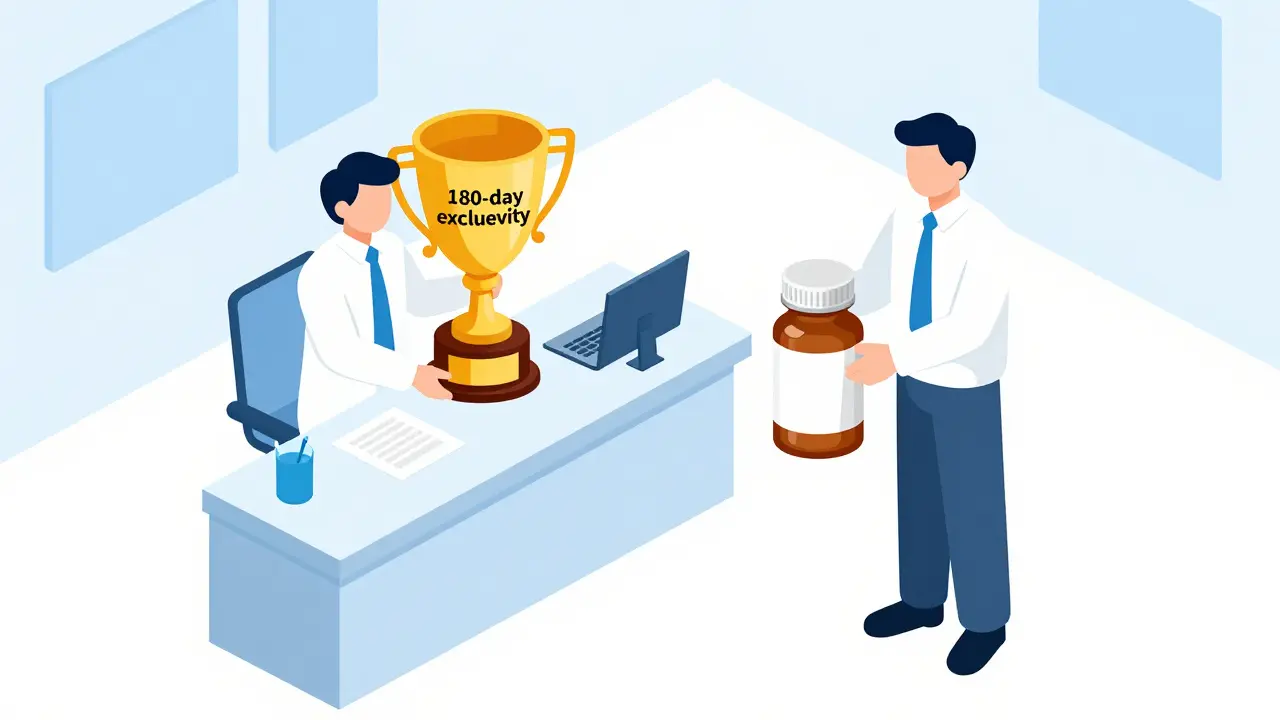
To understand why this happens, we have to look at the Hatch-Waxman Act is a 1984 US law that balances the incentive for pharmaceutical innovation (patents) with the need for affordable generic drugs. Under this framework, the first generic company to successfully challenge a patent through an Abbreviated New Drug Application (ANDA) usually gets 180 days of market exclusivity. This is a massive prize, as it allows them to capture the bulk of the generic market before anyone else can enter. But here is the catch: the FDA has ruled that the brand-name company can launch its own version of the drug-an authorized generic-even during that 180-day window.
What Exactly is an Authorized Generic?
An Authorized Generic is a version of a brand-name drug that is marketed as a generic, produced by the original manufacturer or a licensed partner. Unlike a traditional generic, which must prove bioequivalence through new studies, an authorized generic is the exact same product as the brand, just with a different label and a lower price tag. Because it's the original product, it doesn't need a separate FDA approval process; it just needs a supplemental application. This allows branded companies to move incredibly fast, often launching their version within a week of a court ruling that strikes down their patent.
How Authorized Generics Mess with the Competition
When a brand-name company drops an authorized generic into the mix, it fundamentally changes the math for the independent generic firm. Instead of the first-filer capturing 80-90% of the generic market, they might see their share plummet. Data from the Federal Trade Commission (FTC) shows that authorized generics typically grab 25-35% of the market during that critical exclusivity period. This isn't just a small dip; it's a revenue hit. In some cases, the first-filer's revenues can drop by 40% to 52% because the brand-name company is effectively competing against itself to keep the generic challenger from making too much money.
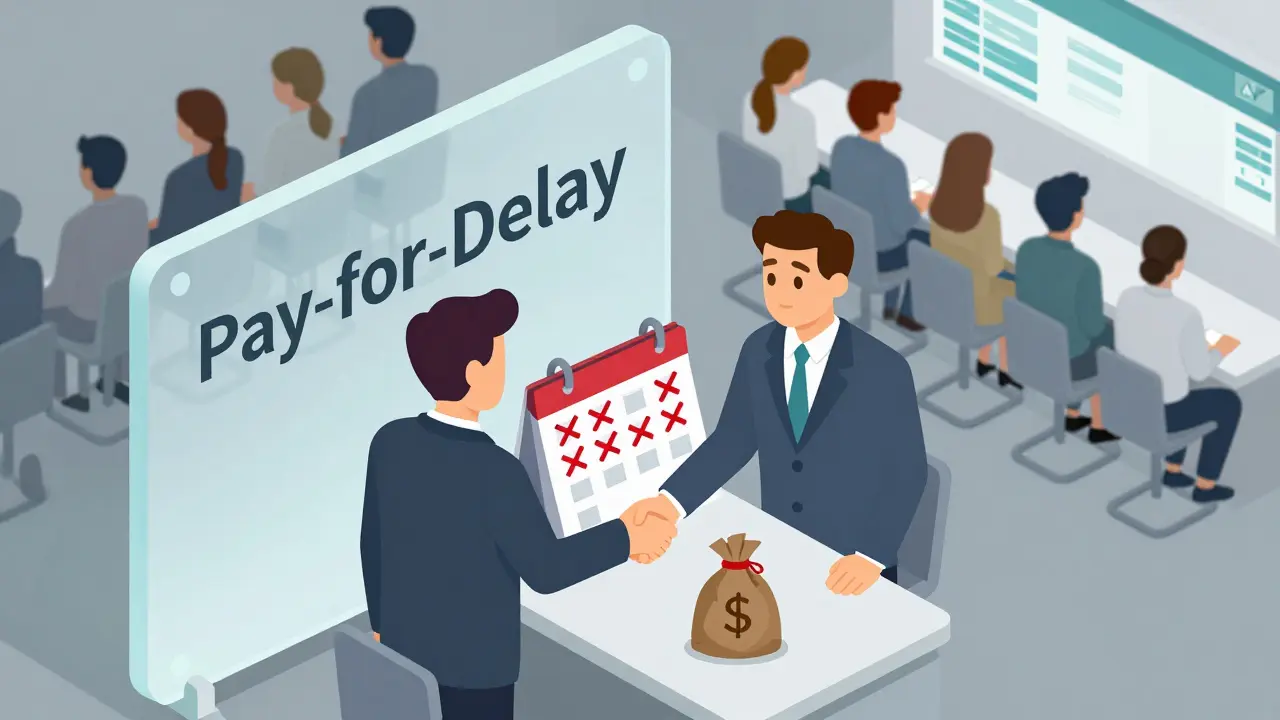
The pricing strategy here is also fascinating. Authorized generics usually don't drop to the rock-bottom prices that independent generics do. Instead, they create a middle tier. They might price the drug 15-20% below the brand but 25-30% above the true generic. This segments the market: people who want the "brand quality" but can't afford the full price go for the authorized generic, while the most price-sensitive patients go for the independent generic.
| Feature | First-Filer Generic | Authorized Generic | Brand-Name Drug |
|---|---|---|---|
| Regulatory Path | Full ANDA Process | Supplemental Application | Original NDA |
| FDA Approval Required? | Yes (Bioequivalence) | No (Identical Product) | Yes (Full Clinicals) |
| Typical Pricing | Lowest | Mid-Tier | Highest |
| Exclusivity Impact | Lost 40-52% Revenue | Captures 25-35% Share | Maintains Brand Presence |
The Dark Side: "Pay-for-Delay" and Patent Settlements
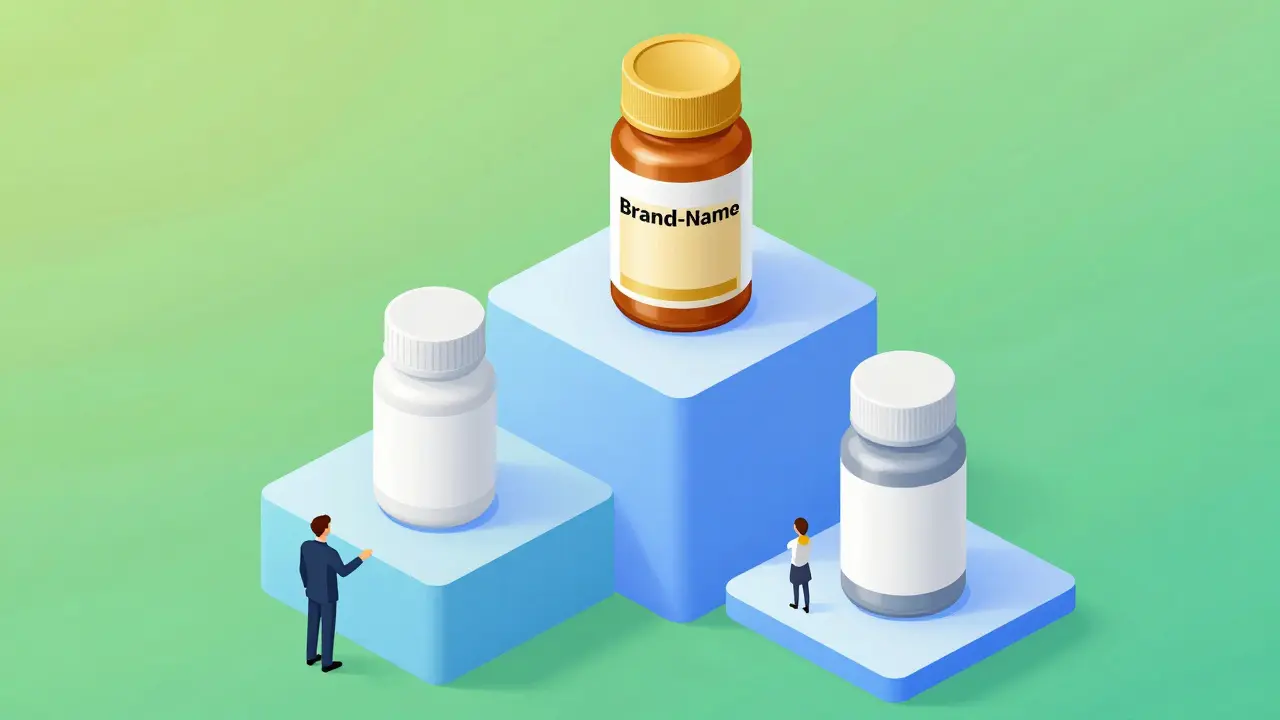
The most controversial part of this dynamic happens behind closed doors during patent litigation. When a brand company and a generic company are fighting in court, they often settle. Sometimes, these settlements include a "reverse payment" or a specific agreement where the brand company promises not to launch an authorized generic if the generic company agrees to stay off the market for a few more years. This is essentially a bribe to delay competition.
Between 2004 and 2010, about 25% of patent settlements for high-value drugs included these types of deals. By agreeing not to launch an authorized generic, the brand company gives the generic firm a guarantee of high profits during their 180-day window in exchange for pushing back the date the generic hits the shelves. On average, these deals delayed drug availability by nearly 38 months. The FTC views this as a direct attack on competition, as it keeps drug prices artificially high for consumers far longer than the law intended.
Does This Stop Companies from Challenging Patents?
You might think that if brand companies can just launch an authorized generic and eat into the profits, generic firms would stop challenging patents altogether. But the reality is more nuanced. For "blockbuster" drugs-the ones making billions-the potential reward is still so high that the risk of an authorized generic is just a cost of doing business. The generic firm might make less, but they still make a lot.
However, for smaller drugs (those with annual sales between $12 million and $27 million), the authorized generic threat is a real deterrent. In these cases, the cost of the legal battle might outweigh the reduced profits, meaning some patents that *should* be challenged never are. This creates a gap where niche but necessary medications stay expensive because the "prize" for the generic challenger isn't big enough to justify the risk.
The Current Regulatory Climate and Future Trends
Regulators aren't sitting idly by. The Association for Accessible Medicines (formerly GPhA) has fought hard to protect the 180-day exclusivity period, arguing that authorized generics undermine the very incentive that drives generic companies to fight patents. More recently, the FTC has stepped up its game, launching numerous investigations into anti-competitive authorized generic arrangements. They are specifically targeting agreements that delay entry, viewing them as a way to circumvent the Hatch-Waxman Act.
Interestingly, the trend seems to be shifting. Recent data suggests that authorized generics are becoming less common following patent settlements. In 2010, they were present in about 42% of relevant markets; by 2022, that number dropped to 28%. This likely reflects a combination of increased regulatory pressure and a shift in how companies manage their product lifecycles. Instead of fighting in the generic space, some are moving toward biosimilars or updated formulations to maintain their edge.
Do authorized generics lower the price for the consumer?
Yes, usually. Because they are priced lower than the brand-name drug, they provide a cheaper alternative. Some research suggests that on-invoice prices for pharmacies can be 13-18% lower when an authorized generic is available. However, they are typically more expensive than independent generics.
Why doesn't the FDA ban authorized generics during the 180-day exclusivity period?
The FDA's position is that the Hatch-Waxman Act does not explicitly prohibit the original manufacturer from selling its own product under a different label. Since the law is silent on this specific point, the FDA allows it, and courts have generally upheld this interpretation.
How do authorized generics differ from regular generics?
A regular generic is made by a different company that must prove the drug works the same way as the brand. An authorized generic is the brand-name drug itself, produced by the original company but sold without the brand name. No new bioequivalence studies are needed because the product is identical.
What is a "pay-for-delay" agreement?
This is a settlement where a brand-name company pays a generic company (or gives them a benefit, like promising not to launch an authorized generic) to delay the generic's entry into the market. This keeps the brand's monopoly intact for longer.
Are authorized generics becoming more or less common?
They appear to be becoming less common. Data shows a decline from about 42% of relevant markets in 2010 down to 28% in 2022, likely due to increased scrutiny from the FTC and changing corporate strategies.
What This Means for the Future
As we look toward 2028, authorized generics will likely remain a part of the landscape, but the "wild west" era of secret settlements is closing. With the Preserve Access to Affordable Generics and Biosimilars Act and other legislative efforts aiming to curb anti-competitive deals, the industry is being forced toward more transparent competition. For the consumer, this ideally means more choices and faster price drops. For the generic companies, it means they can't rely solely on the 180-day window to make all their money-they have to build sustainable, long-term manufacturing advantages to survive the brand's counter-attacks.

Comments (9)
Srikanth Makineni
7 Apr 2026
system is rigged
Brady Davis
7 Apr 2026
Oh, absolutely wonderful. So the solution to expensive drugs is just to have the same company sell the same drug with a different sticker? Truly a masterclass in corporate generosity. I'm sure the patients are just thrilled to be pawns in this high-stakes game of 'how much can we squeeze out of the middle class' before the generic finally hits rock bottom. Truly heartwarming stuff.
Windy Phillips
9 Apr 2026
It is simply exhausting... truly... to see how the legal system permits such blatant manipulation of the public's health!!! The sheer audacity of these corporations to hide behind a 1984 law, while they systematically drain the resources of smaller competitors, is almost too much to bear... One must wonder if anyone in the FDA actually possesses a moral compass, or if they are all just comfortably asleep at the wheel!!!
Timothy Burroughs
11 Apr 2026
typical american capitalism at its finest we make the rules and we win the game those generic companies should just get used to how things work in the us if you cant handle the heat get out of the pharma kitchen
Jitesh Mohun
13 Apr 2026
pay for delay is straight up robbery man why the hell are we letting these companies bribe each other to keep prices high its a joke and the regulators are too slow to do anything about it we need to tear down these settlement loopholes now
Jay Vernon
13 Apr 2026
This is a lot of hard words but it sounds like a big mess! 😵 Hope things get better for people who need meds 💊🙏
Ruth Swansburg
13 Apr 2026
We must remain positive! The decline in authorized generics since 2010 shows that progress is being made. Let us support the legislators fighting for transparency. Every small step leads to a healthier future for all patients.
Nikhil Bhatia
14 Apr 2026
Too long didn't read. Basically just says pharma companies are greedy. Groundbreaking stuff.
Dhriti Chhabra
15 Apr 2026
It is perhaps beneficial to consider that while these strategies are regrettable, the existence of any lower-cost alternative, even an authorized one, provides some immediate relief to those in financial distress. We should strive for a balance where innovation is rewarded but accessibility is never sacrificed for profit.