
PPIs and Blood Thinners: How to Prevent GI Bleeding on DAPT
PPI Compatibility & GI Risk Checker
Your Medication Profile
Do you have any of these risk factors?
Recommendations
Recommended PPI Choice
GI Bleeding Risk Level
You have some risk factors. Consult your doctor about starting a PPI immediately upon starting DAPT.
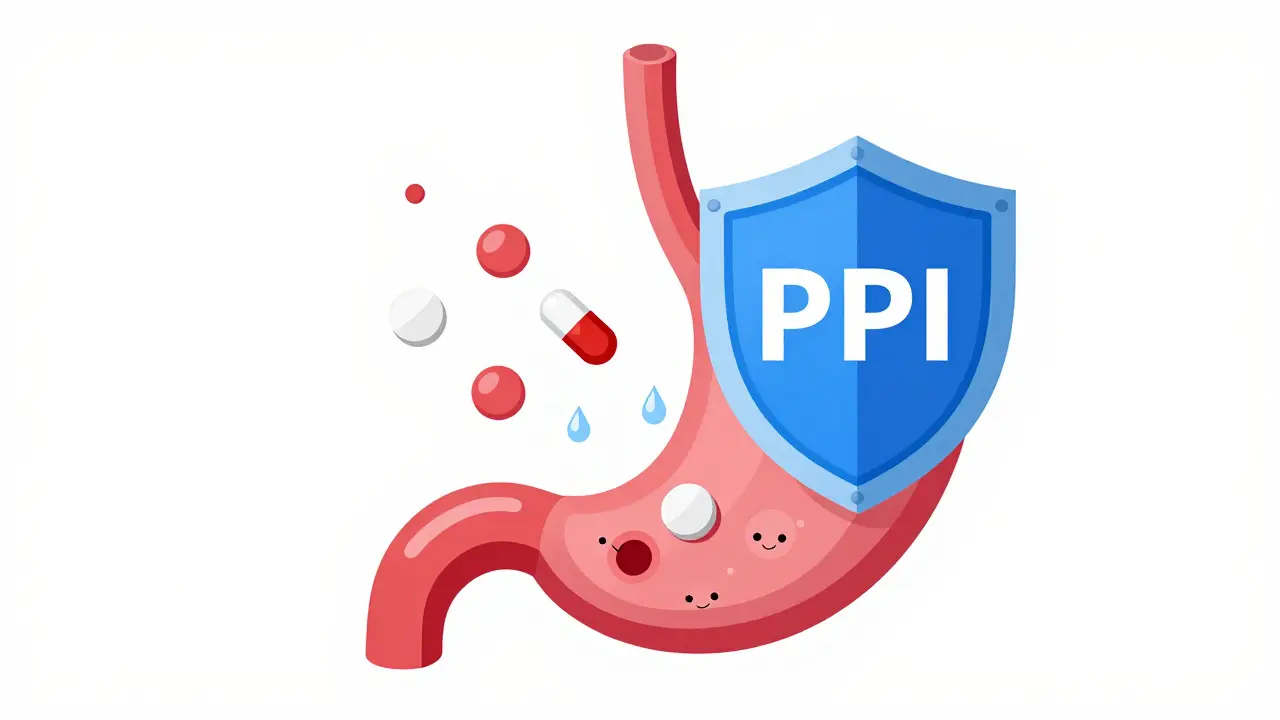
You are taking blood thinners to protect your heart or brain. But those same medications put you at serious risk for stomach bleeding. It is a dangerous trade-off. For decades, doctors prescribed proton pump inhibitors (PPIs) alongside these drugs to keep the stomach safe. The goal was simple: stop the acid so the blood thinner does not erode the stomach lining. Recent studies confirm this strategy works. However, not all PPIs are created equal when you are on specific blood thinners. Choosing the wrong one can weaken the medicine protecting your heart.
This guide breaks down exactly which PPIs work best with which blood thinners. We will look at the data behind the recommendations, explain why some combinations are risky, and give you a clear plan to discuss with your doctor. Your safety depends on getting both the protection from bleeding and the protection from clots right.
Why Blood Thinners Cause Stomach Bleeding
Dual antiplatelet therapy (DAPT) is the standard treatment after a heart attack, stent placement, or stroke. It usually involves two drugs: aspirin and a P2Y12 inhibitor like clopidogrel, prasugrel, or ticagrelor. These drugs stop platelets in your blood from sticking together. This prevents clots that could block an artery and cause another heart attack.
The problem is that platelets also help heal small injuries in your stomach. When you take aspirin, it irritates the stomach lining directly. At the same time, the other blood thinner stops the body from repairing that irritation. According to clinical data, DAPT increases the risk of upper gastrointestinal bleeding (UGIB) by 30% to 50% within the first month. Aspirin alone raises the risk two to four times compared to doing nothing. Most of these bleeds happen early, with 75% occurring in the first 30 days of starting the medication.
A UGIB event is not just a minor upset stomach. It can be life-threatening. It often requires hospitalization, blood transfusions, and sometimes emergency surgery. This is where gastroprotective agents come in. They do not stop the blood thinner from working in the blood vessels. Instead, they reduce the amount of acid in the stomach. Less acid means less damage to the stomach lining if a bleed starts.
Do PPIs Actually Work?
Yes, the evidence is strong. A landmark study called the COGENT trial, published in JAMA, looked at patients taking clopidogrel and aspirin. Those who also took a PPI had a 34% lower risk of any gastrointestinal bleeding. More importantly, they had a 13% lower risk of overt upper GI bleeding. To put that in perspective, you need to treat about 71 patients with a PPI to prevent one major GI event over six months.
More recent data supports this. A 2025 study from Korea involving nearly 97,000 stroke patients found that PPI use reduced the risk of significant UGIB by 37%. The benefit holds true regardless of whether the patient takes a low dose (81 mg) or high dose (325 mg) of aspirin. The consensus among major guidelines, including the 2023 European Society of Cardiology (ESC) guidelines, is that PPIs should be used for patients at high risk of GI bleeding. This includes anyone over 65, anyone with a history of GI bleeding, or anyone taking other medications like NSAIDs or steroids.
The Clopidogrel Interaction Problem
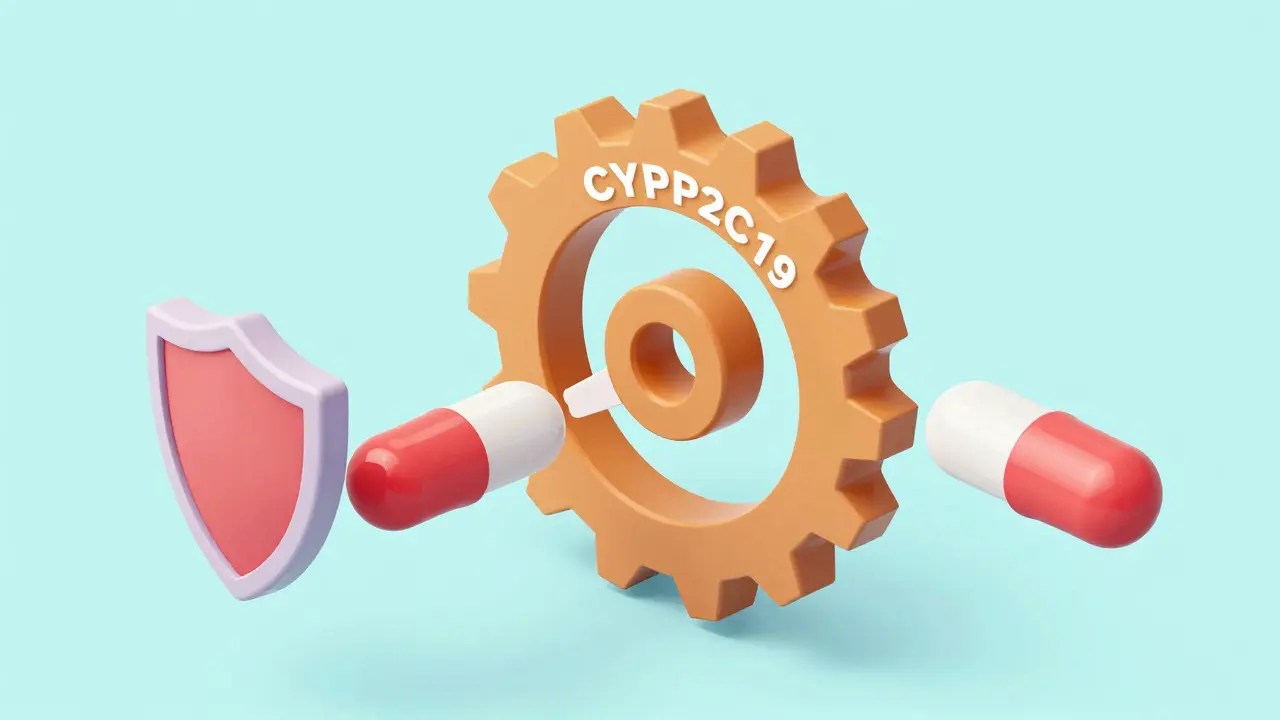
Here is where it gets tricky. Not all PPIs interact with blood thinners the same way. The issue centers on clopidogrel (often sold as Plavix). Clopidogrel is a prodrug, meaning your liver must convert it into its active form for it to work. An enzyme in the liver called CYP2C19 does this conversion.
Some PPIs block this same enzyme. If you take a PPI that blocks CYP2C19, your liver cannot convert clopidogrel as efficiently. This means less active drug in your system, which means higher risk of a clot or stent failure. Omeprazole (Prilosec) is the worst offender here. Studies show it can reduce clopidogrel's antiplatelet activity by up to 30%. One meta-analysis linked this interaction to a 27% increase in cardiovascular events. Because of this, many experts advise against using omeprazole with clopidogrel.
Esomeprazole (Nexium) also has some interaction potential, though less than omeprazole. It reduces clopidogrel efficacy by less than 15%, but caution is still advised. The safest bet with clopidogrel is pantoprazole (Protonix). Pantoprazole has minimal effect on CYP2C19. It provides the same stomach protection without interfering with the blood thinner. In fact, pantoprazole accounts for 35% of cardiovascular PPI prescriptions specifically because of this favorable profile.
PPIs vs. H2 Blockers: Which Is Better?
You might have heard of H2 blockers like famotidine (Pepcid) or ranitidine (Zantac). They are cheaper and available over the counter. Can you use them instead? You can, but they are not as effective. A 2017 meta-analysis in JAMA Internal Medicine compared PPIs and H2 blockers. PPIs reduced the risk of UGIB by 60%. H2 blockers only reduced it by 30%. The absolute risk difference matters here. PPIs prevented 1.8% more bleeds than H2 blockers did. Given that GI bleeds on DAPT are severe, most cardiologists prefer the stronger protection of a PPI for high-risk patients.
Choosing the Right PPI for Your Regimen
Your choice of PPI depends heavily on which second blood thinner you are taking. Here is how to break it down:
| Blood Thinner Combination | Preferred PPI | PPI to Avoid/Caution | Reason |
|---|---|---|---|
| Aspirin + Clopidogrel | Pantoprazole | Omeprazole | Omeprazole blocks CYP2C19, reducing clopidogrel effectiveness. |
| Aspirin + Ticagrelor | Esomeprazole or Pantoprazole | None specific | Ticagrelor is not metabolized by CYP2C19, so no major PPI interactions. |
| Aspirin + Prasugrel | Esomeprazole or Pantoprazole | None specific | Prasugrel is not metabolized by CYP2C19, so no major PPI interactions. |
If you are on ticagrelor (Brilinta) or prasugrel (Effient), you have more freedom. These drugs do not rely on the CYP2C19 enzyme. Therefore, omeprazole, esomeprazole, and pantoprazole are all safe choices regarding drug interactions. However, pantoprazole remains a top choice simply because it is well-tolerated and widely studied.
Risks of Overusing PPIs
While PPIs save lives by preventing bleeds, they are not harmless. Long-term use carries risks. The FDA has issued warnings about increased fracture risk with long-term, high-dose use. There is also a small but real increase in the risk of Clostridium difficile infection (about 0.5% absolute increase) and community-acquired pneumonia (0.8% increase). Some studies have hinted at links to chronic kidney disease and even dementia, though recent Mendelian randomization studies in 2025 suggest the dementia link may not be causal.
The bigger issue today is overprescribing. A 2022 study found that 35% to 45% of low-risk DAPT patients were prescribed PPIs unnecessarily. Low-risk patients are those under 65, with no history of ulcers, and not taking NSAIDs. For these people, the side effects of the PPI might outweigh the tiny benefit. Doctors should use risk scores like the AIMS65 score to decide who really needs the PPI. If you have two or more risk factors (age >65, prior bleed, anticoagulant use, steroid/NSAID use), you likely need it. If you have none, ask your doctor if you can skip it.
Timing and Duration Matters
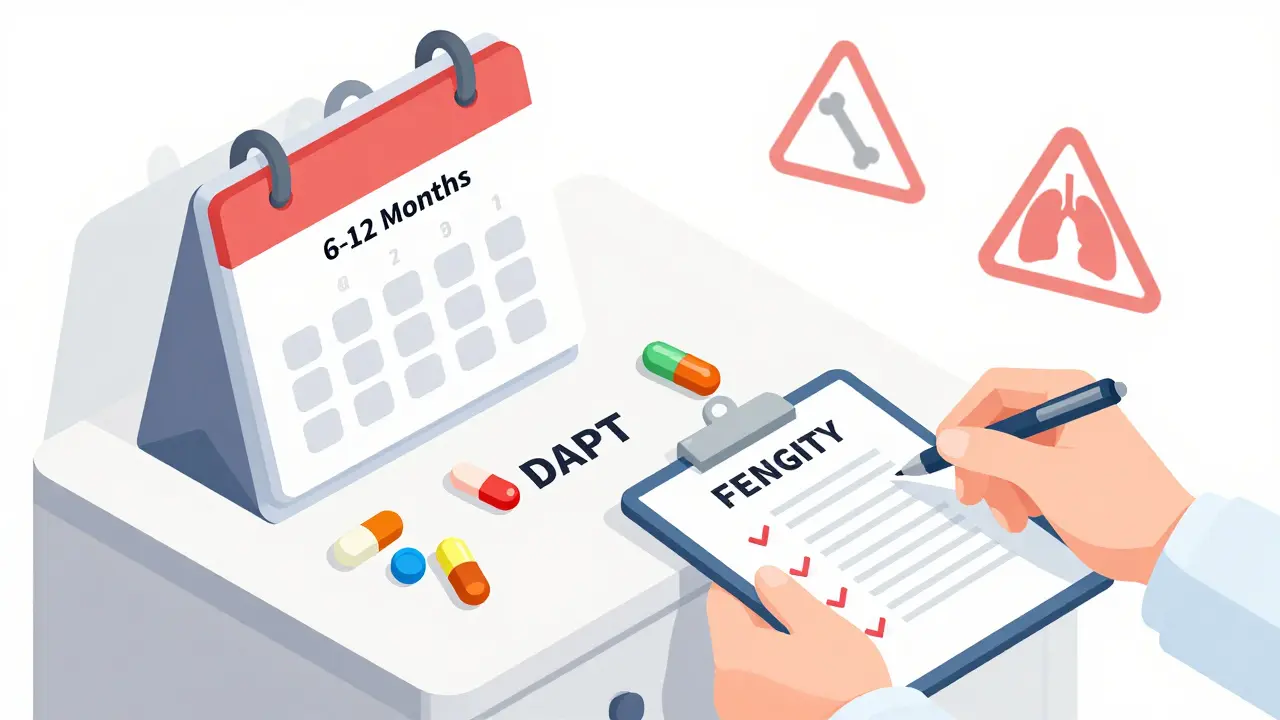
When should you start the PPI? Ideally, at the same time you start the DAPT. Since 75% of bleeds happen in the first 30 days, waiting until you feel symptoms is too late. The damage is already done. Most guidelines recommend continuing the PPI for the duration of the DAPT therapy. For many patients, this is 6 to 12 months after a stent. Newer research suggests some high-risk patients may stay on DAPT for up to 36 months, which would mean a year or more of PPI use. This requires careful monitoring for the long-term side effects mentioned above.
Stopping the PPI abruptly can cause rebound acid secretion. If you have been on a PPI for months, do not just quit cold turkey. Work with your doctor to taper off or switch to an H2 blocker temporarily if appropriate.
What About Newer Options?
The landscape is changing. A new class of drugs called potassium-competitive acid blockers (P-CABs) is emerging. Vonoprazan is one such drug currently in trials. It suppresses acid faster and lasts longer than PPIs. Crucially, it does not interact with CYP2C19. Early phase III trials show it is non-inferior to esomeprazole for GI protection. If approved, vonoprazan could become the go-to choice for patients on clopidogrel who struggle with PPI side effects or interactions. Keep an eye on this development in the coming years.
Action Plan for Patients
So, what should you do right now? First, check your prescription bottle. Are you on clopidogrel? Are you on omeprazole? If yes, call your pharmacist or doctor. Ask if switching to pantoprazole is safer for your heart health. Second, assess your risk. Are you over 65? Did you ever have a stomach ulcer? If yes, ensure you are taking a PPI every day. Do not skip doses. Consistency is key to keeping acid levels down. Third, watch for warning signs. Black, tarry stools or vomiting blood are emergencies. Go to the ER immediately. Do not wait. Finally, review your need for the PPI annually. If your DAPT course is ending, ask if you can stop the PPI. You may not need it forever.
Can I take omeprazole with clopidogrel?
It is generally recommended to avoid omeprazole with clopidogrel. Omeprazole inhibits the CYP2C19 enzyme, which is needed to activate clopidogrel. This interaction can reduce the effectiveness of the blood thinner by up to 30%, increasing your risk of heart attack or stroke. Pantoprazole is a safer alternative that does not interfere with clopidogrel metabolism.
How long do I need to take a PPI with blood thinners?
You typically need to take a PPI for the entire duration of your dual antiplatelet therapy (DAPT). This is often 6 to 12 months after a stent placement or heart attack. Some high-risk patients may stay on DAPT for up to 36 months, requiring longer PPI use. Always consult your cardiologist before stopping, as abrupt cessation can lead to rebound acid issues or unprotected GI risk.
Is pantoprazole better than omeprazole for heart patients?
For patients taking clopidogrel, yes. Pantoprazole has minimal interaction with the CYP2C19 enzyme, preserving the effectiveness of clopidogrel. Omeprazole significantly blocks this enzyme. For patients on ticagrelor or prasugrel, both are safe, but pantoprazole is often preferred due to its well-established safety profile in cardiovascular settings.
What are the side effects of long-term PPI use?
Long-term PPI use can increase the risk of fractures, Clostridium difficile infection, community-acquired pneumonia, and possibly chronic kidney disease. There have been concerns about dementia, but recent studies suggest this link may not be causal. Because of these risks, PPIs should only be used if you are at high risk for GI bleeding, not routinely for everyone on blood thinners.
Can I use an H2 blocker like famotidine instead?
H2 blockers are less effective than PPIs at preventing GI bleeding on DAPT. Studies show PPIs reduce bleeding risk by 60%, while H2 blockers reduce it by only 30%. For high-risk patients, PPIs are the standard of care. H2 blockers might be considered for low-risk patients who cannot tolerate PPIs, but this decision should be made by your doctor.


Comments (13)
Dana Ellington
20 May 2026
OMG this is so important!! i just found out my dad needs to take plavix after his stent and he was already on prilosec for his heartburn. i had no idea that could be dangerous?? 😱 thanks for sharing this info, it saved us from a huge mistake. everyone should read this before they go to the pharmacy.
Yuvraj Singh
22 May 2026
Great summary of the current guidelines. The interaction between omeprazole and clopidogrel via CYP2C19 inhibition is well-documented in pharmacokinetic studies. It is crucial for patients to understand that while PPIs are necessary for GI protection in high-risk DAPT patients, the choice of agent matters significantly. Pantoprazole or rabeprazole are generally preferred due to their minimal impact on hepatic enzymes. I often see patients switching without consulting their cardiologist, which can lead to confusion about efficacy. Always coordinate with your healthcare team.
Jeremiah Cassandra
23 May 2026
Oh, brilliant. Another 'miracle' drug interaction discovered by people who think biology is just a simple puzzle box 🙄. So let me get this straight, you're telling millions of people to panic because their stomach acid might interfere with a blood thinner? Groundbreaking stuff. Meanwhile, the real issue is that we pump these chemicals into people until they explode. But sure, switch to pantoprazole and live forever. Right. 🤡
Danny S
24 May 2026
The pharmaceutical industry wants you to believe you need a different pill for every other pill you take. It is a control mechanism. They want you dependent on their supply chain. Do not trust the doctors who push these combinations. They are paid off by Big Pharma. Wake up sheeple. The natural way is to eat clean and avoid hospitals altogether. These interactions are fabricated to sell more prescriptions. :)
Kris Wong
26 May 2026
🚨 RED FLAG ALERT 🚨 This post is exactly what the medical industrial complex wants you to think. They create problems to sell solutions. You think pantoprazole is safe? Check the side effects of long-term use. They are hiding the truth about how these drugs affect your microbiome and immune system. It is all part of a grand experiment. Don't fall for it. 🧠💊
Javier Arauz
27 May 2026
This is typical American over-medication. In other countries, people don't have time for this nonsense. We work hard and we stay healthy naturally. You guys are soft for needing pills just to swallow other pills. Keep buying your government's poison and wonder why you are sick. Pathetic.
Tanya KLIMCHUK Klimchuk
28 May 2026
Listen to me carefully. If you are on clopidogrel and taking omeprazole, you are literally throwing money away and risking your life. It is that simple. Stop making excuses. Go to your doctor today and demand pantoprazole. Do not wait. Do not hesitate. Your health is your responsibility, not your doctor's. Get it together.
charles robert
28 May 2026
The duality of man is reflected in the duality of antiplatelet therapy. We seek to preserve the flow of life, yet we must inhibit the very mechanisms that sustain our structural integrity. It is a philosophical paradox wrapped in a chemical compound. To bleed or to clot, that is the question. But really, it is about control. Who controls the enzyme? The liver, or the corporation that patents the inhibitor? 🌑💊 The abyss stares back through the prescription bottle.
Anthony Red
29 May 2026
I mean, it makes sense if you think about it. Liver enzymes are busy bodies. If one drug blocks the door, the other can't get in. Simple logic. I switched to pantoprazole last year when my cardiologist mentioned it. No issues since then. Just another day in the grind. Hope everyone stays safe out there. 🎸
Warren Brewer
31 May 2026
This helps a lot. My mom is old and takes lots of meds. She gets confused sometimes. I will print this out and put it on her fridge. Thank you for writing it so clearly. It is scary to think about bleeding inside but good to know there is a safer pill.
Kathryn Byrd
1 Jun 2026
In Japan, the approach to dual antiplatelet therapy often involves careful monitoring of hemoglobin levels rather than universal PPI prophylaxis, although guidelines are shifting. The cultural emphasis on dietary modification to reduce gastric irritation is notable. However, the pharmacological interaction remains a global concern regardless of regional practices. It is interesting to observe how different healthcare systems prioritize risk mitigation strategies.
Desirea Gaona
2 Jun 2026
It is imperative that we consider the holistic well-being of the patient when discussing such critical medication regimens. The information provided herein is of utmost importance for individuals navigating the complexities of cardiovascular health. One must ensure that all stakeholders, including pharmacists and primary care providers, are aligned in their understanding of these interactions. Let us foster an environment where open dialogue regarding medication safety is encouraged and prioritized. The potential consequences of improper drug combinations cannot be overstated, and thus, vigilance is required at every step of the therapeutic journey.
Mark Ronson
4 Jun 2026
I totally agree with the points made here. As someone who works in pharma, I see this all the time. People dont realize how big of a deal the CYP2C19 thing is. Its not just a small interaction. It can really mess up how well the blood thinner works. I always tell my colleagues to check for this. Also, dont forget about the rebound acid effect if you stop suddenly. Its a real pain. Thanks for posting this helpful info! 👍