
Tinnitus: Ringing in the Ears and Management Strategies
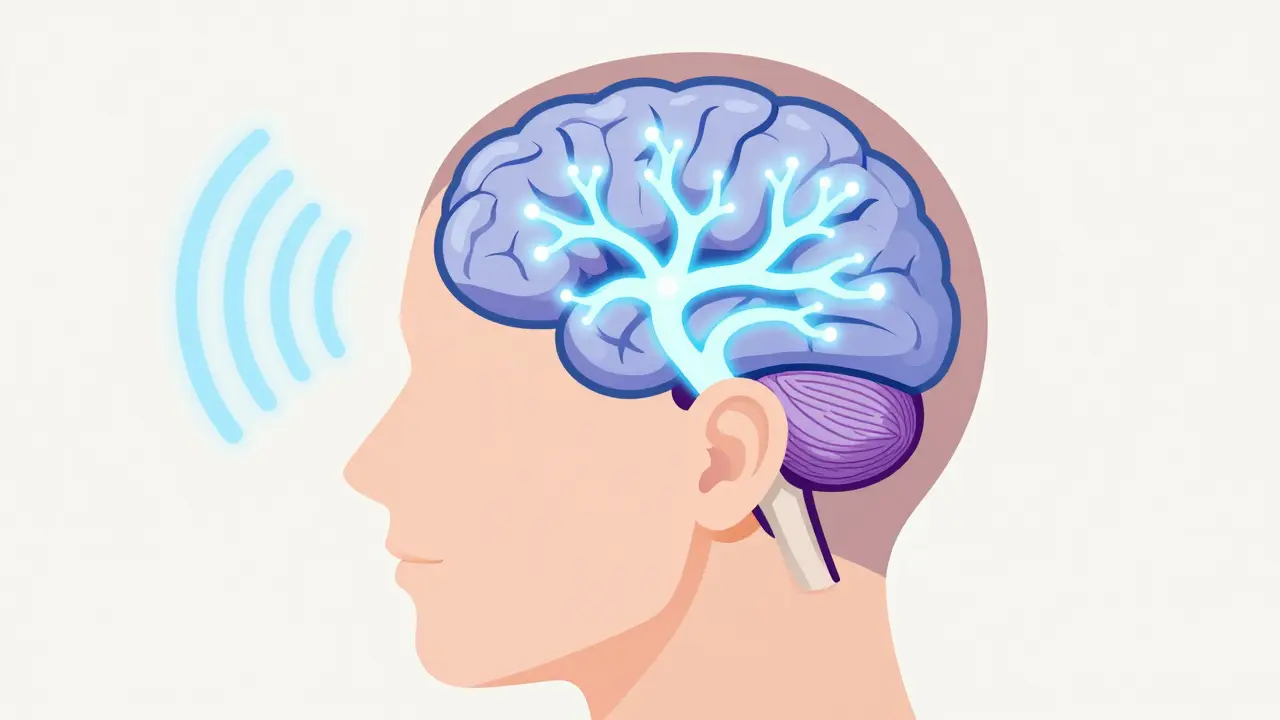
That high-pitched whine. The constant buzzing. Or maybe it sounds like a distant ocean roar inside your head. If you’ve ever heard a sound that no one else can hear, you’re not alone. In fact, about tinnitus affects roughly 15-20% of people worldwide. For most, it’s an annoying background noise. For others, it’s a relentless distraction that ruins sleep and concentration. But here is the good news: while there is no magic pill to cure it, there are proven ways to manage it so it stops controlling your life.
We often think of tinnitus as an ear problem. But modern science shows it’s actually a brain issue. The American Academy of Otolaryngology confirms that tinnitus isn’t a disease itself; it’s a symptom. Your auditory cortex-the part of your brain that processes sound-is misfiring. When your ears stop sending clear signals due to damage or blockage, your brain tries to compensate by turning up the volume on internal noise. Understanding this shift from "ear" to "brain" is the first step toward managing it effectively.
What Is Actually Happening? Types of Tinnitus
To treat tinnitus, you first need to know what kind you have. Most people (99% of cases) experience subjective tinnitus. This means only you can hear the sound. It stems from neurological activity in the brain rather than an actual external noise source. You might describe it as ringing, hissing, or clicking.
A tiny fraction of people-about 1%-have objective tinnitus. This is rare but important because a doctor can actually hear it during an exam. It often has a physical cause, like blood flow issues or muscle spasms near the ear. One specific type is pulsatile tinnitus, where you hear a whooshing sound that syncs with your heartbeat. This accounts for about 4% of all cases and usually points to vascular conditions like high blood pressure or atherosclerosis. If your tinnitus pulses, see a doctor immediately-it’s rarely just "noise" and often requires medical intervention for the underlying blood vessel issue.
The Root Causes: Why Did This Start?
Tinnitus doesn’t appear out of nowhere. It’s usually a signal that something else is wrong. Identifying the trigger is crucial because removing the cause often removes the sound.
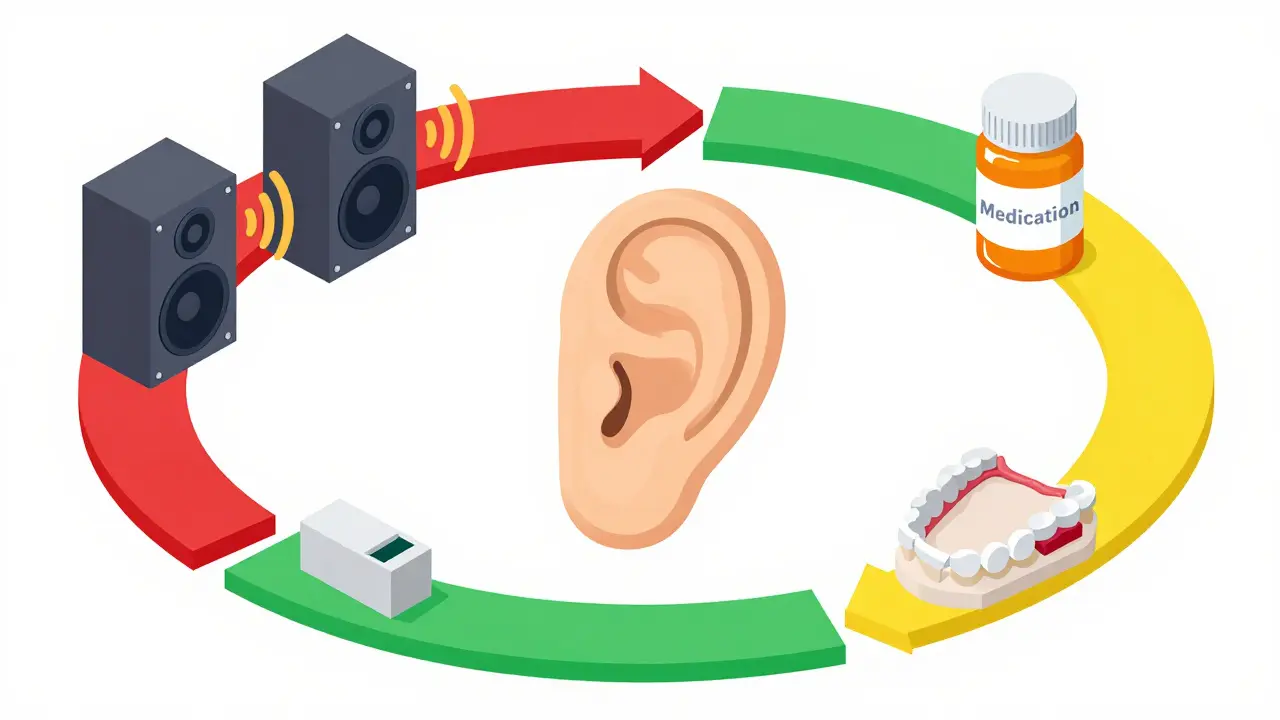
- Hearing Loss: This is the biggest culprit, responsible for about 80% of cases. As we age, the tiny hair cells in our inner ear die off. These cells don’t regenerate. When they break, they send random electrical impulses to the brain. Age-related hearing loss (presbycusis) affects half of people over 75, and 85% of them develop tinnitus.
- Noise Exposure: Loud concerts, construction sites, or headphones at max volume can damage these hair cells permanently. Noise-induced hearing loss contributes to 15% of tinnitus cases. The damage happens when exposure exceeds 85 decibels for prolonged periods.
- Earwax Blockages: It sounds simple, but impacted earwax traps sound against the eardrum, increasing pressure. This affects 10-15% of adult tinnitus patients. The good news? Removing the wax often solves the problem instantly.
- Medications: Over 200 drugs can trigger tinnitus. Common culprits include high-dose aspirin, certain antibiotics (like aminoglycosides), and loop diuretics. If your tinnitus started after a new prescription, talk to your pharmacist.
- TMJ Disorders: Problems with your jaw joint can affect the muscles connected to your ear, creating clicking or grinding sounds.
Diagnosis: What to Expect at the Doctor
You won’t get better if you don’t get checked. A primary care physician will start by looking for easy fixes, like earwax or infection. If those aren’t the issue, they’ll refer you to an otolaryngologist (ENT specialist).
The gold standard for diagnosis is pure-tone audiometry. This test measures your hearing sensitivity across different frequencies. Since 80% of tinnitus patients have some degree of hearing loss, this test is vital. For pulsatile tinnitus, doctors will likely order an MRI with contrast to check for vascular abnormalities, which has a 95% sensitivity rate for detecting issues like tumors or fistulas.
To measure how much tinnitus is impacting your life, clinicians use the Tinnitus Handicap Inventory (THI). It’s a questionnaire scored from 0 to 100. A score under 16 is considered slight, while anything above 78 is catastrophic. Knowing your score helps determine whether you need simple coping strategies or intensive therapy.
Management Strategies That Work
There is no FDA-approved drug that cures tinnitus. However, several management strategies provide significant relief for millions of people. The goal isn’t always silence; it’s habituation-training your brain to ignore the sound.
| Strategy | How It Works | Effectiveness Rate | Best For |
|---|---|---|---|
| Hearing Aids | Amplifies external sounds to mask internal noise | ~60% relief | Patients with concurrent hearing loss |
| Sound Therapy | Uses white noise or nature sounds to distract the brain | 40-50% relief | Sleep disturbances and mild cases |
| Cognitive Behavioral Therapy (CBT) | Changes emotional response to the sound | 50-60% reduction in distress | Anxiety, depression, and severe cases |
| Bimodal Stimulation (Lenire) | Combines audio stimulation with tongue stimulation | 80% improvement (clinical trials) | Chronic, persistent tinnitus |
Hearing Aids
If you have hearing loss, hearing aids are often the first line of defense. Modern devices do more than just amplify speech; many include built-in sound generators. By boosting ambient noise, they reduce the contrast between the quiet environment and your loud tinnitus. Studies show about 60% of users report significant relief.
Sound Therapy
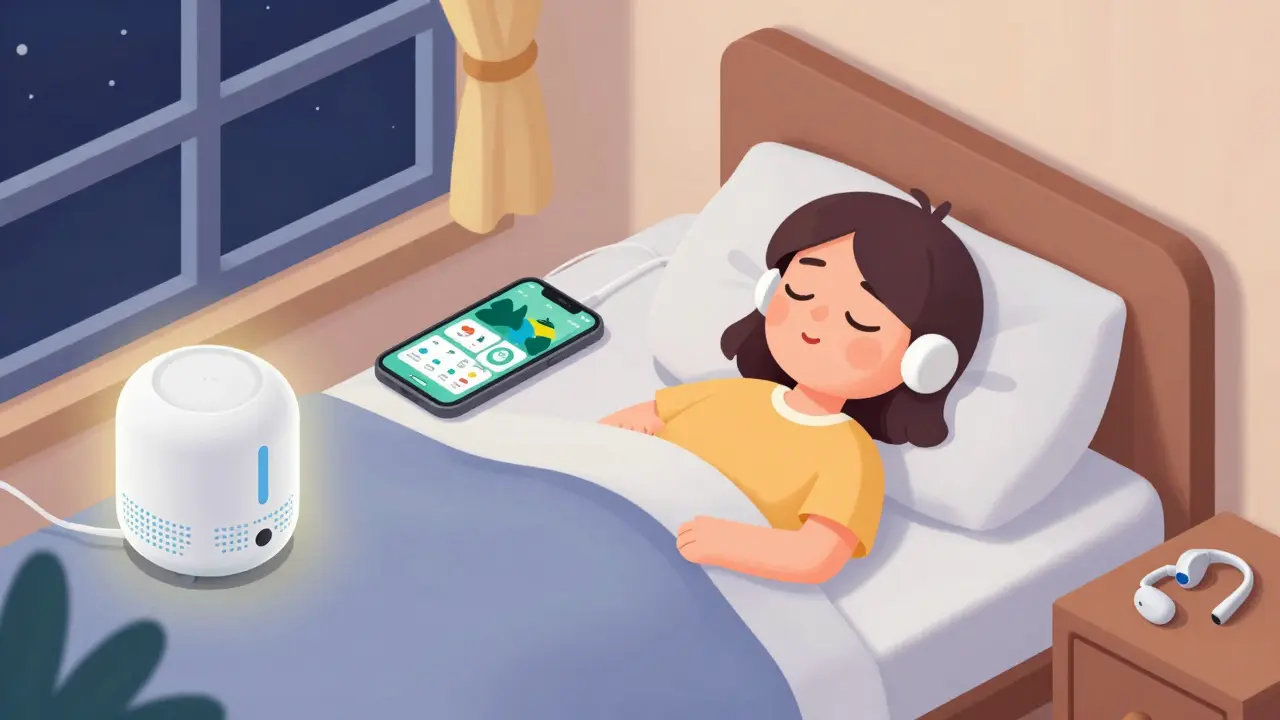
Silence is your enemy. In a quiet room, tinnitus seems louder. Sound therapy uses background noise-white noise machines, fans, or smartphone apps-to "mask" the ringing. This doesn’t cure the tinnitus, but it makes it less noticeable. About 40-50% of patients find this helpful for sleep and relaxation. Many users in online communities report that personalized soundscapes (like rain or ocean waves) work better than flat white noise.
Cognitive Behavioral Therapy (CBT)
Tinnitus becomes a problem when it triggers anxiety or frustration. CBT doesn’t stop the sound, but it changes how you react to it. Through 8-12 weekly sessions, therapists help you reframe negative thoughts about the noise. Research shows this reduces tinnitus-related distress by 50-60%. It’s particularly effective for those who feel hopeless or socially isolated due to their condition.
Emerging Technologies
New devices are changing the game. The Lenire device, approved by the FDA in 2022, uses bimodal stimulation. It plays soft tones in your ear while stimulating your tongue with mild electrical pulses. This dual input rewires the brain’s neural pathways. A 2020 trial showed 80% of participants had significant improvement lasting over a year. Another option is the Oasis device, which delivers personalized sound therapy based on your specific hearing profile.
Living With Tinnitus: Daily Tips
While you wait for treatments to take effect, small lifestyle changes can make a big difference.
- Protect Your Hearing: Wear earplugs in loud environments. Preventing further damage is critical.
- Manage Stress: Stress exacerbates tinnitus. Yoga, meditation, or deep breathing exercises can lower your overall arousal level, making the sound less intrusive.
- Limit Stimulants: Caffeine, nicotine, and alcohol can temporarily worsen tinnitus for some people. Track your diet to see if these are triggers for you.
- Create a Sound Routine: Don’t let your bedroom be silent. Use a fan or a white noise app while sleeping to prevent the tinnitus from waking you up.
When to See a Specialist
Tinnitus is common, but not all cases are benign. Seek immediate medical attention if:
- Your tinnitus is only in one ear (unilateral).
- You experience sudden hearing loss alongside the ringing.
- The sound pulses with your heartbeat.
- You have dizziness, vertigo, or facial weakness.
Remember, 80% of new tinnitus cases improve within 6-12 months as the brain adapts. For the remaining 20%, consistent management strategies like CBT and sound therapy offer a path to a normal, quiet life. You don’t have to live with the noise.
Can tinnitus go away on its own?
Yes, in many cases. Approximately 80% of new tinnitus cases show significant improvement within 6 to 12 months without specific treatment. This is due to neural adaptation, where the brain learns to filter out the phantom sound. However, chronic cases may require ongoing management.
What is the best treatment for tinnitus in 2026?
There is no single "best" treatment, as it depends on the cause. For those with hearing loss, hearing aids with sound therapy are highly effective. For psychological distress, Cognitive Behavioral Therapy (CBT) is the gold standard. Newer devices like Lenire offer promising results for chronic cases through bimodal stimulation.
Why does my tinnitus get worse at night?
Tinnitus seems louder at night because the environment is quieter. During the day, ambient noise masks the ringing. In silence, your brain focuses more on the internal sound. Using a white noise machine or fan can help balance the acoustic environment and promote sleep.
Is pulsatile tinnitus dangerous?
Pulsatile tinnitus, which beats in time with your heart, can indicate underlying vascular issues such as high blood pressure, atherosclerosis, or rare tumors. While not always dangerous, it requires prompt medical evaluation including imaging studies like an MRI to rule out serious conditions.
Can earwax cause tinnitus?
Yes, impacted earwax is a common and reversible cause of tinnitus, affecting 10-15% of adults. The buildup traps sound and increases pressure in the ear canal. Professional removal by a healthcare provider often resolves the symptoms completely within 48 hours.





Comments (12)
Brian Lee
6 May 2026
Thanks for sharing this info it is really helpful. I have had ringing in my ears for years and it drives me crazy sometimes. The part about the brain misfiring makes so much sense to me now. I never thought of it as a brain issue before just an ear problem. I am going to try the white noise app tonight because sleep has been hard lately. Hope this helps other people too who are suffering from this annoying sound.
Jake Williams
7 May 2026
Another article telling us our brains are broken because we listened to music once? Please. This is typical American weakness. You go to work, you deal with noise, you get old, your ears fail. Stop whining about it. If you worked outside like real men did, you’d know pain isn’t something to post about on the internet. Get over it or shut up. The solution is simple: stop being sensitive and focus on things that actually matter instead of your own internal static.
Nilesh Mandani
7 May 2026
I think we need to look at this differently. It is not just about the noise itself but how we perceive the silence around us. In many traditions, silence is seen as empty space waiting to be filled. Your brain fills it with tinnitus because it seeks pattern. Maybe the answer is not masking but accepting. I found that meditation helped me see the sound as separate from my self. It is just a signal. Like a radio station left on. You can change the channel if you want but you do not have to hate the static.
Guy Birtwhistle
8 May 2026
Oh great another medical blog trying to sell you anxiety. Look I am not a doctor but I know that half these ‘strategies’ are just placebo effects wrapped in fancy language. CBT? Sure if you have time to sit around talking about your feelings all day. Sound therapy? Just buy a fan. You don’t need a specialist to tell you that quiet rooms make noises louder. Keep your boundaries clear and don’t let the medical industry gaslight you into thinking you’re broken when you’re just human.
Kenny Pines
9 May 2026
This is super useful! 🌟 I was worried my pulsatile tinnitus was something bad but reading this made me feel better. 😊 I started using the Lenire device last month and wow it is amazing. 🔥 My husband thinks I am crazy but I love it. We should support each other more in these struggles. 💖 Don’t give up hope everyone! ✨
Liz and Nick
10 May 2026
i dont believe any of this garbage. my aunt had tinnitus and she died alone in her apartment screaming at walls. you think some white noise machine fixes that? no. its all about character. if you cant handle a little ring then you are weak. also why does nobody talk about how loud concerts are ruining society. people need to stay home and read books instead of going to clubs. stupid trend. anyway ignore this post it is useless.
Brian Fibelkorn
12 May 2026
The pathophysiology of subjective tinnitus involves maladaptive neuroplasticity within the central auditory pathways, specifically involving the dorsal cochlear nucleus and the inferior colliculus. To suggest otherwise is to ignore the robust body of peer-reviewed literature regarding synaptic gain control mechanisms. Furthermore, the assertion that stress management is a primary intervention ignores the critical role of glutamatergic excitotoxicity in chronic cases. One must approach this condition with rigorous scientific detachment rather than emotional coping strategies which are merely palliative measures for the psychologically fragile.
David Rangkhal
14 May 2026
Let’s keep this respectful please. Everyone experiences pain differently and judging others doesn’t help anyone. I use emojis to lighten the mood because life is heavy enough without adding judgment. 🙏 Try to find common ground. If you have tinnitus share what works for you kindly. No need for aggression. Peace out. 🕊️
Chelsea Grdina
15 May 2026
I’ve been living with tinnitus for five years now and honestly it taught me so much about myself and how I interact with the world around me. When I first got diagnosed I felt like I was losing my mind because nothing else could hear the constant buzzing that lived inside my skull like an unwanted roommate who never pays rent or cleans up after themselves. But over time I learned that my environment matters immensely and that creating a sanctuary of soft sounds whether it’s the hum of a refrigerator or the gentle patter of rain against my windowpane can transform my experience from one of distress to one of manageable background texture. I encourage everyone here to explore their own sensory preferences because what works for one person might not work for another and that’s perfectly okay.
Sarah Kwiatkowski
16 May 2026
You guys are missing the point. It is not about curing it. It is about managing your reaction. I started doing yoga and breathing exercises every morning and suddenly the ringing didn’t bother me as much. It is still there but I don’t fight it anymore. Fight it and it wins. Accept it and you win. Simple logic. Why do people complicate everything?
Brian LeClercq
18 May 2026
Actually the entire premise of this article is flawed because it assumes tinnitus is a uniform condition when in reality it is a heterogeneous symptom complex with vastly different etiologies ranging from vascular anomalies to somatic muscle contractions. The suggestion that ‘sound therapy’ is a panacea is dangerously reductive and ignores the potential for habituation failure in patients with high comorbid anxiety disorders. Moreover the claim that hearing aids provide relief for sixty percent of users is statistically dubious given the lack of long-term controlled studies. People should stop relying on anecdotal evidence and start demanding rigorous clinical data before adopting these so-called solutions.
Frances Kendall
18 May 2026
I am an audiologist and I can confirm that the information here is largely accurate though simplified for general consumption. The key takeaway is that tinnitus is often linked to hearing loss even if you don’t notice it yet. Many people come to me saying they hear fine but their audiogram shows significant high-frequency loss. Addressing this early with hearing aids or sound enrichment can prevent the brain from turning up the volume on internal noise. It is not magic but it is science. Please consult a professional for personalized advice.