
Side Effects vs Allergic Reactions vs Intolerance: How to Tell the Difference
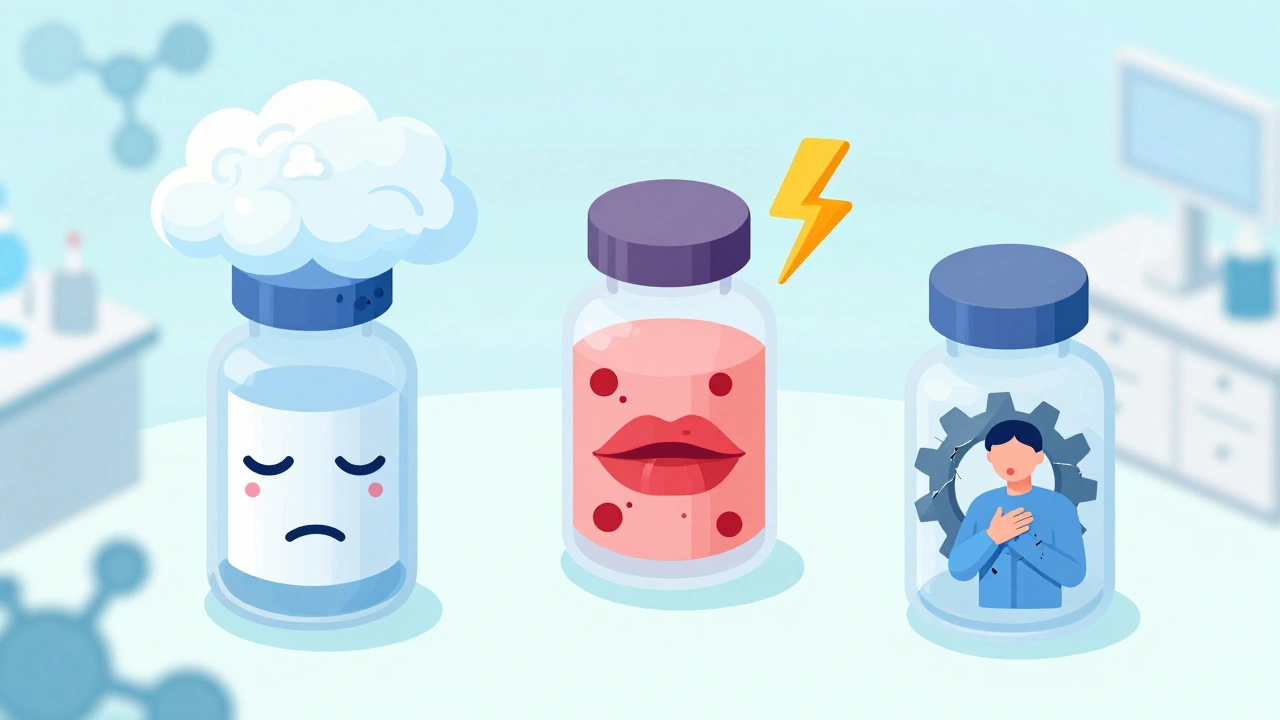
Not all bad reactions to medicine are the same
You took a pill, and within an hour, your skin broke out in hives. Or maybe you got nauseous after your antibiotic. Or your headache got worse after taking ibuprofen. You might have told your doctor, "I’m allergic to this." But here’s the thing: you probably aren’t.
Most people who say they have a drug allergy don’t actually have one. In fact, only 5 to 10% of reported drug reactions are true allergies. The rest? They’re side effects or intolerances. And mixing them up can cost you more than just discomfort-it can put your health at risk.
What’s a side effect, really?
A side effect is just what happens when a drug does more than what it’s supposed to. It’s not your immune system attacking anything. It’s the drug doing its job… a little too well, or in the wrong place.
For example, NSAIDs like ibuprofen reduce pain and inflammation by blocking certain enzymes. But those same enzymes help protect your stomach lining. So nausea, heartburn, or even stomach ulcers? That’s a side effect. It’s expected. It’s listed in the patient information leaflet. It happens in 25 to 30% of people who take them regularly.
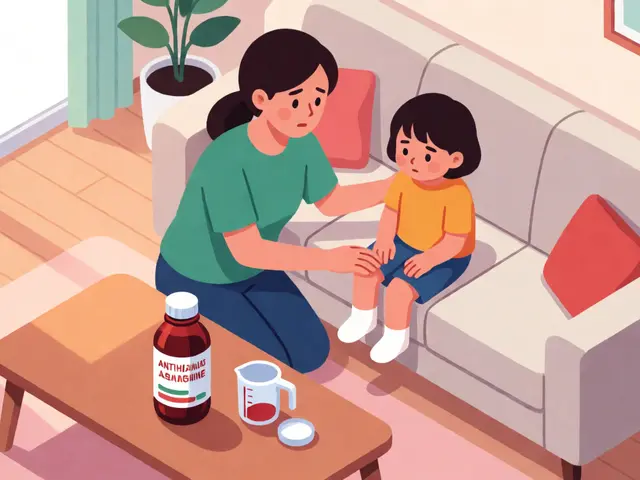
Other common side effects include dizziness from blood pressure meds, drowsiness from antihistamines, or diarrhea from metformin. These usually get better over time. Your body adjusts. Or your doctor lowers the dose. Sometimes, taking the pill with food helps. None of these mean your immune system is involved. No antibodies. No swelling. No danger.
Side effects are predictable. They’re tied to the drug’s chemistry. If you’ve taken it before and felt fine, you’re likely fine again. If you’ve never taken it, you might still get one. That’s normal.
What’s a true drug allergy?
A drug allergy is your immune system treating the medication like an invader. It’s not just an unpleasant reaction-it’s a biological alarm going off.
True allergies show up fast. Usually within minutes to an hour. Symptoms include hives, swelling of the lips or tongue, wheezing, trouble breathing, or a sudden drop in blood pressure. These are signs of anaphylaxis-the most dangerous allergic reaction. It can kill if not treated immediately with epinephrine.
Even delayed reactions count. Some allergies take a few days to show up. Think of a rash that spreads across your body after five days of taking a new antibiotic. That could be DRESS syndrome, a rare but serious condition that affects multiple organs. It requires hospital care.
Here’s the kicker: if you’ve had a true allergic reaction once, you’re at risk of a worse reaction next time. That’s why doctors take these seriously. They won’t give you the drug again. And they’ll warn you about similar ones.
Penicillin is the classic example. About 10% of Americans say they’re allergic to it. But when tested, only 1% actually are. That means 9 out of 10 people are avoiding a safe, effective antibiotic because they misremembered a stomach ache as an allergy. That’s not just inconvenient-it’s dangerous. It leads to more use of stronger, broader antibiotics, which increases the risk of deadly infections like C. diff and MRSA.
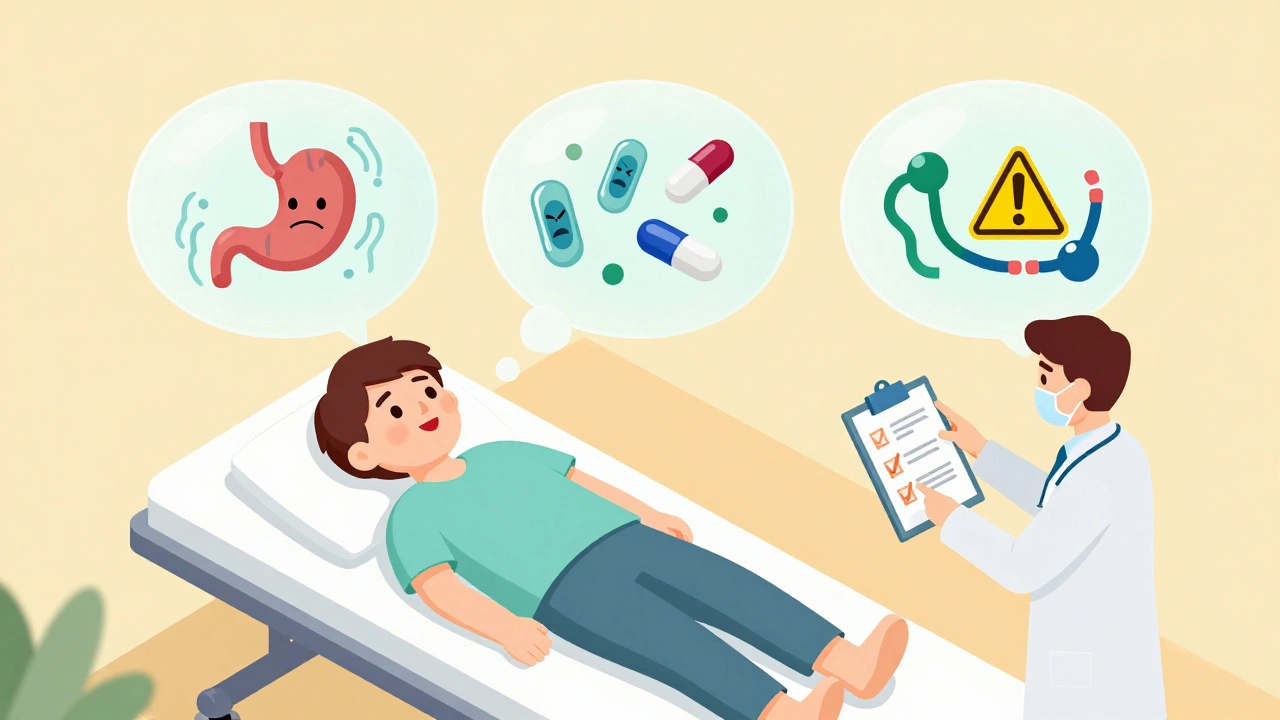
What’s drug intolerance?
Intolerance is the gray zone. It’s not an allergy. It’s not a typical side effect. It’s your body being unusually sensitive to a drug-even at normal doses.
For example, some people with asthma get severe breathing problems when they take aspirin or ibuprofen. That’s not an allergy. It’s an intolerance called AERD (aspirin-exacerbated respiratory disease). Their airways overreact to the way these drugs block certain enzymes. They can take other painkillers like celecoxib without issue.
Another example: codeine. Most people take it and feel better. But about 7% of Caucasians have a gene variation that turns codeine into morphine too fast. They get extreme nausea, vomiting, or even breathing trouble-even at low doses. That’s not an allergy. It’s a metabolic intolerance.
Intolerances are tricky because they’re not always predictable. One person might handle a drug fine. Another can’t even tolerate the first pill. There’s no immune system involvement. No antibodies. Just your body’s chemistry reacting differently.
Doctors often figure this out by trial and error. If you keep having bad reactions to a drug, but tests show no allergy, they might call it intolerance. The key is: you might be able to take a different drug in the same class and be fine.
How to tell them apart
Here’s a simple way to break it down:
- Side effect: Nausea, dizziness, dry mouth, headache, fatigue. Comes on slowly. Gets better with time or dose change. Happens to many people. Not life-threatening.
- Allergy: Hives, swelling, wheezing, throat tightness, low blood pressure, fainting. Comes on fast-often within minutes. Gets worse with each exposure. Can be deadly. Requires emergency treatment.
- Intolerance: Severe reaction at normal dose. No immune system signs. Often tied to a specific drug class. May tolerate a similar drug. Examples: asthma flare with NSAIDs, vomiting with codeine.
Timing matters. If you felt sick 10 minutes after taking the pill? Think allergy. If you felt queasy 2 hours later? Probably a side effect. If you’ve never had a problem until now, and it’s only happening with this one drug? Could be intolerance.
Don’t guess. Write it down. Note the exact symptoms, when they started, how long they lasted, and what you did to feel better. That info helps your doctor decide what it really was.
Why it matters
Mislabeling a side effect as an allergy doesn’t just make you sound dramatic. It changes your treatment.
Let’s say you need an antibiotic for pneumonia. Your chart says “Penicillin allergy.” Your doctor skips penicillin and picks a stronger, more expensive drug. That drug might cause more side effects. It might kill good bacteria in your gut. It might lead to a C. diff infection. And it’s probably not even necessary.
Studies show that people with false penicillin allergy labels have a 30% higher chance of getting C. diff and a 50% higher chance of catching MRSA. They also stay in the hospital longer. Their care costs $2,500 more per year.
On the flip side, people who get tested and find out they’re not allergic can safely use better, cheaper, more effective drugs. One patient in Mayo Clinic’s records avoided antibiotics for 15 years because she thought she was allergic. After testing, she took amoxicillin eight times without issue.
And it’s not just penicillin. The same applies to sulfa drugs, NSAIDs, and even chemotherapy agents. Mislabeling leads to worse outcomes.
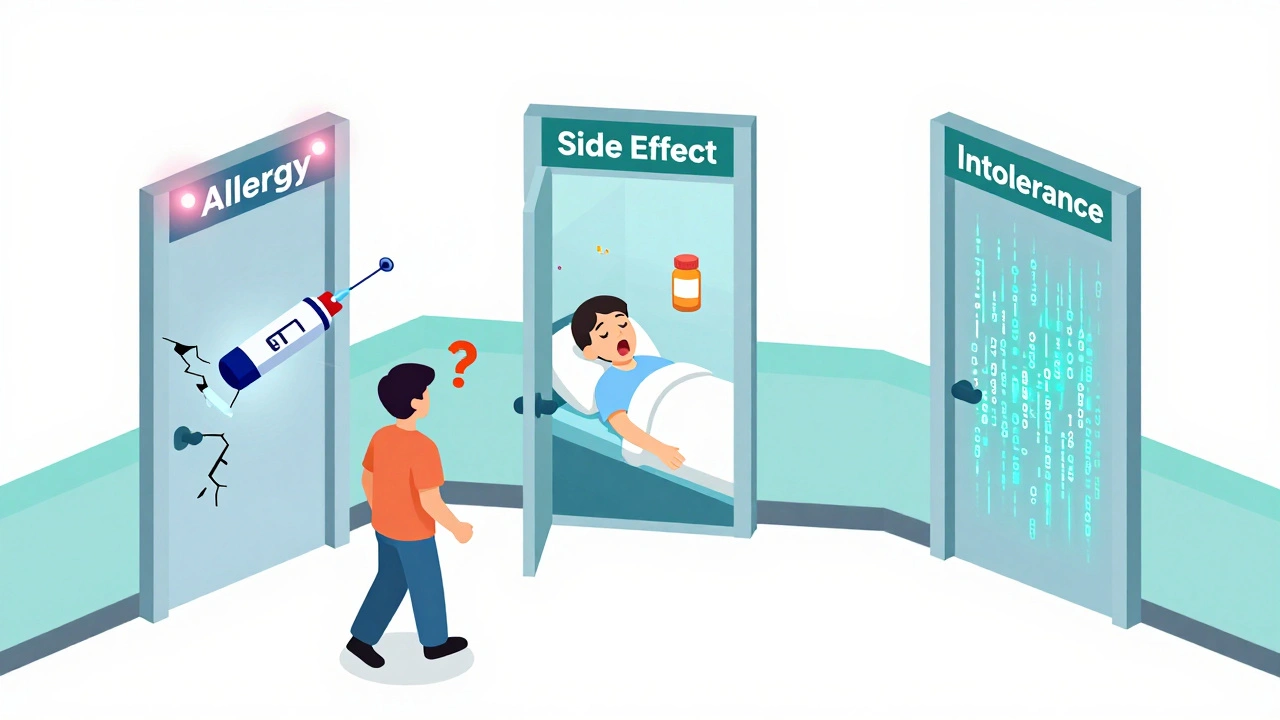
What should you do?
If you’ve ever had a bad reaction to a medicine, don’t just assume it’s an allergy. Ask yourself:
- Did I have trouble breathing, swelling, or a sudden drop in energy?
- Did it happen within an hour?
- Did I need epinephrine or emergency care?
If the answer is no, it’s likely not an allergy.
Here’s what to do next:
- Don’t write “allergy” on your medical records unless it’s confirmed. Write the actual symptom: “nausea,” “dizziness,” “rash.”
- If you think you might have a true allergy-especially if you’ve had swelling, breathing issues, or needed epinephrine-see an allergist. Skin tests and oral challenges are safe and accurate.
- Ask your doctor: “Could this be a side effect or intolerance instead?”
- If you’ve been told you’re allergic to penicillin and never got tested, get tested. It’s quick, safe, and could change your future care.
Many hospitals now have drug allergy clinics. Some offer same-day testing. The NHS and CDC both recommend testing for anyone with a penicillin allergy label. It’s not just smart-it’s becoming standard.
What’s changing in medicine
Hospitals are catching on. Electronic health records now prompt doctors to ask: "Was this an allergy, side effect, or intolerance?" They’re trained to avoid vague labels.
New tools are coming. The FDA is using AI to scan millions of medical records to spot mislabeled allergies. Researchers are testing a 15-minute penicillin test that could replace the old 3-hour process. And in the next few years, genetic tests might tell you if you’re likely to have an intolerance to certain drugs-like how HLA-B*57:01 screening prevents a deadly reaction to the HIV drug abacavir.
One study found that hospitals with allergy testing programs cut unnecessary antibiotic use by 35%. Patients left the hospital 1.2 days sooner. That’s not just better care-it’s cheaper, safer, and saves lives.
Bottom line
You’re not allergic just because a drug made you feel bad. Side effects are common. Intolerances are real but manageable. True allergies are rare-and dangerous.
Getting this right means you get the right treatment. Not the next best thing. Not the backup plan. The best one.
If you’ve ever said, "I’m allergic to this," and it was just nausea or a headache-consider getting it checked. You might be carrying a label that’s holding you back. And you don’t have to.


Comments (12)
Joel Deang
3 Dec 2025
lol i thought i was allergic to ibuprofen till i read this. turned out i just got sick after taking it on an empty stomach. my doc called me dramatic. now i know i’m just dumb. 🤦♂️
Roger Leiton
4 Dec 2025
This is so important. I had a rash after amoxicillin in college and swore I was allergic. Got tested last year-turns out it was just a viral rash. Now I’m on penicillin for my sinus infection and feel like a genius. 🙌 No more unnecessary Z-Paks!
Laura Baur
5 Dec 2025
The societal ignorance around drug reactions is a catastrophic failure of medical literacy. People treat symptoms like religious dogma-'I felt bad once, therefore this drug is evil.' This is not science, this is superstition masquerading as personal experience. The consequences ripple through public health infrastructure: increased antibiotic resistance, inflated healthcare costs, and preventable morbidity. You are not special because you got nauseous. You are statistically predictable. And your ignorance is not a personal right-it’s a public health liability.
Steve World Shopping
6 Dec 2025
The pharmacovigilance gap in Western healthcare is staggering. The conflation of pharmacodynamic side effects with immunoglobulin E-mediated hypersensitivity represents a systemic misclassification error with significant therapeutic implications. The absence of structured phenotyping protocols in primary care exacerbates diagnostic drift.
Paul Keller
7 Dec 2025
I appreciate the clarity here, but I have to say-this is the kind of information that should be mandatory reading for every high school biology class. Not just for patients, but for doctors too. Too many clinicians still default to 'allergy' as a catch-all label. The fact that 90% of penicillin 'allergies' are false isn't just surprising-it's alarming. We're literally choosing inferior, riskier drugs because of misinformation. This needs to be on every hospital's intake form.
Shannara Jenkins
7 Dec 2025
I used to panic every time I got dizzy on blood pressure meds-thought I was allergic. Turns out? Side effect. My doc just lowered the dose and told me to take it at night. Now I feel great. 🥹 So glad someone finally explained the difference. Don’t panic, just document!
Elizabeth Grace
7 Dec 2025
I had a rash after sulfa drugs when I was 12. Told everyone I’m allergic. Turned out I just had a sunburn and the meds made my skin more sensitive. I’m so embarrassed. But now I tell my kids: 'If it didn’t make you swell or stop breathing, it’s probably not an allergy.'
Steve Enck
7 Dec 2025
The psychological phenomenon of misattributing physiological responses to immune mechanisms is a textbook case of cognitive bias in layperson medical interpretation. The narrative of 'I am allergic' serves as a self-protective identity construct-avoiding responsibility for non-compliance or poor pharmacokinetic adaptation. This is not medical ignorance; it is existential narrative construction. The healthcare system enables this by failing to educate, and worse, by reinforcing the label without verification.
Jay Everett
8 Dec 2025
Bro, I used to avoid ALL NSAIDs because I got a headache after Advil once. Then I found out it was dehydration. Now I take celecoxib like a boss, no issues. 🤓 This post is a game-changer. If you’ve ever said 'I’m allergic' to something that just gave you a tummy ache-go get tested. Your future self will high-five you. 🙏
Jack Dao
8 Dec 2025
It's not just about mislabeling-it's about the arrogance of assuming your body's reaction is unique. You're not special. You're a data point. And your anecdote is not evidence. The fact that you're still carrying a 'penicillin allergy' in your chart after 15 years without testing? That's not caution. That's negligence dressed up as caution.
dave nevogt
10 Dec 2025
I’ve been thinking about this a lot since my mom got hospitalized for C. diff after being given clindamycin because they thought she was allergic to penicillin. She wasn’t. She just got nauseous once as a kid. That one label changed her life. I didn’t realize how dangerous these assumptions were until it almost killed her. Thank you for writing this. I’m going to talk to her doctor this week.
Arun kumar
11 Dec 2025
I take codeine for back pain and got super sleepy and vomited once. Thought I was allergic. My Indian doc laughed and said, 'Bro, you have CYP2D6 ultra-rapid metabolism.' Turned out I’m one of those 7%. Now I take tramadol. Life changed. 🙏