
Sulfonylureas and Hypoglycemia: How to Lower Your Risk of Low Blood Sugar
Sulfonylurea Hypoglycemia Risk Calculator
This tool calculates your personalized risk of hypoglycemia based on your medication type, age, and other factors. Your results will help you understand your risk level and take appropriate action.
Low Risk
Based on your inputs, you have a low risk of hypoglycemia with your current medication regimen. However, always monitor your blood sugar and carry fast-acting sugar for emergencies.
Factors contributing to your risk:
When you're managing type 2 diabetes, keeping your blood sugar stable isn't just about avoiding highs-it's equally about preventing dangerous lows. One of the most common culprits behind sudden, unpredictable drops in blood sugar? Sulfonylureas. These older diabetes pills have been around since the 1950s, and despite newer options, they're still prescribed to millions of people because they work-and they're cheap. But here’s the catch: they can cause hypoglycemia more often than most other diabetes drugs. If you're on one of these medications, or if you're considering it, you need to know the real risks and how to stay safe.
How Sulfonylureas Work-and Why They Cause Low Blood Sugar
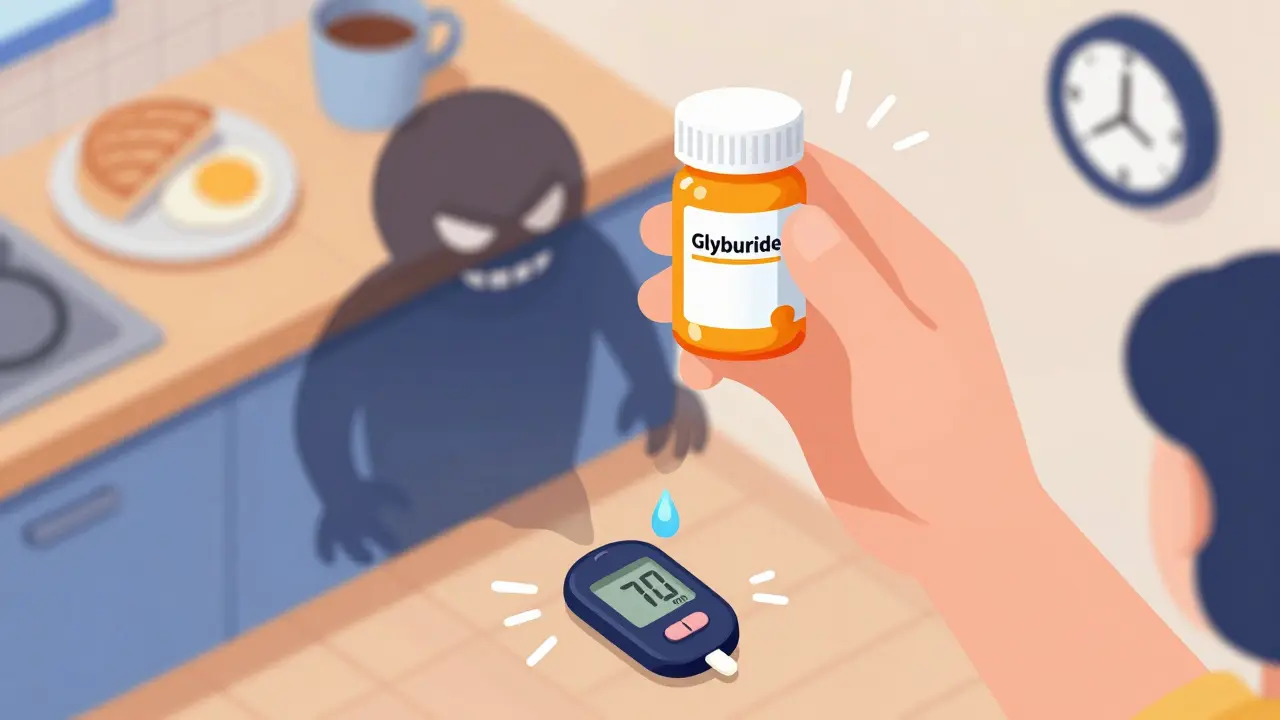
Sulfonylureas don’t wait for your body to signal that it needs insulin. Instead, they force your pancreas to release insulin all the time, no matter what your blood sugar level is. That’s how they lower glucose-but it’s also why they’re so risky. Unlike newer drugs that only boost insulin when blood sugar is high, sulfonylureas keep pushing insulin out even when you haven’t eaten, during exercise, or while you’re sleeping. That’s when your blood sugar can crash below 70 mg/dL, the official threshold for hypoglycemia.
This isn’t a rare side effect. About 1 in 10 people taking sulfonylureas will have at least one episode of low blood sugar during treatment. For some, it’s mild-sweating, shaking, hunger. For others, it’s terrifying: confusion, passing out, needing someone to give them glucagon. And the risk isn’t the same across all sulfonylureas. Some are far more dangerous than others.
Not All Sulfonylureas Are the Same
If you're on a sulfonylurea, you need to know exactly which one. There are two generations, and the difference matters a lot.
First-generation drugs like chlorpropamide and tolbutamide are rarely used today. The real players now are second-generation agents: glyburide, glipizide, glimepiride, and gliclazide. Of these, glyburide is the most commonly prescribed in the U.S.-about 70% of all sulfonylurea prescriptions. But it’s also the riskiest.
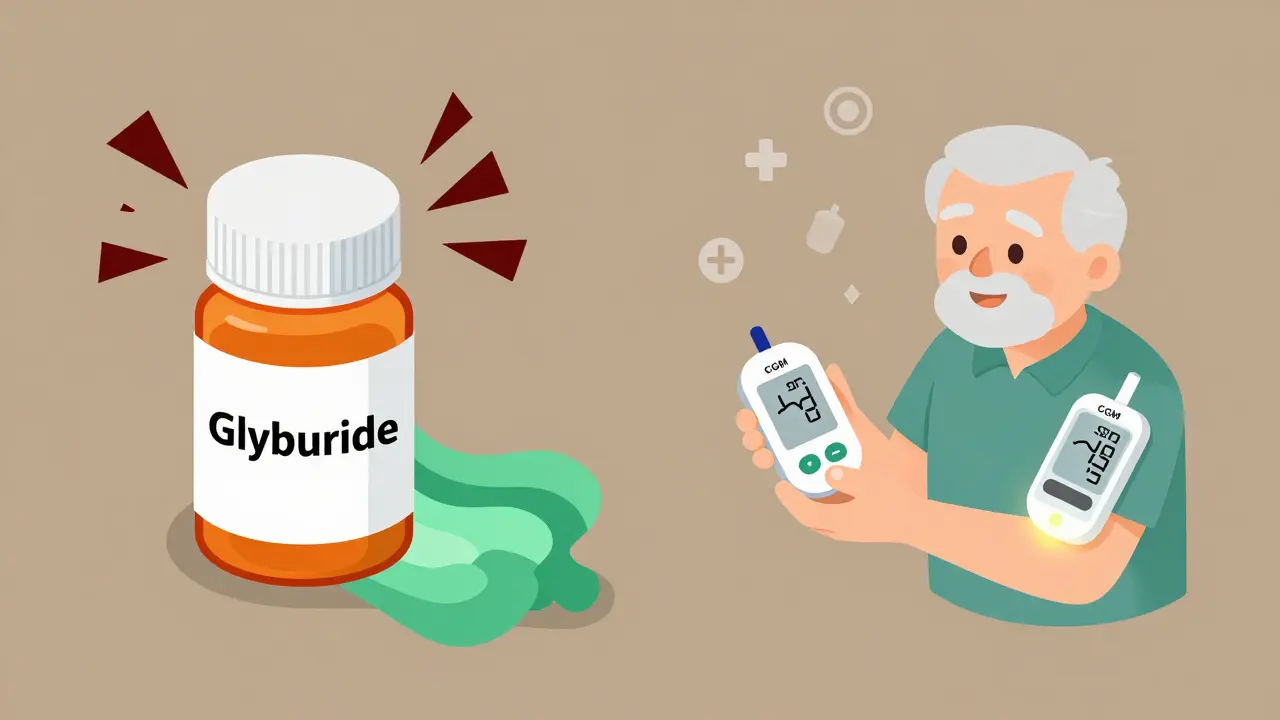
Why? Glyburide lasts longer. Its half-life is around 10 hours, and it produces active metabolites that stick around even longer. That means it keeps pushing insulin out overnight, during fasting, or after exercise. Studies show people on glyburide have a 36% higher risk of being hospitalized for severe hypoglycemia compared to those on glipizide. One user on Reddit put it bluntly: “Switched from metformin to glyburide last month and have had 3 severe lows requiring glucagon-my doctor didn’t warn me this could happen multiple times per week.”
Glipizide, on the other hand, has a much shorter half-life-only 2 to 4 hours. It doesn’t build up in your system. Glimepiride and gliclazide (available in Europe and Australia) are also safer choices. Gliclazide, in particular, targets only pancreatic beta cells and doesn’t affect other tissues, which lowers the chance of unexpected lows. A 2019 meta-analysis found gliclazide had a 28% lower risk of hypoglycemia than glyburide.
Who’s Most at Risk?
Age isn’t the only factor-but it’s a big one. The American Geriatrics Society specifically warns against using glyburide in people over 65. Why? Older adults are more likely to skip meals, have slower metabolism, or take other medications that interact with sulfonylureas. In fact, the risk of severe hypoglycemia is 2.5 times higher in elderly patients on glyburide compared to glipizide.
But it’s not just age. Genetics play a role too. About 15% of people carry a genetic variant called CYP2C9*2 or *3. These variants make it harder for your liver to break down sulfonylureas, so the drug builds up in your system. People with these variants have a 2.3 times higher risk of hypoglycemia. That’s why some experts now recommend genetic testing before starting sulfonylurea therapy-if you’re a carrier, you need a much lower dose.
Other risk factors? Skipping meals, drinking alcohol, exercising without adjusting your dose, or taking certain other drugs. Medications like gemfibrozil (for cholesterol), sulfonamide antibiotics, and even warfarin can displace sulfonylureas from protein binding sites, increasing the amount of free drug in your bloodstream by 30-40%. That’s like doubling your dose without realizing it.
What Hypoglycemia Feels Like
Low blood sugar doesn’t always come with a warning. But most people experience at least a few of these symptoms:
- Sweating (85% of cases)
- Shakiness or trembling (78%)
- Feeling irritable or anxious (65%)
- Confusion or trouble thinking clearly (52%)
- Racing heart (47%)
- Intense hunger (41%)
If you’re alone and start feeling this way, don’t wait. Treat it immediately. Eat or drink 15 grams of fast-acting sugar: 4 glucose tablets, 1/2 cup of juice, or 1 tablespoon of honey. Wait 15 minutes. Check your blood sugar again. If it’s still below 70 mg/dL, repeat. Once it’s back up, eat a snack with protein or complex carbs to keep it stable.
Severe hypoglycemia-where you pass out, have a seizure, or can’t swallow-requires emergency glucagon. Make sure someone close to you knows how to use a glucagon kit. Keep one in your bag, your car, and at work.
How to Prevent Low Blood Sugar
There are proven ways to reduce your risk-some simple, some requiring a conversation with your doctor.
- Start low, go slow. The American Diabetes Association recommends beginning with the lowest possible dose: 1.25-2.5 mg of glyburide or 2.5-5 mg of glipizide. Many doctors still prescribe higher doses out of habit, but slow titration cuts hypoglycemia risk by nearly half.
- Switch to a safer sulfonylurea. If you’re on glyburide and keep having lows, ask about switching to glipizide or glimepiride. Many patients report a dramatic drop in episodes after the change.
- Use a continuous glucose monitor (CGM). The DIAMOND trial showed that sulfonylurea users wearing CGMs had a 48% reduction in time spent in hypoglycemia. A CGM doesn’t just alert you when your sugar drops-it shows you patterns. You’ll see that your lows happen after lunch, or during your evening walk, or at 3 a.m. That’s information you can use.
- Don’t skip meals. Even if you’re not hungry, eat something. A small snack before bed can prevent overnight lows.
- Check for drug interactions. If you’re taking gemfibrozil, sulfonamides, or warfarin, tell your doctor. You may need a different diabetes medication or a lower sulfonylurea dose.
- Get educated. A 2021 study found that structured education programs reduced hypoglycemia by 32%. Learn the early signs. Know how to treat it. Teach your family.
How Sulfonylureas Compare to Newer Drugs
It’s no secret that newer diabetes medications like GLP-1 agonists and SGLT-2 inhibitors have better safety profiles. They lower blood sugar without forcing insulin release. As a result, their hypoglycemia rates are under 0.3 events per 100 person-years-compared to 1.2-1.8 for sulfonylureas.
But here’s the reality: sulfonylureas still have value. Generic glipizide costs about $4 a month. A monthly supply of semaglutide (Ozempic) can cost over $1,000. For people without good insurance, or those living on fixed incomes, sulfonylureas are often the only affordable option. A 2021 cost-effectiveness analysis found they save $1,200-$1,800 per patient annually compared to newer drugs-while reducing HbA1c just as much.
The key isn’t to avoid sulfonylureas entirely. It’s to use them wisely. If you’re young, healthy, and take your pills consistently, glipizide might be fine. If you’re older, have kidney issues, or take other meds, you’re better off with something else.
What’s Changing Right Now
Things are shifting. In 2023, the American Diabetes Association and European Association for the Study of Diabetes agreed: sulfonylureas should be used only when hypoglycemia risk is carefully managed. That means:
- Avoiding glyburide in older adults
- Choosing glipizide or glimepiride over glyburide
- Considering genetic testing for CYP2C9 variants
- Using CGMs routinely
- Combining low-dose sulfonylureas with GLP-1 agonists-this cuts hypoglycemia risk by 58%
An ongoing trial called RIGHT-2.0 is testing a new approach: dosing sulfonylureas based on your genes. Early results suggest this could reduce hypoglycemia by 40%. That’s not science fiction-it’s coming soon.
For now, the message is clear: sulfonylureas aren’t going away. But they’re not the first choice they used to be. If you’re on one, ask yourself: Is this the safest option for me? And if you’re having lows, don’t accept it as normal. Talk to your doctor. Change your drug. Get a CGM. Adjust your routine. You don’t have to live with the fear of crashing.
Real Stories, Real Outcomes
One user on DiabetesDaily.com wrote: “After switching from glyburide to glipizide, my hypoglycemia episodes dropped from weekly to once every 2-3 months.” That’s the power of choosing the right drug.
Another shared: “I used to wake up at 3 a.m. drenched in sweat, heart pounding. I thought it was stress. Then I got a CGM. My sugar was at 48. I switched to glimepiride. I haven’t had a single low since.”
These aren’t rare cases. They’re the result of awareness, action, and better choices.

Comments (15)
Dylan Smith
15 Dec 2025
So glyburide is basically a time bomb for old folks and I'm supposed to just take it because it's cheap? My grandma nearly died from one of these and the doctor acted like it was normal. This is medical negligence wrapped in a $4 pill.
Dave Alponvyr
15 Dec 2025
Switched from glyburide to glipizide. No more 3am panic attacks. Simple fix. Why isn't everyone doing this?
Kitty Price
16 Dec 2025
My CGM saved me so many times 😅 I used to think I was just "bad at diabetes" until I saw the graphs. Now I know my lows happen after coffee. Weird, right?
Mike Smith
18 Dec 2025
For those managing type 2 diabetes on a budget, sulfonylureas remain a vital tool-but only when used with precision. The data is clear: glipizide and glimepiride offer significantly safer profiles than glyburide. Pairing even low-dose sulfonylureas with a continuous glucose monitor reduces hypoglycemic events by nearly half. Education, monitoring, and medication selection are not optional-they are foundational to safe care. Always consult your provider before making changes.
Hadi Santoso
20 Dec 2025
bro i switched from glyburide to glimepiride and my sugar stopped dropping at 3am like a rock 🤯 i thought i was just bad at sleeping but turns out my meds were trying to kill me. also my doc never mentioned the CYP2C9 thing, i had to google it. why is this not standard testing???
Souhardya Paul
21 Dec 2025
There’s a huge gap between what guidelines say and what’s actually prescribed. I’ve seen patients on glyburide 10mg daily-no titration, no education, no CGM-just a script and a shrug. The fact that we still use this drug like it’s 1995 is a systemic failure. We need better prescriber education, especially in primary care. And insurance companies need to stop blocking access to CGMs and safer alternatives. This isn’t about cost-it’s about patient safety.
I work in a community clinic. Last week, a 72-year-old came in after passing out at the grocery store. His HbA1c was 6.8. He was on glyburide 5mg daily. He skipped meals because he couldn’t afford food. He had no CGM. He didn’t know what glucagon was. This isn’t a case of noncompliance-it’s a case of a broken system.
Glipizide costs $5. A CGM costs $30/month. Glucagon is $150. But the ER visit from a severe low? $12,000. We’re spending more on crisis than prevention. We need policy changes, not just patient advice.
Also, if you’re on sulfonylureas and don’t have a glucagon kit, get one. Now. Your family needs to know how to use it. It’s not a luxury. It’s a lifeline.
And yes, genetic testing matters. If you’re of South Asian or African descent, your risk of CYP2C9 variants is higher. Ask for it. Push for it. You deserve better than guesswork.
Joanna Ebizie
21 Dec 2025
you people are so naive. big pharma doesn't want you to know that sulfonylureas are dangerous because they make billions off them. the real solution is fasting and keto. drugs are poison. why are you trusting a system that's been lying to you for decades?
Cassandra Collins
22 Dec 2025
wait so glyburide is secretly a government mind control drug? i knew it. they put it in the water to make diabetics docile. that’s why they push it so hard in nursing homes. they don’t want us to be alert. check the FDA documents from 2012-there’s a redacted section about "behavioral suppression". someone’s hiding something.
Elizabeth Bauman
24 Dec 2025
It’s hilarious how Americans act like they’re the only ones with diabetes problems. In Europe, they’ve known for years that glyburide is dangerous. We use gliclazide. It’s safer, cheaper, and made in Germany. Why do we still let American doctors play Russian roulette with our blood sugar? Shame on you.
Josias Ariel Mahlangu
25 Dec 2025
People who take sulfonylureas and still eat donuts are asking for trouble. This isn't a medication issue-it's a personal responsibility issue. If you can't manage your diet, don't blame the drug. You're just lazy.
Arun ana
26 Dec 2025
My uncle in India was on glipizide for 10 years. No lows. He eats rice, walks 5km daily, and checks his sugar twice a week. Sometimes the simplest things work. No fancy tech needed. Just consistency. 🙏
Ron Williams
26 Dec 2025
Just wanted to say thank you for writing this. I’m a nurse and I’ve seen too many patients get handed glyburide like it’s aspirin. I now hand out a printed one-pager on sulfonylurea risks to every new patient. Small thing, but it helps. Knowledge is power.
Kim Hines
28 Dec 2025
I got a CGM last year. I didn’t realize I was having lows during meetings. I thought I was just tired. Turns out my brain was starving. Now I keep glucose tabs in my purse. Life changed.
anthony epps
30 Dec 2025
so if i switch from glyburide to glipizide will i still get low? just asking cause i dont wanna get dizzy at work
Mike Smith
30 Dec 2025
Thank you for sharing your experience, Anthony. Switching from glyburide to glipizide significantly reduces hypoglycemia risk-especially if you're active or eat at irregular times. Glipizide’s short half-life means it doesn’t linger overnight. Still, monitor your levels closely for the first few weeks. If you’re unsure, ask your provider for a 3-day glucose log. You’re not alone in this.