Calcium, Iron, and Mineral Interactions with Medications: The Timing Guide
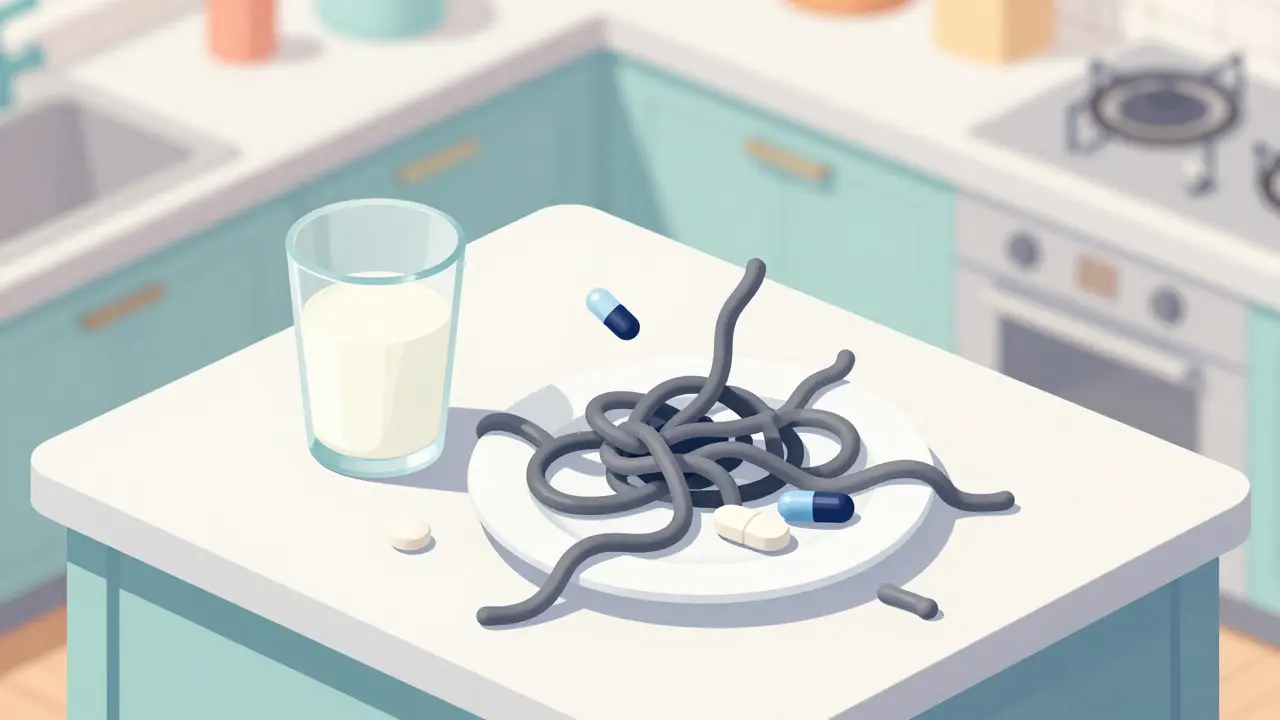
Think taking a multivitamin or a calcium pill is harmless? Think again. If you are popping supplements alongside prescription drugs, you might be flushing your money-and your health-down the drain. It’s not just about what you take; it’s about when you take it. Minerals like calcium and iron don’t just sit in your stomach waiting to be absorbed. They actively grab onto certain medications, forming insoluble clumps that your body simply cannot process. This means the medicine doesn’t work, and the mineral goes unused.
This isn’t theoretical chemistry. It’s a daily reality for millions of people. Research indicates that 67% of women and 25% of men regularly consume calcium supplements. When combined with common prescriptions like antibiotics or thyroid medication, these minerals can reduce drug effectiveness by up to 40%. You could be treating an infection or managing hypothyroidism, but your body isn’t getting the full dose because a glass of milk or a Tums tablet got in the way. Let’s break down exactly which combinations cause trouble and how to fix them without changing your entire lifestyle.
The Chemistry of Chelation: Why Minerals Block Drugs
To understand why your morning yogurt might ruin your antibiotic course, you need to know one word: chelation. In simple terms, chelation is when a metal ion (like calcium or iron) binds tightly to another molecule. Imagine the mineral is a magnet and the medication is a piece of paperclip. Once they snap together, they become a single, heavy object. Your gut lining is designed to absorb small, specific molecules. It cannot absorb this giant, clumped mess. So, both the drug and the mineral pass right through you.
Calcium carbonate, found in many antacids and supplements, is particularly aggressive at this. It creates these insoluble complexes with several classes of drugs. The result? Reduced bioavailability. Bioavailability is just a fancy term for "how much of the drug actually gets into your bloodstream." If bioavailability drops, the therapeutic effect drops. You might feel no better, or worse, your condition might worsen because the treatment failed silently.
Calcium: The Silent Saboteur of Antibiotics and Thyroid Meds
Calcium is the most common culprit in mineral-drug interactions. While we often think of it as a bone-builder, in the digestive tract, it acts as a blocker. Two major groups of medications suffer the most from calcium interference: fluoroquinolones and tetracyclines.
Fluoroquinolones are powerful antibiotics used for urinary tract infections, pneumonia, and other serious bacterial issues. Common names include ciprofloxacin (Cipro) and levofloxacin (Levaquin). Studies show that calcium carbonate can reduce the bioavailability of ciprofloxacin by 40%. That is massive. A 40% drop in efficacy can mean the difference between curing an infection and letting it spread. For short-term antibiotic courses, this failure rate is unacceptable.
Tetracyclines, such as doxycycline and minocycline, face the same fate. These are often prescribed for acne or respiratory infections. If you take a calcium supplement within two hours of these antibiotics, you are essentially neutralizing them. The U.S. Pharmacist notes that patients should avoid calcium supplements altogether during short tetracycline courses if possible, or strictly adhere to spacing protocols.
Then there is thyroid medication. Levothyroxine is the standard treatment for hypothyroidism. It has a narrow therapeutic window, meaning even small changes in absorption can throw off your hormone levels. Calcium decreases levothyroxine’s bioavailability significantly. Dr. Robert L. Talbert, a professor of pharmacy and medicine, documented that doses must be separated by at least four hours. Taking your thyroid pill with your morning cereal and milk? You’re likely under-dosing yourself every single day.
Iron: The pH-Dependent Problem Child
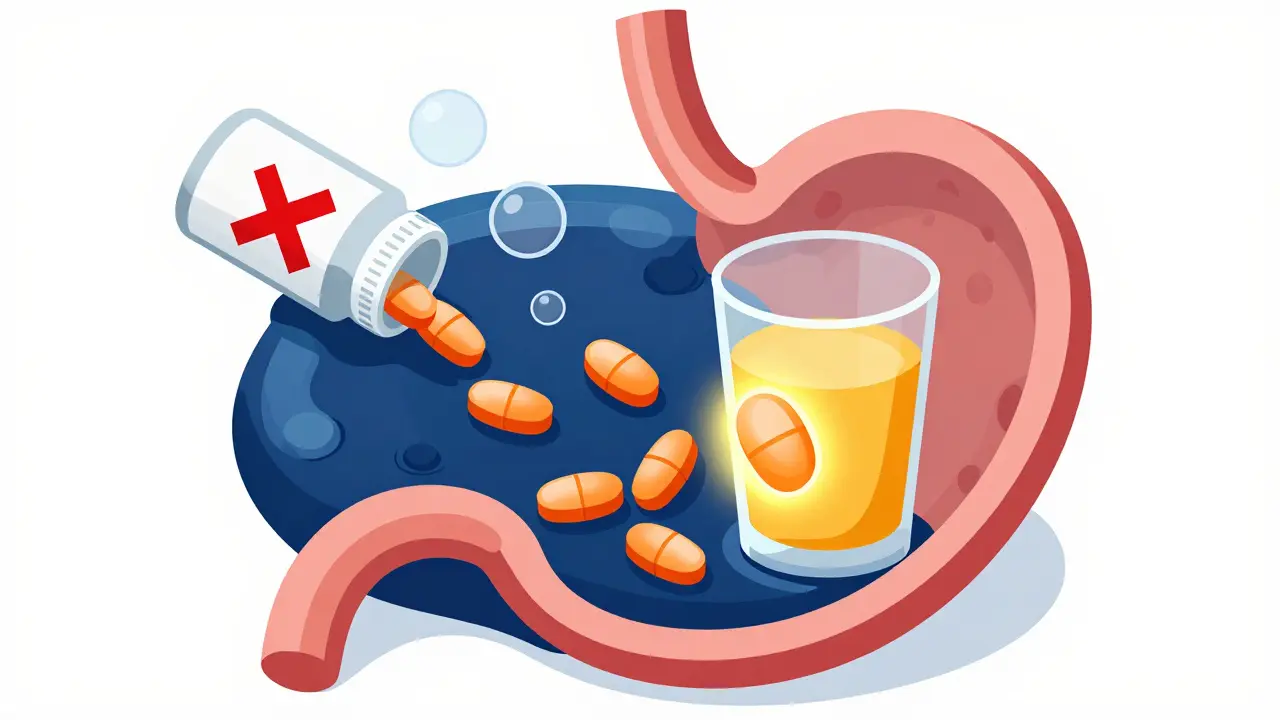
Iron behaves differently than calcium. Its biggest enemy isn’t just chelation; it’s stomach acid. Ferrous fumarate and other iron supplements require an acidic environment to be absorbed properly. This creates a double-edged sword. On one hand, iron binds to antibiotics like tetracyclines and quinolones, blocking their absorption just like calcium does. On the other hand, medications that reduce stomach acid block the iron itself.
If you are taking proton pump inhibitors (PPIs) like omeprazole or pantoprazole, or H2 blockers like famotidine, you are lowering your gastric acidity. GoodRx medical reviewers note that this reduced acidity can severely limit iron absorption. You might be taking your iron pill faithfully, but if your stomach isn’t acidic enough, your body can’t pull the iron out of the pill. This is a common reason why anemia treatments fail in older adults who also take heartburn medication.
Furthermore, iron interacts with tetracycline antibiotics. The binding mechanism prevents the antibiotic from working. The recommended spacing here is strict: take the tetracycline at least 2 hours before or 4 hours after the iron supplement. Missing this window renders the antibiotic less effective, potentially leading to resistant bacteria or prolonged illness.
The Spacing Strategy: How to Time Your Doses
You don’t have to stop taking your supplements or your medications. You just have to be a scheduler. The key strategy is separation. By creating a time gap between ingesting the mineral and the drug, you allow your body to absorb one before introducing the other.
Who Is Most at Risk?While anyone can experience these interactions, certain groups are more vulnerable. Older adults are the primary risk group due to polypharmacy-the use of multiple medications simultaneously. An elderly patient might be taking a PPI for heartburn, levothyroxine for thyroid issues, and a calcium supplement for osteoporosis. Without careful management, this combination is a recipe for therapeutic failure across the board. Pediatric populations also face unique challenges. Children with anemia may need iron supplements, but they are also prone to infections requiring tetracycline antibiotics (for conditions like severe acne or certain respiratory infections). Parents often struggle with the timing, leading to suboptimal treatment outcomes. The NHS emphasizes that parents should consult healthcare professionals about appropriate spacing intervals, as children’s metabolism and schedules differ from adults. Practical Steps to Protect Your HealthSo, what do you do tomorrow morning? Start with a review. Look at your pill organizer. Identify any minerals (calcium, iron, magnesium, zinc) and any prescription drugs. Check the labels. The FDA mandates specific interaction warnings on packaging for affected medications. Read them. Next, talk to your pharmacist. They are the experts in drug interactions. Ask them specifically: "Do I need to space my supplements from my prescriptions?" Don’t assume they know you take vitamins unless you tell them. Pharmacists should question their patients about calcium intake, but they can’t read minds. Finally, set alarms. Use your phone to remind you of the 2-hour or 4-hour gaps. Consistency is key. If you miss a gap once, it’s fine. If you miss it every day, your medication stops working. Treat your supplement schedule with the same seriousness as your prescription schedule. Can I take calcium and levothyroxine at the same time?No. You should separate them by at least four hours. Calcium significantly reduces the absorption of levothyroxine, which can lead to uncontrolled thyroid levels. Take levothyroxine on an empty stomach in the morning, and wait until lunch or dinner to take your calcium supplement. Does iron interact with antibiotics?Yes, specifically with tetracyclines (like doxycycline) and fluoroquinolones. Iron binds to these antibiotics, preventing your body from absorbing them. You must take the antibiotic at least 2 hours before or 4 hours after your iron supplement to ensure the infection is treated effectively. Why shouldn't I take iron with antacids or PPIs?Iron requires an acidic stomach environment to be absorbed. Antacids, H2 blockers (like famotidine), and proton pump inhibitors (like omeprazole) reduce stomach acid. Taking them together can drastically lower iron absorption, making your supplement ineffective. Try to take iron at least 2 hours before these heartburn medications. Is it safe to drink milk while on antibiotics?It depends on the antibiotic. For fluoroquinolones (like Cipro) and tetracyclines, dairy products containing calcium can block absorption. Avoid milk, yogurt, and cheese for at least 2 hours before and 4-6 hours after taking these specific antibiotics. Other antibiotics may not have this restriction, so always check the label. How can I improve iron absorption?Take iron supplements with vitamin C-rich foods or drinks, such as orange juice. Vitamin C enhances iron absorption. Avoid taking iron with coffee, tea, or dairy products, as these contain compounds that inhibit absorption. Also, ensure you are not taking acid-reducing medications at the same time. Do all minerals interact with medications?Not all, but many do. Calcium, iron, magnesium, and zinc are the most common offenders due to their ability to chelate drugs. Always check for interactions with multivitamins, as they often contain a mix of these minerals. When in doubt, ask your pharmacist for a personalized interaction check. |
|---|