Edema in CKD: How Diuretics, Salt Restriction, and Compression Work
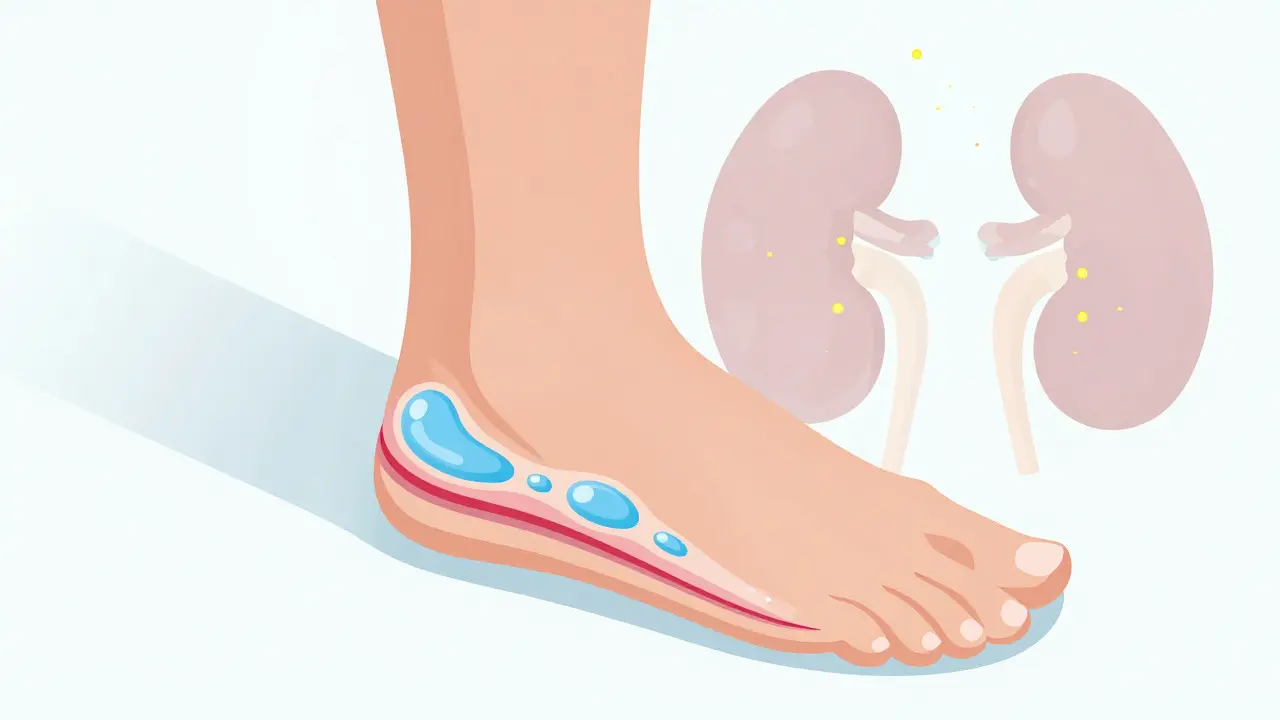
Your ankles feel tight. Your shoes pinch. You press your thumb into your shin, and the skin stays indented for seconds before slowly bouncing back. This isn't just tired legs; it's edema, which is the accumulation of excess fluid in body tissues due to the kidneys' inability to remove sufficient sodium and water from the bloodstream. If you have chronic kidney disease (CKD), this swelling is a direct signal that your kidneys are struggling to balance fluids. It’s uncomfortable, it limits movement, and if left unchecked, it can strain your heart and lungs.
The good news? You don’t have to live with swollen limbs. Managing edema in CKD relies on a three-part strategy: limiting what goes in (salt and fluid), helping what’s there come out (diuretics), and mechanically pushing fluid back into circulation (compression). Let’s break down exactly how each piece works, based on current clinical guidelines and real-world patient data.
Why Swelling Happens in Kidney Disease
To treat the swelling, you first need to understand why it’s happening. Healthy kidneys act as precise filters, removing waste and balancing salts and water. In CKD, particularly in stages 3 through 5 (where estimated glomerular filtration rate [eGFR] drops below 60 mL/min/1.73m²), this filtering capacity declines. The primary issue isn't just that water builds up; it's that sodium retention drives the process.
When your kidneys can't excrete enough sodium, your body holds onto water to dilute it. This expands your plasma volume, increasing pressure inside your blood vessels (capillary hydrostatic pressure). Eventually, this pressure forces fluid out of the vessels and into the surrounding tissue spaces. This is why swelling typically appears in areas where gravity pulls fluid most strongly: the lower extremities, around the eyes (periorbital area), and sometimes in the abdomen (ascites).
- Stages 1-2: Edema is rare unless other conditions like heart failure are present.
- Stages 3-4: Fluid overload becomes common as eGFR continues to drop.
- Stage 5: Severe edema often requires aggressive intervention or dialysis.
Understanding this mechanism is crucial because it tells us that simply "drinking less water" rarely solves the problem. You must address the sodium imbalance first.
The Foundation: Strict Salt Restriction
Before reaching for medication, you must control dietary sodium. The National Kidney Foundation’s KDOQI guidelines specify that sodium intake should not exceed 2,000 mg per day (about 5 grams of salt) for any CKD patient with edema. For those in stages 4-5, the limit tightens further to 1,500 mg daily.
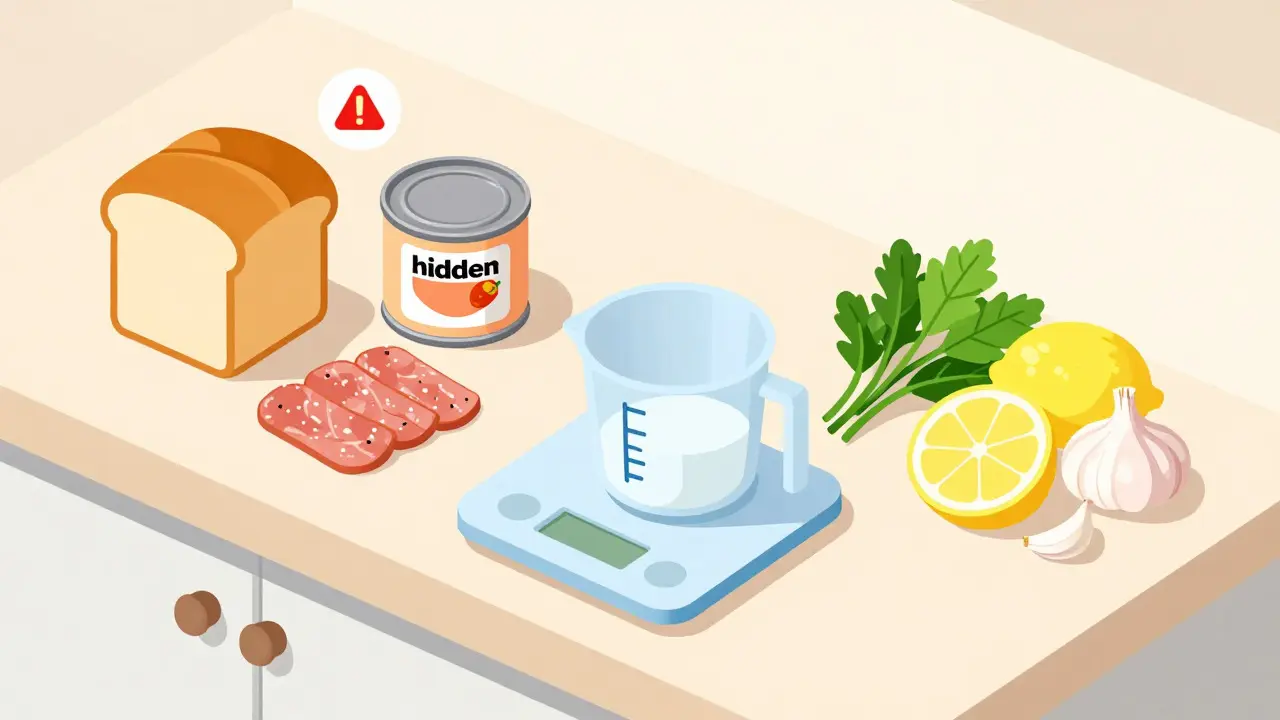
Here is the hard truth: most people fail at salt restriction not because they love salty food, but because they don't realize how much hidden sodium exists in everyday items. According to NHS clinical guidance, processed foods contribute roughly 75% of dietary sodium. You might skip the salt shaker, but one slice of bread can contain 150-200 mg of sodium. A single cup of canned soup can hold between 800 and 1,200 mg-half your daily limit right there.
| Food Item | Serving Size | Approximate Sodium Content |
|---|---|---|
| Bread (white) | 2 slices | 300-400 mg |
| Canned Soup | 1 cup | 800-1,200 mg |
| Deli Meats (ham/turkey) | 2 oz | 500-700 mg |
| Frozen Dinners | 1 package | 600-900 mg |
| Instant Noodles | 1 packet | 800-1,000 mg |
Strict adherence to these limits can reduce edema by 30-40% within 2-4 weeks without even using diuretics, according to American Kidney Fund data. To succeed, you need to read labels religiously and cook from fresh ingredients whenever possible. Renal dietitians recommend replacing table salt with herbs, lemon juice, and garlic to maintain flavor without the sodium load.
Diuretics: The Pharmacological Cornerstone
When diet alone isn't enough, doctors prescribe diuretics-medications that help your kidneys remove more sodium and water through urine. However, choosing the right diuretic depends entirely on your remaining kidney function (eGFR).
Loop Diuretics (such as furosemide, bumetanide, and torsemide) are the first-line treatment for patients with an eGFR below 30 mL/min/1.73m². These drugs work on the Loop of Henle in the kidney, blocking sodium reabsorption effectively even when kidney function is poor. Typical starting doses of furosemide range from 40 to 80 mg daily. Doctors may increase this by 20-40 mg every few days until the desired effect is seen, sometimes reaching maximum doses of 160-320 mg daily in severe cases.
Thiazide Diuretics (like hydrochlorothiazide) generally stop working well when eGFR drops below 30. They are useful in earlier stages (eGFR >30) at doses of 12.5-25 mg daily. For resistant edema, nephrologists sometimes combine loop and thiazide diuretics-a technique called "sequential nephron blockade." While this boosts efficacy, NIH studies warn it increases the risk of acute kidney injury by 23%, so it requires careful monitoring.
A significant advancement occurred in March 2025 when the FDA approved intravenous furosemide specifically for CKD-related edema. Clinical trials showed this method provided 38% greater fluid clearance than oral pills in patients with very low eGFR (<15). However, diuretics aren't risk-free. Data shows diuretic users experience a faster decline in kidney function (mean annual eGFR drop of 3.2 vs 1.7 in non-users) and a higher risk of needing renal replacement therapy. This highlights the need for precise dosing: too little does nothing; too much harms the kidneys.
Potassium-Sparing Diuretics like spironolactone are used cautiously. They are recommended for patients with concurrent heart failure (NYHA class III/IV) but require strict potassium monitoring. In CKD stages 4-5, the risk of hyperkalemia (dangerously high potassium levels) exceeds 25%, which can cause fatal heart rhythms.
Compression Therapy: Mechanical Support
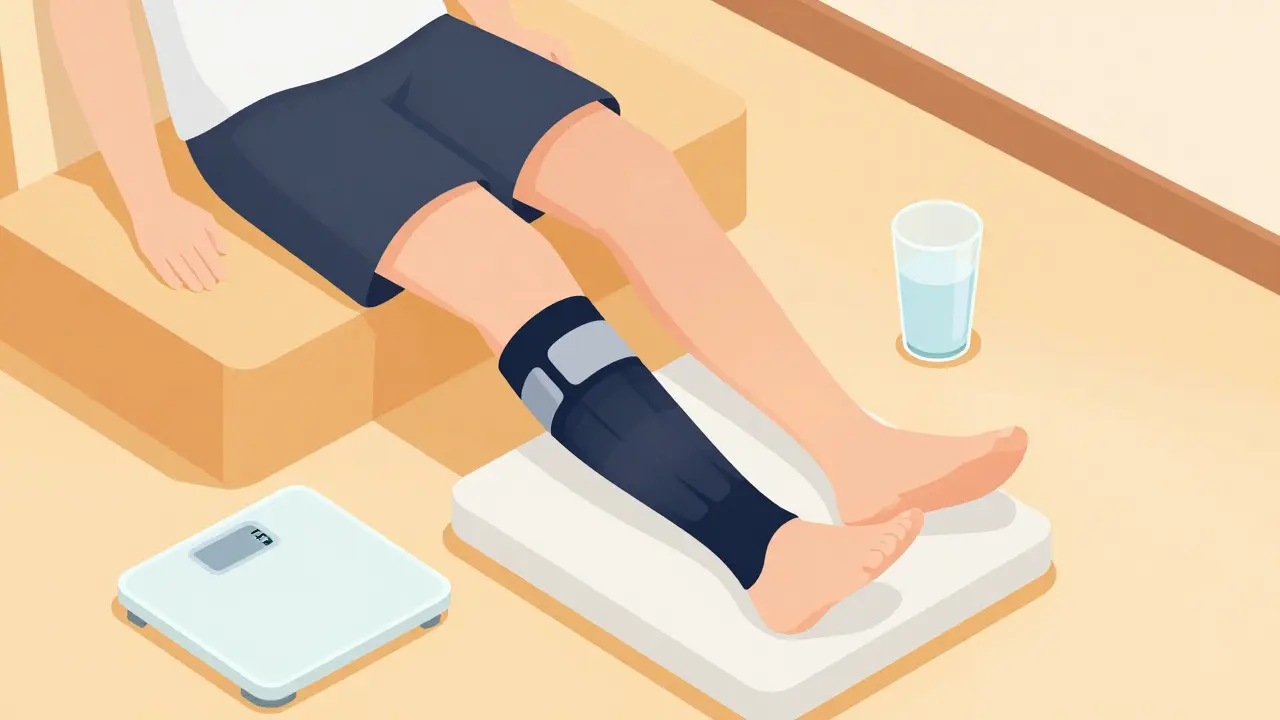
If diuretics pull fluid out internally, compression therapy pushes it back into circulation externally. This is especially vital for lower extremity edema. The American Venous Forum recommends graduated compression stockings that exert 30-40 mmHg of pressure at the ankle, decreasing up the leg. This gradient helps venous return and reduces capillary leakage.
Consistent use can reduce leg volume by 15-20% after four weeks. However, adherence is a major hurdle. A University of Michigan study found only 38% of patients wore them consistently beyond three months due to discomfort and difficulty putting them on. Tips for success include:
- Putting stockings on first thing in the morning, before swelling accumulates.
- Using donning aids or gloves to make pulling them up easier.
- Checking skin integrity daily to prevent irritation or ulcers.
For severe cases, intermittent pneumatic compression devices (which cycle pressure at 40-50 mmHg) offer additional benefit. Studies show these devices can reduce leg circumference 35% more than standard stockings alone. Combining compression with elevation (keeping legs above heart level) and gentle movement (walking 30 minutes, 5 days a week) enhances lymphatic drainage significantly.
Fluid Limits: Beyond Just Salt
In advanced CKD with significant edema, restricting sodium isn't enough; you must also limit total fluid intake. The Mayo Clinic protocol recommends limiting fluids to 1,500-2,000 mL per day. This includes everything you drink plus "hidden fluids" in food.
Many patients forget that soups, yogurt, ice cream, and juicy fruits count toward this limit. For example, one cup of yogurt contains about 200 mL of fluid, and watermelon is 92% water. Tracking all fluid sources in a journal or app can help ensure you stay within safe boundaries without causing dehydration, which would further stress the kidneys.
Monitoring and When to Worry
Effective management requires regular monitoring. Weigh yourself daily at the same time, preferably in the morning after urinating but before eating. A sudden weight gain of more than 2 pounds (1 kg) in a day or 5 pounds (2.3 kg) in a week signals rapid fluid retention. Contact your doctor immediately if you notice:
- Shortness of breath or difficulty lying flat (signs of pulmonary edema).
- Rapid worsening of swelling despite medication.
- Confusion or extreme fatigue (potential electrolyte imbalance).
New technologies like bioimpedance spectroscopy (BIS) are becoming more common in clinics to objectively measure fluid status, moving beyond subjective visual assessments. Ongoing trials, such as the NIH-funded FOCUS trial, aim to refine how we use these tools to guide diuretic therapy, potentially reducing hospitalizations by 32%.
How quickly should I see results from diuretics?
Most patients notice increased urination within 1-2 hours of taking loop diuretics like furosemide. Visible reduction in swelling typically takes 2-4 days of consistent dosing. If there is no change after 3-5 days, your doctor may need to adjust the dose or switch medications.
Can I eat bananas if I'm on spironolactone for CKD edema?
Be very cautious. Spironolactone is a potassium-sparing diuretic, meaning it retains potassium. Since damaged kidneys struggle to excrete potassium, eating high-potassium foods like bananas, oranges, or potatoes can lead to dangerous hyperkalemia. Always check your latest blood potassium levels with your doctor before consuming high-potassium foods.
Why do my legs swell more in the evening?
Gravity causes fluid to pool in the lowest parts of your body during the day. As you stand or sit, hydrostatic pressure pushes fluid out of capillaries into the tissue. Elevating your legs above heart level for 30 minutes several times a day helps counteract this gravitational pull.
Is compression therapy safe for everyone with CKD?
Generally yes, but not always. If you have peripheral arterial disease (poor blood flow to the legs), strong compression can restrict oxygen delivery and cause tissue damage. Always get an arterial assessment from your doctor before starting high-compression stockings.
What is the target weight loss goal for treating edema?
In acute settings, the goal is often a negative sodium balance leading to a weight loss of 0.5-1.0 kg per day until "dry weight" is reached. Dry weight is your ideal weight without excess fluid. Losing weight too fast can cause dehydration and kidney injury, so steady, monitored progress is key.