
Evergreening: How Pharma Brands Delay Generic Competition
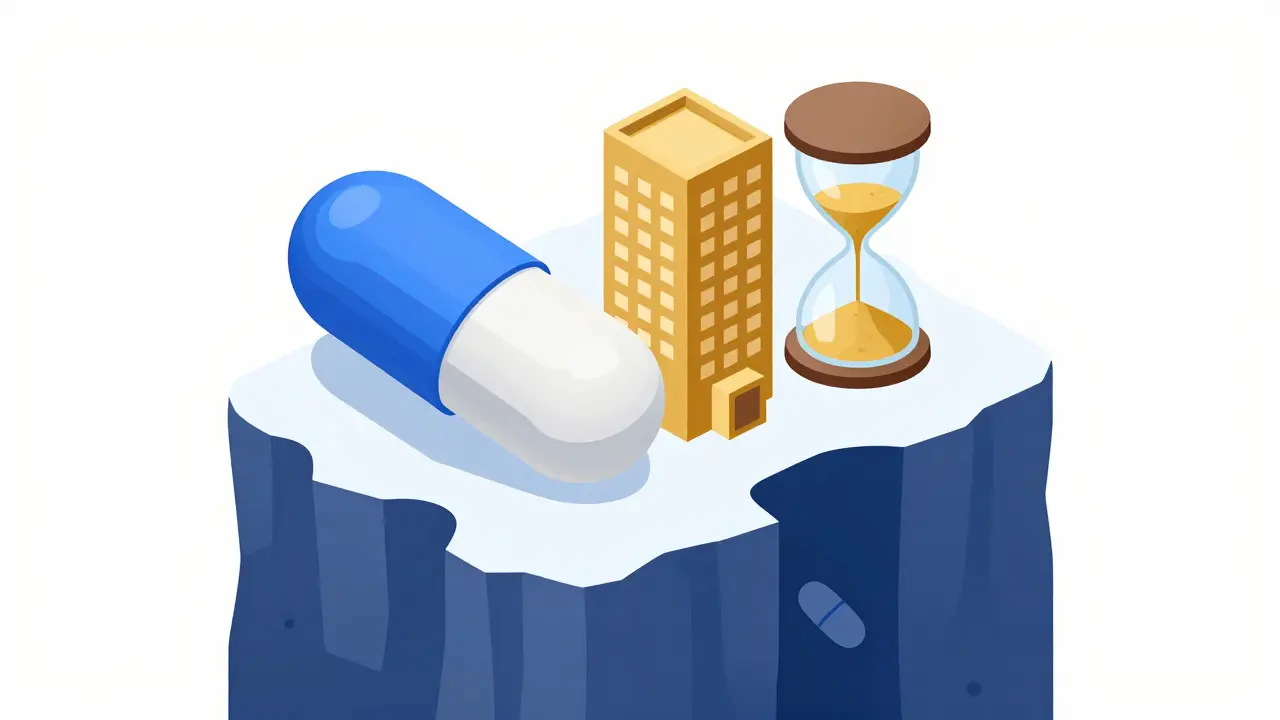
Imagine spending a decade and billions of dollars to develop a life-saving drug, only to have your profits vanish the moment your patent expires. For pharmaceutical giants, that "patent cliff" is a nightmare scenario. To avoid it, many companies use a tactic called evergreening is a set of legal and business strategies used to extend the lifetime of patents on existing drugs to prevent generic competitors from entering the market. By making minor tweaks to a formula or changing how a pill is released, brands can effectively freeze out cheaper alternatives for years, sometimes decades, after the original invention should have become public property.
The Game of Patent Timelines
To understand why companies do this, you first have to look at the standard patent timeline. Typically, a patent lasts 20 years from the filing date. However, by the time a drug clears clinical trials and gets regulatory approval, a huge chunk of that time is already gone. This leaves a narrow window to recoup massive R&D costs.
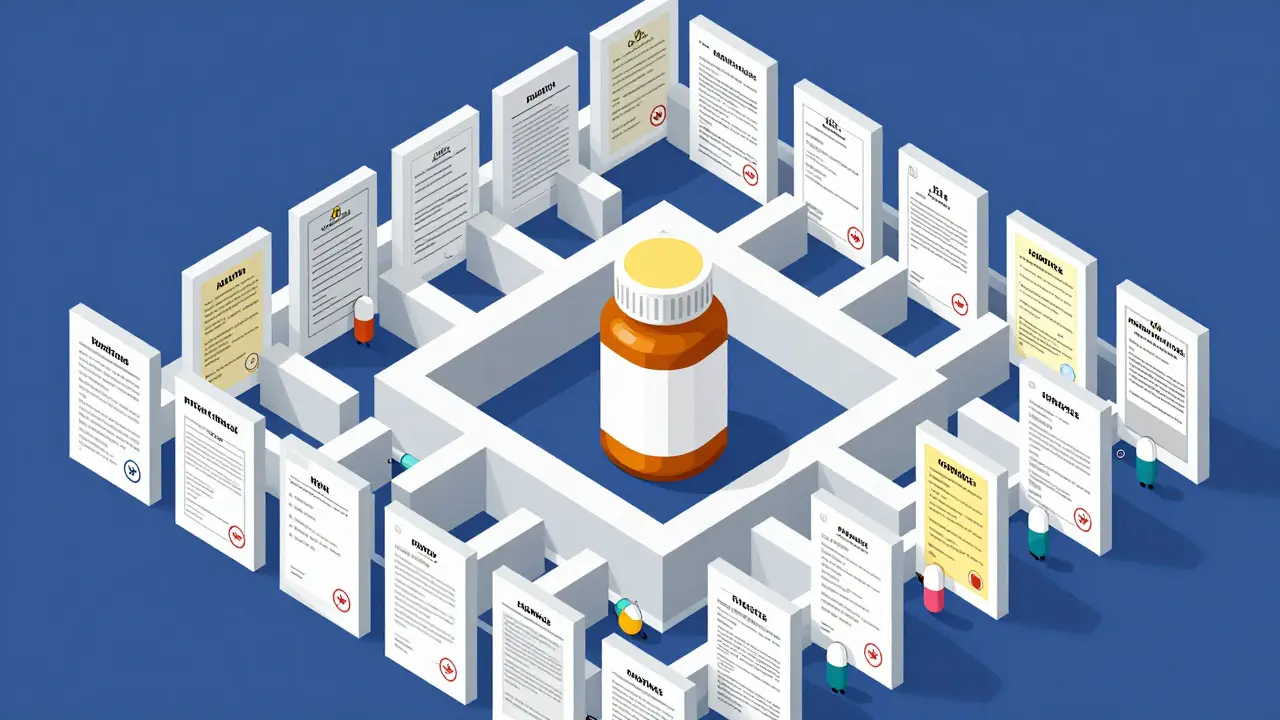
Evergreening isn't about creating a new cure; it's about stretching the clock. Instead of one single patent, companies build what experts call a "patent thicket." They file dozens or even hundreds of secondary patents on the same drug. These might cover a new dosage, a different chemical salt, or even just a new way to swallow the medicine. Because each new patent can potentially trigger its own exclusivity period, the original expiration date becomes a suggestion rather than a deadline.
Common Evergreening Tactics in the Wild
Companies don't just rely on one trick. They use a variety of regulatory loopholes and branding shifts to stay on top. One of the most common moves is "product hopping." This is where a company introduces a "new and improved" version of a drug just before the old one goes generic. They then use aggressive marketing to move all their patients to the new version, making the old version (which the generic companies are targeting) obsolete.
Take the transition from Prilosec to Nexium as a classic example. By shifting the market to a successor drug with its own fresh patent protections, the brand maintains its grip on the market even as the original product's protection fades. Other common strategies include:
- New Formulations: Switching from a tablet to a capsule or a slow-release version.
- Pediatric Extensions: Gaining an extra six months of exclusivity by conducting studies on children.
- Combination Drugs: Mixing two existing drugs into one pill to create a "new" patentable entity.
- Orphan Drug Status: Targeting rare diseases to get a specialized seven-year exclusivity window.
| Drug Category | Typical Exclusivity Period | Requirement for Extension |
|---|---|---|
| New Chemical Entity | 5 Years | First-time approval of a new drug |
| Modified Old Drug | 3 Years | New clinical trials essential to approval |
| Orphan Drug | 7 Years | Treatment for a rare disease/condition |
| Pediatric Use | 6 Months | Clinical data for pediatric populations |
The High Cost of "Minor" Changes
There is a massive difference between true innovation and evergreening. Developing a brand new molecular entity can cost around $2.6 billion and take over a decade of failure and testing. In contrast, changing a drug from a powder to a capsule is relatively cheap and carries far less risk. Yet, the financial reward for these minor changes can be staggering.
Consider Humira, a blockbuster drug for autoimmune conditions. The company AbbVie didn't just file one patent; they filed 247 applications related to the drug. This created a legal wall so complex and expensive to climb that generic competitors were stalled for years. When a drug like Humira generates roughly $40 million a day, the incentive to block generic entry is overwhelming.
When generics finally hit the market, the price drop is usually dramatic. In most cases, generic competition slashes drug prices by 80% to 85% within the first year. By delaying that moment, companies aren't just protecting their profits-they are directly affecting who can afford their medication.
The Legal and Regulatory Pushback
Regulators are starting to catch on. For years, the Hatch-Waxman Act in the US provided the framework for both patent protection and generic entry, but it left gaps that companies exploited. Now, agencies like the Federal Trade Commission (FTC) are stepping in. The FTC has previously challenged the "patent thickets" used by companies like AbbVie, arguing that these strategies are anticompetitive rather than innovative.
We're also seeing a shift in how governments handle pricing. The Inflation Reduction Act of 2022 introduced Medicare drug price negotiations. This changes the math for pharmaceutical companies; if the government can cap the price of a high-cost drug, the financial incentive to spend millions on "evergreening" a patent becomes much lower.
The Future: Biologics and Beyond
As traditional chemical drugs become easier to genericize, the industry is moving toward biologics. These are complex medicines made from living organisms. Unlike a simple pill, biologics are incredibly hard to copy exactly. Instead of "generics," we get "biosimilars," which are similar but not identical.
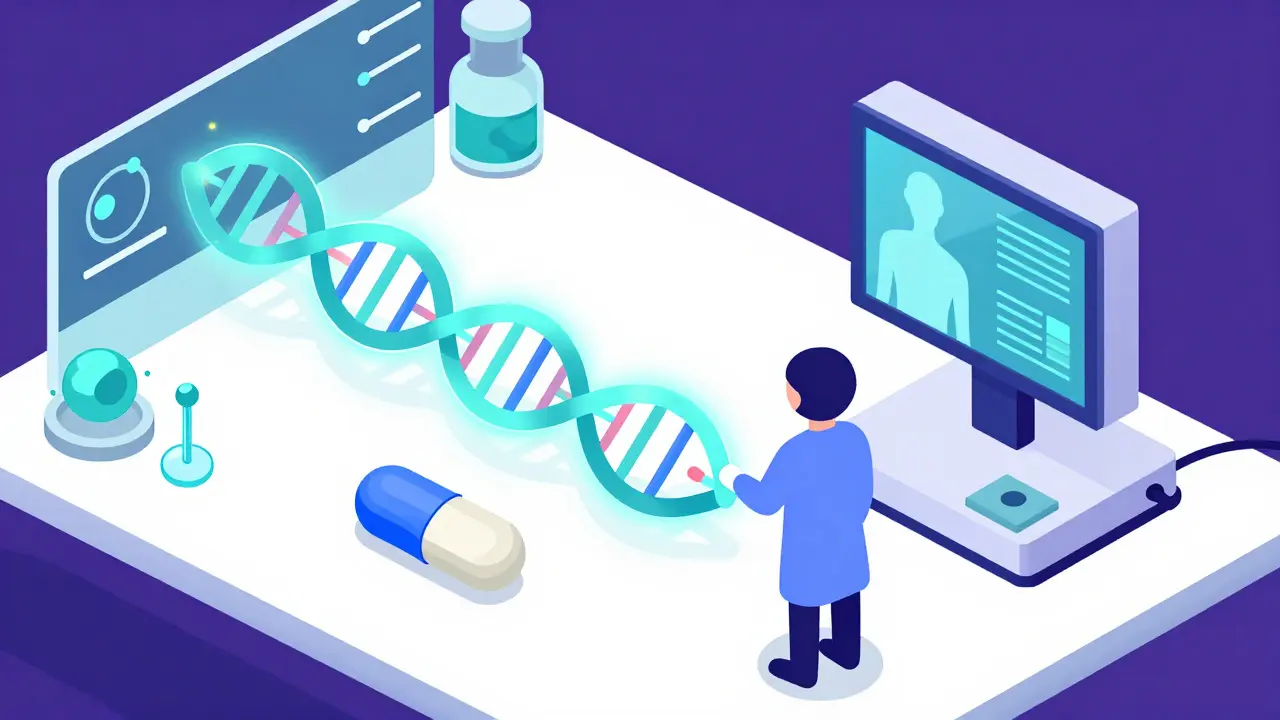
This complexity provides a natural shield for brands, but the strategies for extending control are evolving. We're seeing a rise in pharmacogenomics-patenting genetic tests that determine if a drug will work for a specific person. By controlling the test, the company can effectively control who uses the drug, creating a new layer of market dominance that doesn't rely on the drug's chemical patent alone.
Is evergreening illegal?
Not strictly. Filing for patents on improvements is a legal right. However, when these patents are used to create an anticompetitive "thicket" that blocks all competition without providing a real medical benefit, it can trigger antitrust lawsuits from agencies like the FTC.
How does evergreening affect the average patient?
It primarily hits the wallet. By delaying generic entry, patients are forced to pay brand-name prices for much longer. This can lead to "prescription abandonment," where patients skip doses because they cannot afford the monthly cost.
What is the difference between a generic and a biosimilar?
A generic is a chemically identical copy of a drug. A biosimilar is a biological product that is "highly similar" to a reference biologic but not identical, due to the complexity of living cells. This makes biosimilars harder and more expensive to produce than generics.
Can a company evergreen a drug forever?
No. While they can extend protection for decades, eventually the clinical value of the modifications is challenged in court or the regulatory body refuses to grant further exclusivity. However, some companies have managed to extend control for over 90 years across a portfolio of related drugs.
Does this practice discourage real innovation?
Critics argue yes. If a company can make billions by tweaking an old drug (low risk), they may be less inclined to spend billions on a completely new drug (high risk). However, some argue the profits from evergreening fund the R&D for the next big breakthrough.
What to Watch For
If you're a healthcare provider or a patient, keep an eye on "new versions" of long-standing medications. When a brand suddenly pushes a "controlled-release" or "extended-release" version just as the original is about to lose its patent, it's often a sign of a lifecycle management strategy. Checking for available biosimilars or generics through independent pharmacy databases can help find more affordable alternatives when the brand tries to steer you toward a newer, patented version.

Comments (13)
Joel Bonstell
30 Apr 2026
Man, this is just heartbreaking... thinking bout all the peple who cant afford their meds because of some legal loophole. My cousin had a real hard time with this stuff last year. Its wild how they just change the pill shape and boom, another 5 years of overcharging. Really hope the FTC actually does something about these thickets cuz its just plain wrong.
Andrew Hanssen
30 Apr 2026
The premise that this is "wrong" is laughably naive. Incentives drive progress. If you strip away the ability to protect iterations, you simply kill the desire to refine existing treatments. The "patent cliff" is a necessary correction in a capitalist framework, and complaining about it is merely a plea for state-mandated charity.
Ken Baldridge
2 May 2026
We're basically looking at a classic case of rent-seeking behavior here. The ROI on a New Chemical Entity is high-risk, but the delta between a tablet and a capsule is negligible in terms of actual clinical efficacy. It's a total play for market exclusivity without the R&D heavy lifting. We need more transparent data on therapeutic equivalence to stop the product hopping madness.
Alexa Mack
2 May 2026
I wonder how this compares to other countries. I've heard some places have way stricter rules on what counts as a "new" invention for patents. It's interesting that the US system allows so many secondary patents. Maybe we could learn from a more balanced approach elsewhere to keep costs down for everyone.
SWATI NAWANGE
2 May 2026
It is utterly pedestrian to assume that the general public grasps the intricate nuances of pharmacology. The sheer audacity of suggesting that a simple regulatory change could solve this is laughable. One must acknowledge that the intellectual property framework is the only thing preventing the total collapse of medical advancement. I find it quaint that some believe a "capsule change" is a scam, when in reality, the pharmacokinetic profile can be vastly improved, though I doubt most here would understand the chemistry involved.
Robert Cowley
3 May 2026
Oh look, another "expert" defending corporate greed! 🙄 It's not about the chemistry, it's about the checkbook. The a-hole executives just want to keep the stock price high while people literally die because they can't afford a pill that costs 2 cents to make. Absolutely disgusting! 🤮
Bradley Gusick
4 May 2026
Wake up people! This isn't just about money, it's about control. They don't want us having cheap generics because that means we aren't dependent on the system. These "patent thickets" are just a way to keep the population sick and broke. It's all part of the same game the big government plays to keep us under their thumb. They're literally patenting our DNA now to decide who lives and who dies!
Leah Sentz
5 May 2026
AMERICA FIRST!! 🇺🇸 We need to protect our companies from foreign generic competition anyway!! Who cares if it costs a bit more if it keeps our jobs here? 🦅 Stop whining about the prices and support American innovation!! 🇺🇸🇺🇸🇺🇸
Prudence Wesson
7 May 2026
The lack of intellectual rigor in these responses is... staggering!!! One must analyze the systemic failure of the FDA's approval process... which is clearly compromised by lobbying!!! It is simply pathetic that the regulatory bodies allow "pediatric extensions" as a blatant loophole!!! Pure incompetence!!!
Sarah Mifsud
9 May 2026
I actually work in pharamcy and we see this all the time. Patients get so confused when their doc switches them to the "new" version and then the copay jumps through the roof. Its really a mess at the counter. Most of the time the new version isnt even that much better, just a different release timing. Just check with your pharmacist next time if you see a weird price hike!
Tallulah Sandison
9 May 2026
Stay strong everyone! Just keep advcating for change! We can do this! 💪
Christina Lancey
9 May 2026
It is encouraging to see more people becoming aware of these practices. With more knowledge, we can all advocate for a fairer system together.
Halle Dagley
10 May 2026
It is a travesty that our national sovereignty is undermined by those who seek to weaken the profit margins of our great industires. The regulatory overreach by the FTC is a disgrace to the free market of the United States of Amercia. We must cease this unpatriotic assault on our corporatons immediately.