
How Aging Affects Medication Response and Dosing Guidelines
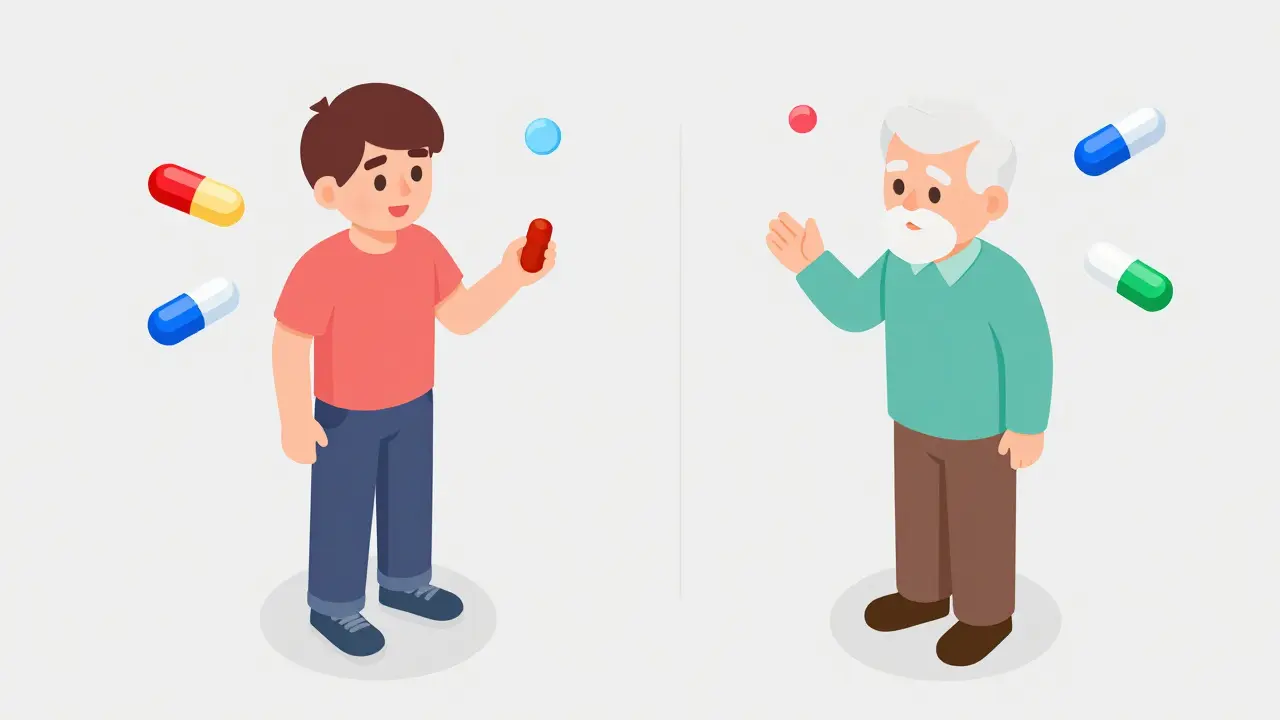
Imagine taking a pill that worked perfectly for you ten years ago, but today, that same dose leaves you feeling dizzy, confused, or dangerously drowsy. It isn't just "getting older"; it is a fundamental shift in how your internal chemistry handles medicine. For many people over 65, the body becomes a different environment for drugs, turning standard doses into potential risks. In fact, nearly 40% of seniors take five or more prescription medications daily, yet the way these drugs move through an aging body is vastly different from how they behave in a 30-year-old.
The "How" and "What": Pharmacokinetics vs. Pharmacodynamics
To understand why dosing changes, we have to look at two processes: Pharmacokinetics is how your body processes a drug (absorption, distribution, metabolism, and excretion. Think of it as the journey the medicine takes from the moment you swallow it until it leaves your system. On the other hand, Pharmacodynamics is what the drug actually does to your body-how it binds to receptors and triggers a response.
As we age, both of these systems shift. Your organs don't just "slow down"; they change in specific, measurable ways. This means that a dose that was safe for decades might suddenly become toxic because your body can no longer clear it fast enough, or your brain becomes hypersensitive to its effects. This is why senior medications require a more tailored approach than a one-size-fits-all prescription.
Where the Changes Happen: The Body's Processing Map
The journey of a drug is altered at every major stop in the body. Let's look at the specific physiological shifts that force doctors to change doses.
The Kidneys and Liver (The Cleanup Crew)
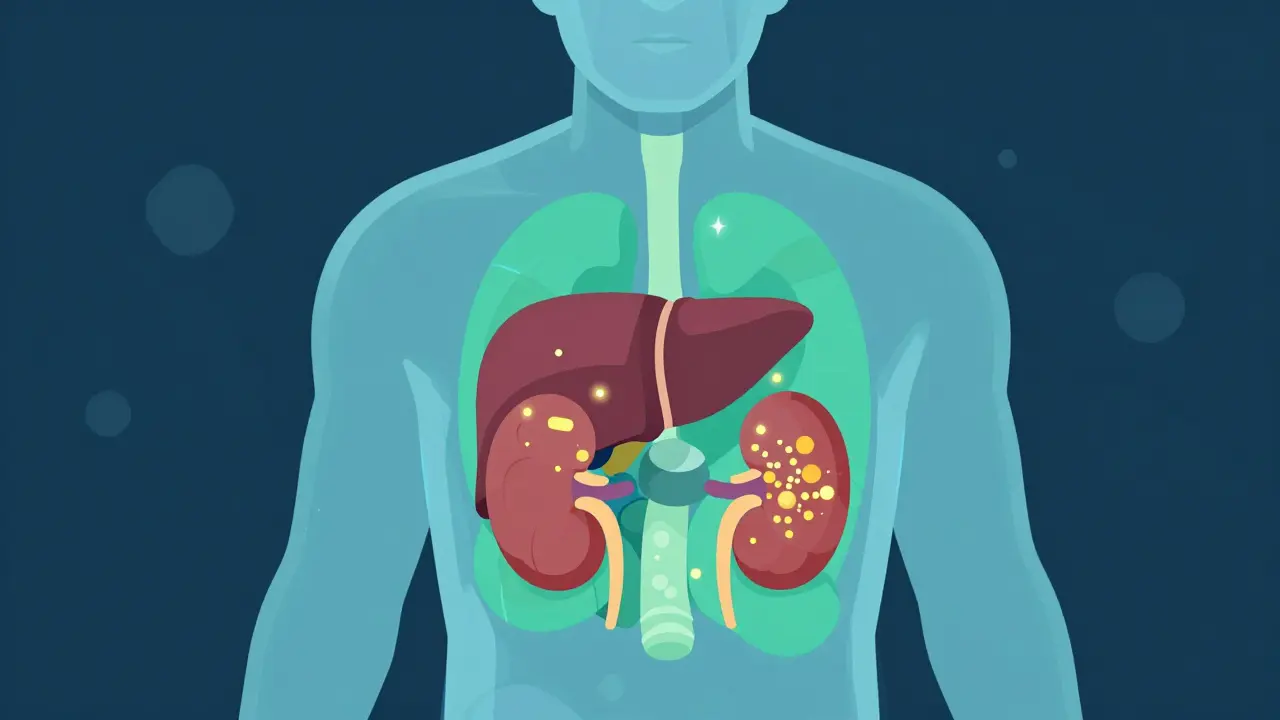
Your kidneys are the primary exit for many drugs. After age 40, the glomerular filtration rate (GFR)-which measures how well your kidneys filter blood-drops by about 0.8 mL/min per year. By age 80, the clearance of drugs like digoxin can be 30-50% lower than in younger adults. If the exit door is smaller, the medicine stays in your blood longer, increasing the risk of overdose.
The liver also slows down. Blood flow to the liver decreases by 30-40% in adults over 70, which means "flow-dependent" drugs, such as propranolol, aren't broken down as quickly. When the liver can't keep up, the drug concentration builds up in the system, which can lead to unexpected side effects.
Body Composition and Protein Binding
Our bodies change shape internally. We typically lose muscle and gain fat as we age. For lipid-soluble drugs (like diazepam), this increase in body fat acts like a sponge, soaking up the medication and keeping it in the body longer. This can extend the "half-life" of a drug by two or three times, meaning the drug stays active in your system way past the next scheduled dose.
Additionally, serum albumin-a protein that carries drugs through the bloodstream-declines from about 4.5 g/dL to 3.8 g/dL between ages 20 and 80. For drugs that rely heavily on albumin, like warfarin, this means there is more "free" drug floating around to interact with your tissues, making the medication much more potent and dangerous.
The Stomach and Gut
Even the start of the journey is different. Older adults often have 25-30% less gastric acid and slower gastric emptying. This doesn't necessarily change how much drug you absorb, but it changes when it happens. A drug like acetaminophen might take 1-2 hours longer to reach its peak concentration, which can complicate timing for pain management.
| Organ/System | Change in Older Adults | Effect on Medication | Example Drug Affected |
|---|---|---|---|
| Kidneys | Reduced GFR / Clearance | Slower elimination; higher toxicity | Digoxin, Aminoglycosides |
| Liver | Lower blood flow (30-40% drop) | Slower metabolism of flow-dependent drugs | Propranolol, Lidocaine |
| Body Fat | Increased fat percentage | Longer half-life for fat-soluble drugs | Diazepam |
| Blood Proteins | Lower serum albumin | Higher levels of "free" active drug | Warfarin |
The Danger Zone: Increased Sensitivity
Beyond how the body processes the drug, the body's response to the drug changes. This is pharmacodynamics. For example, the blood-brain barrier becomes more permeable with age, and we lose neurons. This makes the brain far more sensitive to central nervous system depressants. A dose of a benzodiazepine that might make a 40-year-old sleepy could leave an 80-year-old severely confused or prone to falls.
Beta-adrenoceptor function also drops by nearly 50% in adults over 70. This means the heart doesn't respond as strongly to certain medications designed to increase heart rate. Conversely, the body's sensitivity to anticoagulants like warfarin increases 2-4 fold, often requiring a 20-30% lower maintenance dose to avoid dangerous bleeding.
One of the biggest red flags is Anticholinergic sensitivity. Drugs that block acetylcholine (like some older allergy meds or sleep aids) can cause a massive spike in confusion, urinary retention, and drops in blood pressure. In adults over 75, these drugs cause confusion at rates 3-5 times higher than in middle-aged adults.
Safe Prescribing: Tools and Guidelines
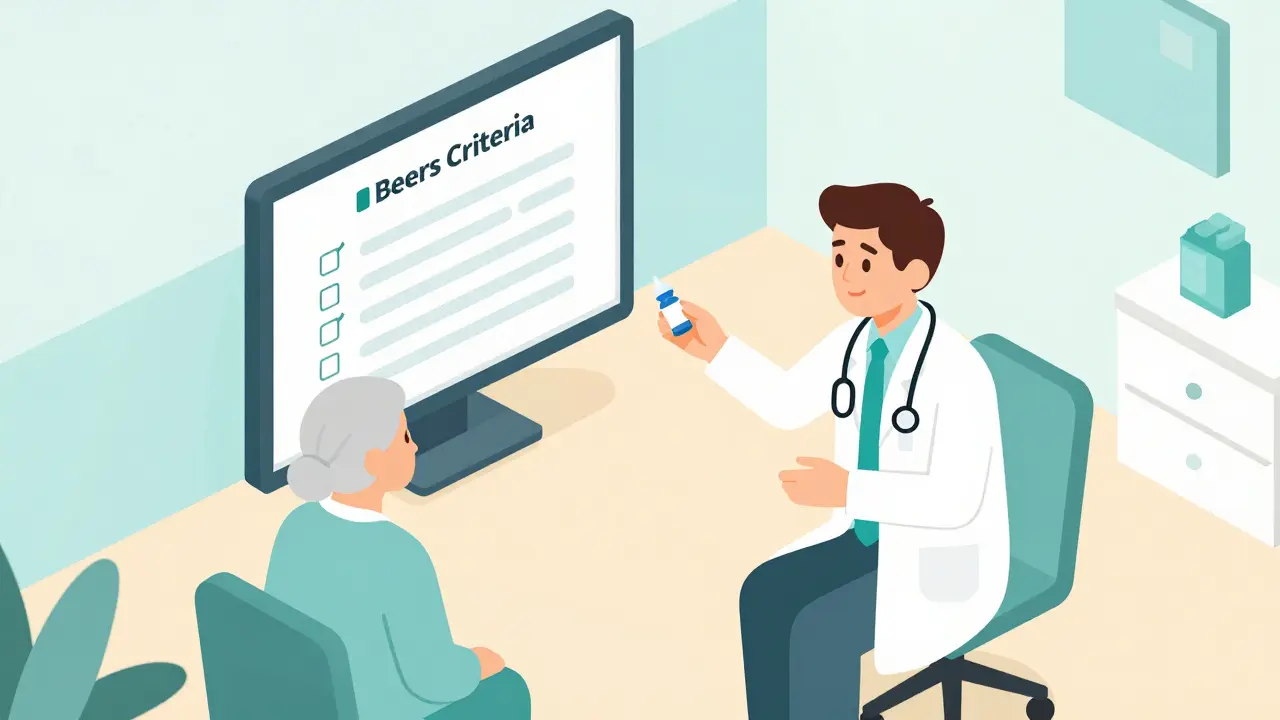
Because of these risks, medical professionals don't just guess. They use specific frameworks to keep seniors safe. One of the most vital is the Beers Criteria, a list maintained by the American Geriatrics Society that identifies medications that are potentially inappropriate for older adults. It highlights 30 different medication classes that either need dose adjustments or should be avoided entirely.
Clinicians also use the START (Screening Tool to Alert to Right Treatment) and STOPP (Screening Tool of Older Persons' Prescriptions) criteria. These evidence-based tools help doctors spot medications that are no longer necessary or are causing more harm than good. Research shows that using these tools can reduce adverse drug events by 22%.
The gold standard for dosing in the elderly is a philosophy called "start low, go slow." This means beginning with 25-50% of the standard adult dose and gradually increasing it only if necessary. This allows the doctor to see how the patient's specific physiology reacts before hitting a toxic level.
Practical Tips for Patients and Caregivers
If you are managing medications for yourself or a loved one, a few specific steps can prevent hospital visits. Remember that a blood test for serum creatinine isn't enough; doctors should use the Cockcroft-Gault equation to calculate actual creatinine clearance to determine the right dose.
- Request a Medication Review: Every six months, have a pharmacist or doctor review all prescriptions to check for "prescribing cascades" (where a new drug is prescribed just to treat the side effect of another drug).
- Watch for "Slight" Changes: In seniors, a side effect might not look like a rash or nausea. It might look like sudden confusion, a slight stumble, or a change in sleep patterns. These are often signs of drug toxicity.
- Question Anticholinergics: If a medication is for sleep or allergies, ask if there is a non-anticholinergic alternative to avoid the risk of cognitive impairment.
- Track Kidney Function: Ensure your provider is monitoring GFR regularly, as kidney function can change quickly during a bout of dehydration or illness.
Why do older adults need lower doses of medication?
Older adults generally need lower doses because their kidneys and liver clear drugs more slowly, meaning the medicine stays in the bloodstream longer. Additionally, changes in body composition-like increased fat and decreased protein in the blood-can increase the amount of "free" active drug in the system, making standard doses potentially toxic.
What are the Beers Criteria?
The Beers Criteria is a widely recognized list of medications that are potentially inappropriate for older adults. It helps healthcare providers identify drugs that have a higher risk of causing adverse effects in seniors compared to the potential benefit they provide.
Can aging make a medication stop working?
Yes, in some cases. For example, beta-adrenoceptor function declines by 40-50% in adults over 70. This means some medications that target these receptors may not produce the same heart-rate response they once did, requiring different therapeutic strategies.
What is the "start low, go slow" approach?
This is a clinical strategy where a patient starts with a very small dose (often 25-50% of the normal dose) and the amount is increased gradually. This minimizes the risk of severe adverse reactions while allowing the physician to find the lowest effective dose for that specific individual.
How does dehydration affect medication in seniors?
Dehydration can cause a sudden drop in kidney function (reduced GFR), which prevents drugs from being excreted properly. This can lead to a rapid buildup of medication in the blood, potentially turning a normal dose into a toxic one very quickly.
Next Steps and Troubleshooting
If you suspect a medication is causing issues, don't stop taking it abruptly, as this can cause dangerous rebound effects. Instead, schedule a "brown bag" appointment where you bring every single bottle-including vitamins and over-the-counter supplements-to your doctor.
For caregivers, keep a daily log of mood and balance. If you notice a pattern where confusion spikes a few hours after a specific pill, document the exact time and dosage. This data is invaluable for a doctor when deciding whether to implement a dose reduction or switch to a different class of medication.



Comments (14)
Mark Koepsell
30 Apr 2026
The Cockcroft-Gault equation is indeed the standard, but it's worth noting that for very elderly patients with low muscle mass, it can sometimes overestimate kidney function. This is where the MDRD or CKD-EPI equations provide a more nuanced view of the glomerular filtration rate.
Kelly Feehely
1 May 2026
Typical pharmaceutical propaganda right here. They tell you your body "changes" so they can justify prescribing ten different pills to "manage" the side effects of the first one. It's a cycle designed to keep you dependent on Big Pharma while they slowly poison your liver under the guise of "dosing guidelines." Wake up and look at the profit margins!
Jimmy Crocker
2 May 2026
It is truly fascinatting how the average layperson fails to grasp the sheer complexities of pharmacokinetics, though I find the prose here somewhat reductive given that the interplay between lipophilic distribution and the sarcopenic shift in body composition is far more intricate than a mere "sponge" analogy, a nuance that is sadly omitted in most pop-sci medical articles of this sort, leading to a gross oversimplifcation of renal clearance kinetics.
Robert Cowley
2 May 2026
Oh wow, look at this "scientific" guide telling us to trust the doctors who can't even diagnose a common cold without a $500 lab test. 🙄 The whole "start low, go slow" thing is just a way to keep you in the office for more visits. Absolute joke. :)
Joel Bonstell
4 May 2026
I've seen so many families struggle with this stuff. It's realy heart braking when a senior gets confused and everyone thinks it's dementia when its actually just a drug interaction. Just keep a simple list of everything they take, even the vitamins, cuz those can mess with meds too.
Alexa Mack
4 May 2026
I wonder if these changes happen differently across different cultures or diets. Like, does a plant-based diet affect how the liver processes these things as we age?
Tallulah Sandison
5 May 2026
Great tips! Super useful info for anyone careing for parents.
Ken Baldridge
6 May 2026
The titration phase is where the real magic happens, honestly. You've gotta manage that therapeutic window with precision or you're just inviting an adverse drug event. It's all about the synergy between the pharmacokinetic profile and the patient's current metabolic state, man. Just keep it chill and monitor the biomarkers.
Bradley Gusick
8 May 2026
This is exactly how they control the elderly! First they tell you your body is failing, then they put you on a chemical leash. It's a systemic erasure of autonomy. We are witnessing the medicalization of existence itself to serve a globalist agenda that hates the strength of the old guard!
Leah Sentz
10 May 2026
Exactly!! 🇺🇸 We need to protect our seniors from this nonsense! 💊🚫 Stop the madness!!! 😡😤
Sarah Mifsud
10 May 2026
I've worked in a clinic and the "brown bag" method is a life saver. You'd be suprised how many people forget they are taking an OTC supplement that interacts with their prescription blood pressure meds. Always double check the labels!
Christina Lancey
10 May 2026
It's so encouraging to see clear guidelines like the Beers Criteria available to help patients advocate for themselves.
Halle Dagley
10 May 2026
It is imperative that the American healthcare system prioritizes the rigor of these standards over the profitmotives of pharmaceutical corporations. One must ensure that the GFR is calculated with utmost precission to avoid catastrophic failur.
Rebekah Korak
12 May 2026
Honestly, most people just don't get that aging isn't a disease, it's a transition of state. You can't treat a 70-year-old like a 20-year-old because the very essence of their biological vibration has shifted, and pretending otherwise is just peak ignorance. If you actually look at the way the body holds onto lipid-soluble drugs, it's a spiritual lesson in attachment; the body clings to what it no longer needs, creating a toxic sludge of outdated chemistry that mirrors the mental clutter most people carry into their twilight years. We spend our whole lives accumulating things-fat, memories, grudges-and then we act surprised when the medicine we used to take doesn't work the same way because we are fundamentally different beings now. It is almost poetic, in a grim sort of way, that the liver slows down just as we are supposed to be slowing down our pace of life. Most doctors just want to slap a label on it and move on, but if you actually meditate on the pharmacodynamics of the situation, you realize that the "danger zone" isn't just about toxicity, it's about the loss of balance. We crave stability, yet we use these chemical interventions that throw us further into chaos. I've seen people spend thousands on the "right" dose and still end up confused because they ignored the holistic alignment of their system. The Beers Criteria is a fine start, I suppose, but it's just a map, not the journey. Real wisdom comes from observing the slight stumble or the change in sleep not as a "side effect" but as a message from the body that the current chemical regime is out of sync with the current stage of life. It's high time we stopped treating the elderly like broken machines and started treating them like evolving organisms. But of course, that wouldn't sell any more pills, would it?