
FDA Orange Book: How Approved Generic Drugs Are Listed
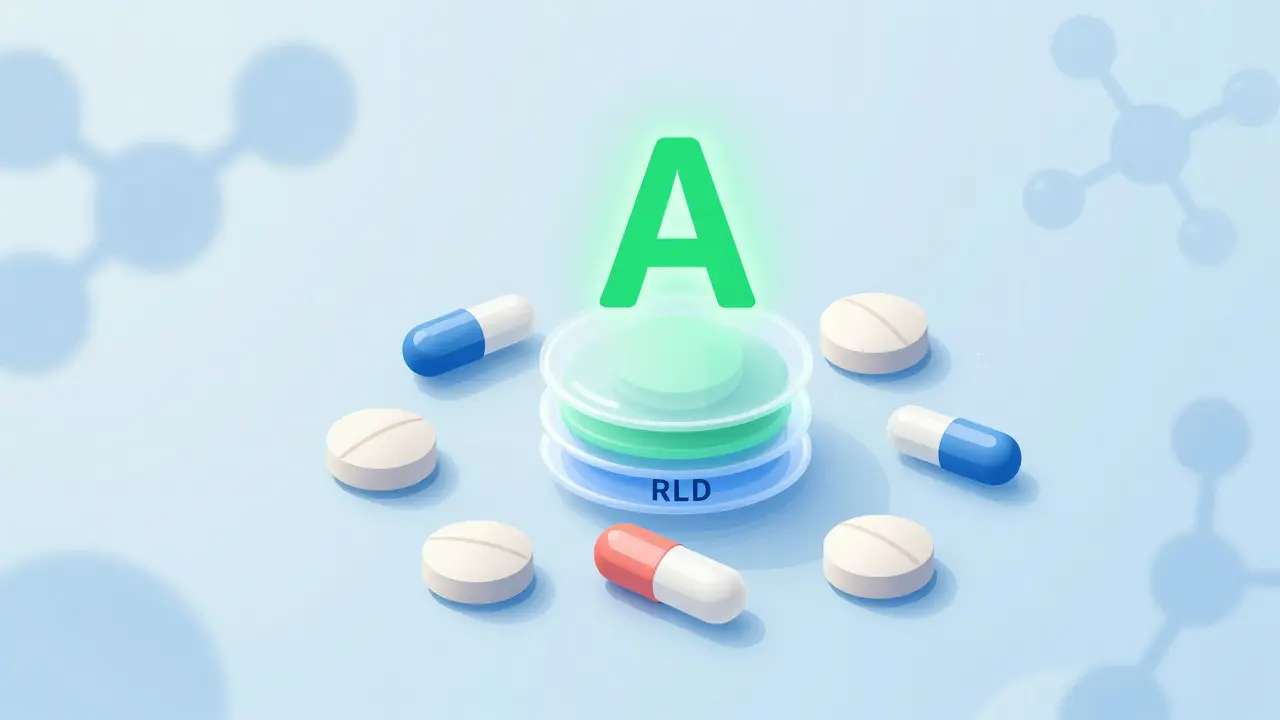
The FDA Orange Book is the U.S. government’s official list of drug products approved for safety and effectiveness. It’s not just a catalog-it’s the rulebook that determines which generic drugs can legally replace brand-name medications. If you’ve ever picked up a cheaper pill at the pharmacy and wondered if it’s truly the same as the brand, the Orange Book holds the answer.
What the FDA Orange Book Actually Is
The full name is Approved Drug Products With Therapeutic Equivalence Evaluations. It was created in 1984 under the Hatch-Waxman Act to balance two goals: letting generic drugs enter the market quickly and protecting the patents of original drugmakers. Today, it’s updated monthly and available online as the Electronic Orange Book. As of late 2023, it lists over 16,000 approved drug products, including both prescription and over-the-counter medicines.
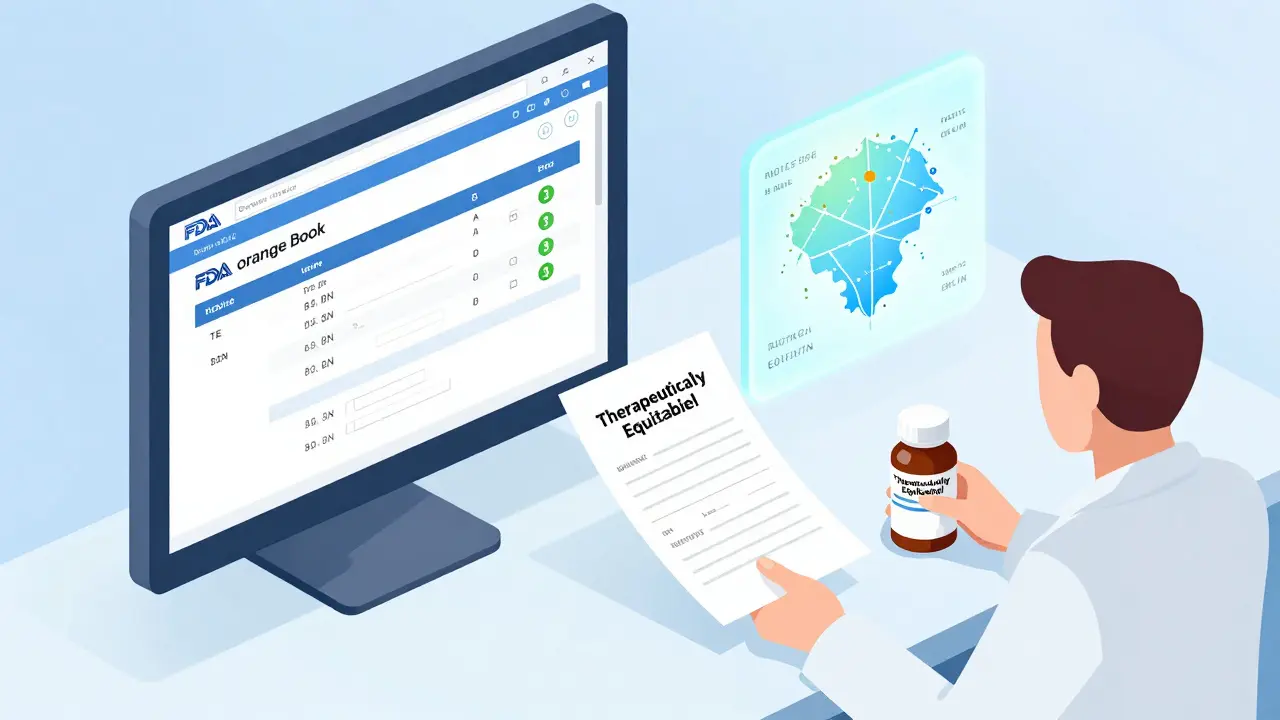
What makes this list different from other drug databases? It doesn’t just say which drugs are approved. It tells you which ones can be swapped out for others without changing how well they work. That’s called therapeutic equivalence. If two drugs are therapeutically equivalent, pharmacists can substitute one for the other without needing a new prescription. This is what keeps generic drug prices low and access high.
How Generic Drugs Get Listed
Generic drugs don’t go through the same long, expensive approval process as brand-name drugs. Instead, they use a shortcut called the Abbreviated New Drug Application (ANDA). To get approval, a generic company must prove its product is bioequivalent to a specific brand-name drug-the one chosen as the Reference Listed Drug (RLD).
The RLD is the original drug approved under a New Drug Application (NDA). It’s the standard against which every generic is measured. In the Orange Book, each drug product is marked with a simple “Yes” or “No” under the RLD column. Only one product per drug class can be the RLD. All others are generics.
For example, if the brand-name drug Lipitor (atorvastatin) is the RLD, then every generic version of atorvastatin must show it behaves the same way in the body. That means the same amount of the drug enters the bloodstream at the same rate. The FDA tests this with clinical studies, often using healthy volunteers. Once approved, the generic appears in the Orange Book with a Therapeutic Equivalence (TE) Code.
Understanding TE Codes
TE codes are the key to understanding substitution rules. They’re one or two letters that tell you whether a generic can be swapped with confidence.
- A codes mean the drug is therapeutically equivalent to the RLD. These are the most common and safest to substitute.
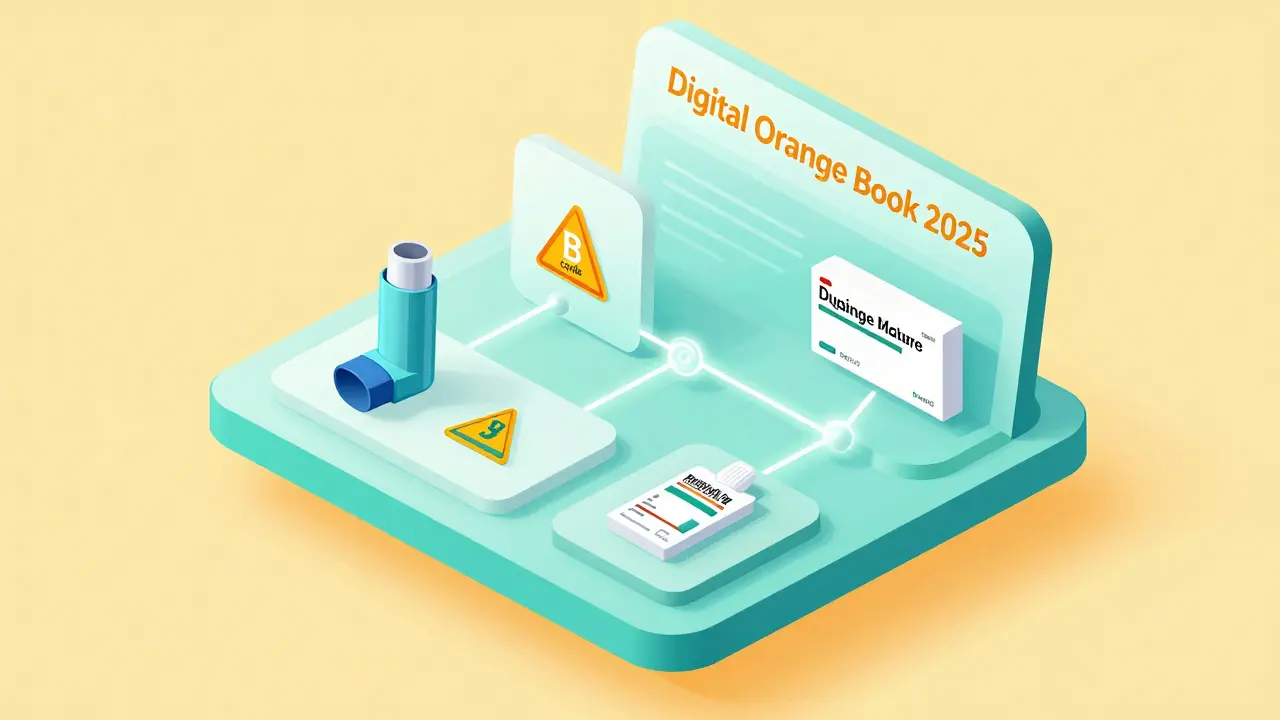
- B codes mean there’s a concern about bioequivalence. These are not recommended for substitution without a doctor’s approval.
- BN means the drug has no other approved versions-it’s a single-source product. No generics exist yet.
These codes are critical for pharmacists. If a prescription says “atorvastatin” and the pharmacy has a generic with an “A” code, they can fill it without calling the doctor. If it’s a “B” code, they must contact the prescriber. Misreading these codes can lead to insurance denials or even health risks.
Authorized Generics: The Hidden Players
There’s another kind of generic you won’t find in the Orange Book: the authorized generic. These are brand-name drugs sold under a different label-same factory, same formula, same packaging-but without the brand name. They’re made by the original company and sold at a lower price to compete with generics.
Because they’re marketed under the same NDA as the brand, they don’t get their own listing in the Orange Book. Instead, the FDA maintains a separate List of Authorized Generic Drugs, updated quarterly. This list includes the brand name, the authorized generic’s name, the manufacturer, and the date it entered the market.
Authorized generics are important because they often enter the market before any true generic can. They can delay competition by flooding the market with cheap versions of the brand, sometimes before the patent even expires.
Patents and Exclusivity: The Gatekeepers
The Orange Book doesn’t just list drugs-it lists patents. When a brand-name company gets approval, it must submit every patent that covers the drug’s active ingredient, formulation, or specific medical use. The FDA then publishes these in the Orange Book.
Each patent gets a unique number, an expiration date, and a patent use code (like U-123). These codes describe exactly how the drug is used. For example, a patent might cover using a drug to treat high blood pressure, but not for heart failure. That distinction matters because generic companies can design their products to avoid infringing on specific uses.
Here’s the twist: if a generic company challenges one of these patents, the brand-name company can trigger a 30-month legal hold on approval. This delay isn’t about whether the patent is valid-it’s about giving the brand time to fight in court. Critics say this system is abused. In 2022, there were over 14,000 patents listed in the Orange Book, up from 8,000 in 2005. Many of these are for minor changes-like a new pill shape or coating-that don’t improve effectiveness. This practice, called “patent evergreening,” keeps generics off the market longer than necessary.
Real-World Confusion and Challenges
Pharmacists and patients don’t always agree with what the Orange Book says. In 2023, a survey of 147 pharmacists found that 62% had experienced situations where the Orange Book’s therapeutic equivalence rating didn’t match state laws or clinical reality.
Take inhalers. Two drugs might have the same active ingredient and the same TE code, but if one uses a different propellant or delivery system, patients might not get the same dose. The Orange Book doesn’t capture these nuances. One pharmacist on a professional forum wrote: “I’ve seen patients switch from one inhaler to a ‘therapeutically equivalent’ generic and end up in the ER because the spray didn’t reach their lungs the same way.”
Even the search tools can be tricky. Searching for a drug like Trelegy Ellipta requires knowing all three active ingredients. If you only search for one, you might miss the full picture. And some approved generics appear on Drugs@FDA but not in the Orange Book until their approval becomes final. That gap can cause confusion for pharmacies trying to stock inventory.
The Bigger Picture: Why This Matters
The U.S. generic drug market was worth $67 billion in 2023. Ninety percent of prescriptions filled are for generics. The Orange Book is the engine behind that number. Without it, pharmacies couldn’t swap drugs automatically. Insurance companies couldn’t push for cheaper options. Patients couldn’t save hundreds of dollars per year.
But it’s not perfect. The FDA’s own 2023 survey of 350 industry professionals gave the Orange Book a 4.2/5 for completeness but only 3.1/5 for ease of use. Many say the interface is outdated, the data is hard to interpret, and the rules are too complex.
That’s why the FDA is working on a Digital Orange Book by 2025. It will include real-time updates, better search filters, and clearer explanations of TE codes. The goal? Make it easier for pharmacists to do their jobs and for patients to get the right drugs at the right price.
What You Can Do With This Information
If you’re a patient: Ask your pharmacist if your generic is listed as therapeutically equivalent (TE code A). If it’s not, find out why.
If you’re a prescriber: Double-check TE codes before approving substitutions. Some states require you to sign off even on “A”-coded drugs.
If you work in pharmacy or healthcare IT: Use the Electronic Orange Book API. It’s free, updated monthly, and used by over 78% of pharmacy systems. But don’t trust it blindly-pair it with clinical judgment.
The FDA Orange Book isn’t glamorous. It’s a dry, technical document. But it’s one of the most powerful tools in American healthcare. It decides which drugs are affordable. It shapes how companies compete. And it affects whether you’ll pay $5 or $50 for your next prescription.
Is the FDA Orange Book the same as Drugs@FDA?
No. Drugs@FDA lists all approved drug applications, including those still under review. The Orange Book only includes drugs that are fully approved and available on the market. A drug can appear in Drugs@FDA for months before it shows up in the Orange Book. Only after final approval and assignment of a therapeutic equivalence code does it become active in the Orange Book.
Can a generic drug be approved without being listed in the Orange Book?
Yes, but only temporarily. A drug may receive tentative approval if there’s an unresolved patent or exclusivity issue. It will appear in Drugs@FDA but not in the Orange Book. Once the patent expires or the legal issue is resolved, the FDA moves it to the Active section of the Orange Book. Until then, it cannot be sold.
Why do some generics have a ‘B’ code?
A ‘B’ code means the FDA has concerns about whether the generic is truly bioequivalent to the brand. This often happens with complex drugs like inhalers, topical creams, or injectables, where small differences in formulation can affect how the drug is absorbed. These drugs may require special monitoring or a doctor’s approval before substitution.
Do all over-the-counter (OTC) drugs have therapeutic equivalence ratings?
No. The FDA does not evaluate OTC drugs for therapeutic equivalence. They are listed in the Orange Book, but without TE codes. This means pharmacists can’t automatically substitute one OTC product for another, even if they contain the same active ingredient. Always check the label and consult a pharmacist.
How often is the Orange Book updated?
The Electronic Orange Book is updated monthly, usually on the first business day of each month. New approvals, patent changes, and discontinued products are added or removed in each update. If a drug is approved on January 15, it typically appears in the February update.
Comments (8)
Maddi Barnes
19 Feb 2026
Okay so let me get this straight - the FDA basically plays matchmaker between generics and brand-name drugs like it’s some kind of pharmaceutical Tinder? 🤔
And we’re supposed to trust that ‘A’ code like it’s a golden ticket? I’ve had generics that felt like they were made by someone who thought ‘bioequivalent’ meant ‘close enough’ after a nap.
My pharmacist once substituted my antidepressant with a generic that had the same TE code… and I spent three days crying in the shower. Turns out, the ‘A’ code doesn’t care if your brain needs the exact same molecular hug.
Also, why does the Orange Book feel like a 2008 AOL website? I’m not asking for a VR interface, but can we at least have a search bar that doesn’t require a PhD in pharmacology?
And don’t even get me started on authorized generics - it’s like the brand-name company is whispering ‘I’m still in charge’ while selling the same pill under a different name. Sneaky. 😏
Also, why is the ‘B’ code so rare? Are we really that good at science, or are we just ignoring the fact that inhalers and creams aren’t Legos?
My grandma’s inhaler switched to a ‘therapeutically equivalent’ generic and she ended up in the ER. The FDA’s database didn’t care. The pharmacy didn’t care. I cried. Again.
Can we please just admit that drugs aren’t widgets? Not everything that looks the same works the same. And if we’re going to save money, let’s do it without turning patients into guinea pigs.
Also, who approved the ‘BN’ code? It’s just… ‘nope, nope, nope’ in code form. I love it. 🤷♀️
Benjamin Fox
21 Feb 2026
USA makes the best drugs period 🇺🇸
Generic stuff is for losers who cant afford real medicine
if you take a fake pill your gonna die
the orange book is sacred text
no one in china or india can make a real drug
trust the system or go back to africa
Jana Eiffel
21 Feb 2026
One must acknowledge the foundational elegance of the Hatch-Waxman Act as a regulatory compromise between innovation and accessibility - a paradigm that, while imperfect, has enabled the democratization of pharmaceutical access for over three decades.
That the Orange Book serves as the empirical nexus between patent law, bioequivalence, and public health is not merely administrative - it is epistemologically significant.
One cannot overstate the ethical imperative to preserve the integrity of therapeutic equivalence designations, particularly as market pressures incentivize the proliferation of patent evergreening strategies that obfuscate rather than clarify.
The distinction between tentative and final approval, though seemingly technical, represents a vital safeguard against premature market entry - a procedural nuance that safeguards the patient from subtherapeutic intervention.
Furthermore, the absence of TE codes for OTC products is not an oversight, but a deliberate recognition of the heterogeneity of non-prescription formulations - a distinction that respects clinical variability rather than reducing it to algorithmic equivalence.
The forthcoming Digital Orange Book, if implemented with methodological rigor and stakeholder transparency, may indeed constitute a quantum leap in regulatory transparency - provided it does not succumb to the allure of digital aesthetics at the expense of epistemic depth.
One must remain vigilant: regulatory systems are not neutral vessels - they reflect the values of the societies that sustain them.
Let us not mistake efficiency for justice, nor speed for safety.
Tommy Chapman
22 Feb 2026
Wow so the government lets some foreign company make your pill and says it’s the same? LOL
My cousin works at a pharmacy and says half the generics are made in factories with rats running through the halls
And you’re telling me this ‘TE code’ means nothing? Yeah right
They’re just trying to save a buck while you’re getting poisoned
Real Americans don’t take generics
Also the FDA is full of bureaucrats who got kicked out of med school
Patents? More like pay-to-play scams
Someone needs to burn this whole system down
And why is this even a thing? Just make us pay for real medicine like in the 90s
Why are we letting China run our medicine? 🤬
Freddy King
23 Feb 2026
So the Orange Book is basically a blockchain for pharma compliance with TE codes as smart contracts? Interesting.
Patent evergreening is just rent-seeking disguised as IP protection - classic neoliberal capture.
Authorized generics? That’s a moat strategy, not a market entry play. The brand is using its NDA as a monopolistic lever.
And the fact that inhalers and topical formulations have higher B-code prevalence? That’s because dissolution kinetics aren’t linear - you can’t just swap a propellant and call it bioequivalent.
Also, the API for the Electronic Orange Book is RESTful, JSON-encoded, and versioned at v2.1 - but nobody uses it because the documentation is in Word docs from 2012.
Meanwhile, the FDA’s own 2023 survey shows 68% of pharmacists rely on heuristic overrides because the TE code doesn’t account for excipient variability - which is why we need a ML-driven dynamic equivalence model.
Bottom line: we’re using a 1984 framework to manage a 2024 drug landscape. We need a FedRAMP-certified, AI-augmented Orange Book 3.0.
And yes, I’ve built a scraper for it. DM me if you want the code.
Laura B
25 Feb 2026
I’ve been a pharmacist for 18 years and I can tell you - the Orange Book is the backbone of our daily work. We rely on it. Every single day.
But I also know that TE codes aren’t magic. I’ve seen patients have bad reactions to generics that were labeled ‘A’ - especially with thyroid meds or seizure drugs.
That’s why I always check the manufacturer, the lot number, and sometimes even call the rep if something feels off.
It’s not about distrust - it’s about being thorough.
And yes, the interface is outdated. I’ve complained about it since 2016. But the data? Solid.
If you’re a patient, ask your pharmacist: ‘What’s the TE code?’ and ‘Who makes this?’
Most of us will tell you. We want you to be safe, not just cheap.
Also - authorized generics? They’re legit. Sometimes they’re even better than the knockoffs.
Knowledge is power. Keep asking questions.
Robin bremer
26 Feb 2026
bro i just took a generic pill and now i feel weird
is this normal??
my friend said it might be the orange book but i dont know what that is
can someone explain??
also i think the pill was yellow but the brand was white
is that okay??
idk man i just want to feel normal again 😭
Jayanta Boruah
27 Feb 2026
The regulatory architecture of the United States Food and Drug Administration, as codified in the Orange Book, represents a sophisticated equilibrium between intellectual property rights and public health imperatives.
It is neither a catalog nor a database - it is a legal instrument, a jurisprudential artifact that governs the substitution of pharmaceuticals under statutory authority.
The therapeutic equivalence codes are not mere labels; they are epistemic markers, calibrated through bioequivalence studies that adhere to the guidelines of 21 CFR 320.
It is a fallacy to conflate the absence of a TE code for OTC products with regulatory negligence - such products are governed by monographs under the OTC Drug Review, not the NDA/ANDA framework.
The rise in patent listings from 8,000 to 14,000 reflects not abuse, but the increasing complexity of drug delivery systems - including polymorphs, enantiomers, and combination products.
One must distinguish between patent litigation delays and regulatory delays - the former is a judicial process, the latter is a procedural safeguard.
While the interface may appear archaic, the underlying data integrity remains uncompromised.
Therefore, to advocate for a ‘Digital Orange Book’ is not merely technological - it is constitutional. The FDA must modernize, but not at the cost of precision.