
How Drug-Drug Interactions Work: Mechanisms and Effects Explained
Drug Interaction Simulator
Select a scenario to see how a "perpetrator" drug changes the levels of a "victim" drug in your bloodstream.
Blocks enzymes, preventing the victim drug from being broken down.
Triggers more enzyme production, clearing the drug faster.
The drug is metabolized at a standard, therapeutic rate.
Scenario Results
Mechanism Breakdown:
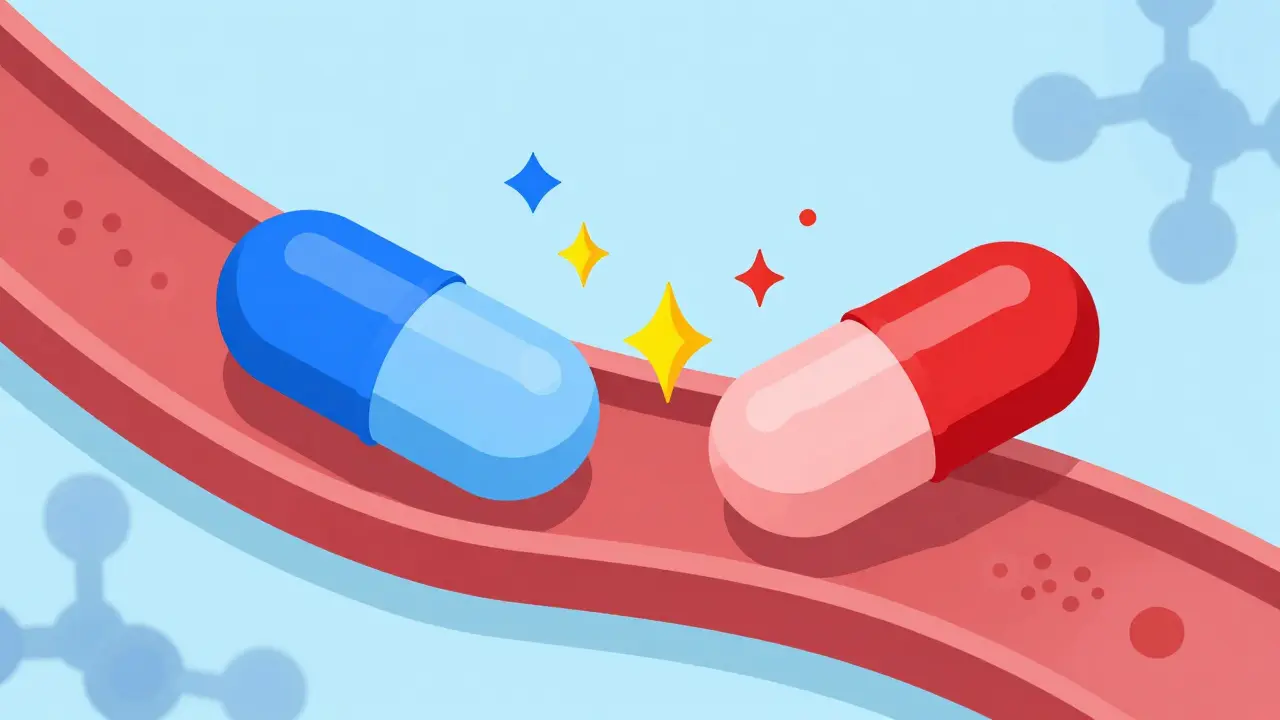
Imagine taking a pill for high blood pressure and another for a simple infection, only to find out that they are fighting a chemical war inside your body. One might cancel out the other, or worse, they might amplify each other's effects to a dangerous level. This is the core of drug-drug interactions: the phenomenon where one medication changes how another drug works, often leading to a treatment that doesn't work or a sudden, adverse reaction.
Whether you are managing a chronic condition or just treating a seasonal cold, understanding these interactions isn't about memorizing a chemistry textbook. It is about knowing that your body processes every chemical through a specific set of biological "toll booths" and "processing centers." When two drugs try to use the same path at the same time, things can go wrong.
The Two Main Types of Interactions
To understand why medications clash, scientists split interactions into two main buckets: pharmacokinetics and pharmacodynamics. Think of pharmacokinetics as what the body does to the drug, and pharmacodynamics as what the drug does to the body.
Pharmacokinetic interactions are processes where one drug alters the absorption, distribution, metabolism, or excretion (ADME) of another. In simple terms, the first drug changes the amount of the second drug that actually reaches your bloodstream or target organ. If a drug is absorbed too slowly or broken down too quickly, it can't do its job.
Pharmacodynamic interactions are interactions where drugs influence each other's effects directly at the site of action, without changing the drug's concentration in the blood. Here, the concentration remains the same, but the result changes. This is like two people trying to push a door in opposite directions (antagonism) or both pushing in the same direction (synergy), making the effect much stronger than intended.
How Pharmacokinetics Messes with Your Meds
The journey of a drug through your body has four main stages. An interaction can happen at any one of these points:
- Absorption: Some drugs change the acidity (pH) of your stomach or slow down how fast your gut moves. This can stop another drug from getting into your system.
- Distribution: Many drugs travel by "hitching a ride" on proteins in your blood. If Drug A kicks Drug B off its protein carrier, there is suddenly more "free" Drug B floating around, which can lead to toxicity.
- Metabolism: This is the most common site of conflict. The liver uses specific enzymes to break down drugs. If one drug blocks these enzymes, the other drug builds up to dangerous levels. If it triggers the enzymes to work faster, the other drug is flushed out before it can work.
- Excretion: The kidneys filter waste. Some drugs interfere with the transporters that push medications out of the body, keeping them in your system longer than they should be.
The Role of the Liver's Processing Center: CYP450
If your liver had a specialized workforce for cleaning up chemicals, the Cytochrome P450 (or CYP450) system would be the lead foreman. This is a family of enzymes responsible for about 70-80% of all drug metabolism. One specific enzyme, CYP3A4, is a real powerhouse-it handles roughly 50% of all clinically used medications.
In these interactions, drugs are classified as either "perpetrators" or "victims." A perpetrator drug can be an inhibitor or an inducer:
| Drug Role | Action on Enzyme | Effect on "Victim" Drug | Clinical Result |
|---|---|---|---|
| Inhibitor | Blocks the enzyme | Concentration increases | Risk of toxicity/overdose |
| Inducer | Increases enzyme production | Concentration decreases | Treatment failure (drug doesn't work) |
For example, ketoconazole (an antifungal) is a strong CYP3A4 inhibitor. If you take it with simvastatin (for cholesterol), the simvastatin isn't broken down. Its levels in your blood can jump 10 to 20 times higher than normal, which can cause a severe muscle breakdown condition called rhabdomyolysis.
Transporters: The Body's Cargo Ships
Beyond enzymes, the body uses protein transporters to move drugs across cell membranes. One of the most important is P-glycoprotein (or P-gp), which basically acts as a biological vacuum cleaner, pumping drugs out of cells and back into the gut or urine.
When a drug like verapamil inhibits P-gp, it shuts down the vacuum. If you're also taking digoxin (for heart failure), the digoxin stays in your system instead of being pumped out. This can increase digoxin levels by 50-100%, potentially leading to life-threatening heart rhythm problems.
Dangerous Combinations: When Effects Add Up
Pharmacodynamic interactions aren't about blood levels; they are about the cumulative punch. Sometimes two drugs are too similar, and their effects stack up in a way that becomes toxic.
Consider the risk of hyperkalemia (dangerously high potassium). If you combine ACE inhibitors (used for blood pressure) with potassium-sparing diuretics like amiloride, both drugs keep potassium in your body. This can raise serum potassium levels by 1.0 to 1.5 mmol/L, which can cause your heart to stop.
Another scary example is the "QT interval prolongation." Combining certain antibiotics-like fluoroquinolones and macrolides (e.g., erythromycin)-can disrupt the electrical timing of your heart. This increases the risk of a specific, fatal heart rhythm called torsades de pointes by nearly six times compared to taking just one of those drugs.
Why Some People Are More at Risk
Not everyone reacts to drugs the same way. This is where Pharmacogenomics comes in-the study of how your genes affect your response to drugs. Some people are "poor metabolizers" because they lack a specific enzyme. For instance, if you lack the CYP2D6 enzyme, codeine (which needs that enzyme to turn into morphine) won't provide any pain relief. Conversely, "ultrarapid metabolizers" can turn codeine into morphine too quickly, risking an overdose even at normal doses.
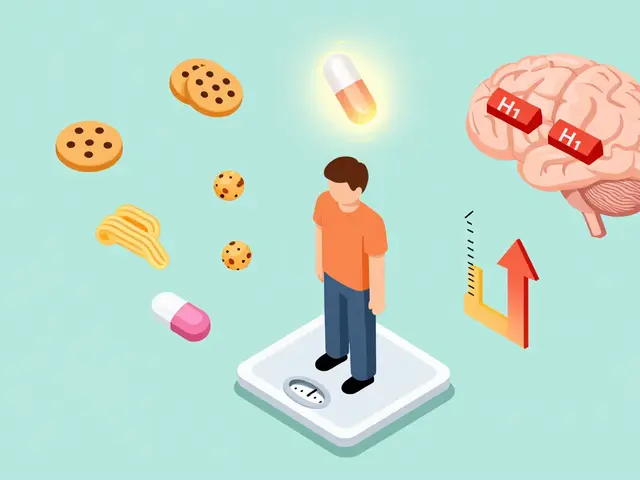
Age is another huge factor. Older adults are often on multiple medications-a situation called polypharmacy. Because kidney and liver function naturally decline with age, the risk of interactions spikes. In patients over 65, drug interactions are estimated to cause 3-5% of all hospital admissions. A classic high-risk pair is NSAIDs (like ibuprofen) combined with blood thinners (anticoagulants), which can increase the risk of internal bleeding by 3 to 5 times.
How to Prevent Interaction Disasters
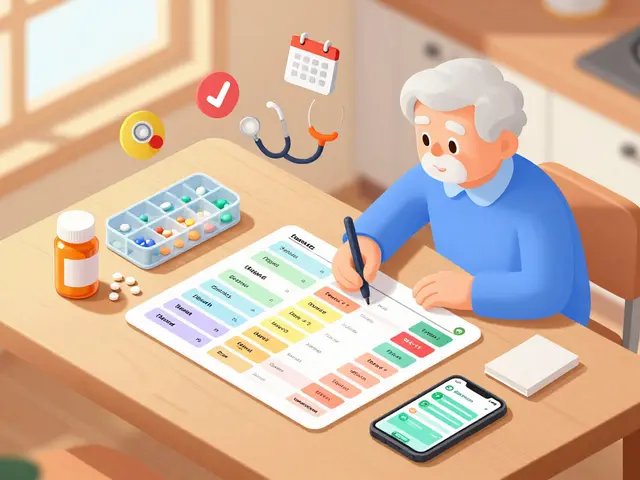
You don't need to be a pharmacist to stay safe, but a few habits can prevent serious mistakes. First, keep a complete, updated list of everything you take, including vitamins and herbal supplements. Many people assume "natural" means "safe," but St. John's Wort is a potent CYP3A4 inducer that can slash the effectiveness of cyclosporine (an immunosuppressant) by 50-60%.
Second, always use a single pharmacy. This allows the pharmacist's software to flag potential clashes. While these systems sometimes trigger too many "false alarms" (leading to what doctors call "alert fatigue"), they are still your best line of defense. Pharmacist interventions have been shown to reduce clinically significant interactions by about 37%.
If you're on a medication with a "narrow therapeutic index"-meaning the difference between a helpful dose and a toxic dose is tiny, like warfarin-you may need Therapeutic Drug Monitoring (TDM). This involves regular blood tests to ensure your levels stay in the safe zone.
Can food and drinks cause drug interactions?
Yes, absolutely. Some foods change how drugs are absorbed or metabolized. For example, vitamin K-rich foods (like spinach and kale) can counteract the effects of the blood thinner warfarin. Similarly, tyramine-rich foods (like aged cheese) can cause a hypertensive crisis if you are taking monoamine oxidase inhibitors (MAOIs).
What is the difference between an inhibitor and an inducer?
An inhibitor blocks an enzyme, which stops a drug from being broken down, leading to higher (and potentially toxic) levels of that drug in your blood. An inducer tells your body to produce more of the enzyme, which breaks the drug down faster, often making the medication ineffective.
Why do some medications require a "loading dose"?
While not a direct interaction, loading doses are used for drugs with long half-lives to reach a therapeutic concentration quickly. When interactions occur, they can change this half-life, meaning a standard loading dose could suddenly become too high or too low depending on whether an inducer or inhibitor is present.
Are herbal supplements safer than prescription drugs regarding interactions?
No. Herbal supplements can be just as dangerous. St. John's Wort is a prime example; it acts as a powerful enzyme inducer and can make many life-saving medications, such as birth control or anti-rejection drugs, fail completely.
How can I tell if I'm having a drug interaction?
Signs vary. If a drug is being inhibited (levels too high), you might feel exaggerated side effects. If a drug is being induced (levels too low), you might notice your symptoms returning despite taking your medication. Any sudden change in how you feel after starting a new med warrants a call to your doctor.
Next Steps for Your Safety
If you are starting a new medication, ask your doctor three specific questions: "Does this interact with my current meds?", "Should I avoid any specific foods or supplements while taking this?", and "Are there signs of toxicity I should watch for?"
For those managing complex regimens, tools like the Liverpool HIV-Drug Interactions Checker demonstrate how specialized databases can now manage hundreds of combinations in real-time. While you may not need such a specialized tool, asking your pharmacist to run a "comprehensive medication review" once a year is a smart way to catch potential issues before they become emergencies.
Comments (10)
Doug DeMarco
11 Apr 2026
Super helpful breakdown! :) It's wild how something as simple as a supplement can totally wreck a prescription's effectiveness. Definitely a good reminder to keep that pharmacy list updated!
Sarina Montano
12 Apr 2026
The P-glycoprotein mechanism is such a fascinating biological gatekeeper. It's like a bouncer at a club that just decides some chemicals aren't on the guest list, and when you inhibit it, the whole place gets flooded. This kind of biochemical choreography is exactly why pharmacological precision is so precarious.
danny Gaming
13 Apr 2026
imagine trustin a farmcist to catch this lol most of them just scan barcodes and dont know a thing about cyp450 logic
Doug DeMarco
13 Apr 2026
Hey now, let's give them some credit! They're the last line of defense for a reason! 😅
Rakesh Tiwari
13 Apr 2026
Oh sure, because relying on a software alert is the peak of medical wisdom. Truly a revolutionary system for ensuring we don't accidentally poison ourselves while the doctor ignores our concerns.
Emily Wheeler
15 Apr 2026
It really makes you ponder the delicate balance of the human vessel and how our internal chemistry is essentially a mirror of the universe's complexity, where a tiny shift in one enzyme can lead to a cascading effect that alters our entire physical state, and while it's terrifying to think about, there's a certain poetic beauty in how these intricate molecular dances dictate our health and longevity in ways we are only just beginning to grasp through the lens of modern pharmacogenomics, reminding us that we are not just patients but biological experiments in progress.
Peter Meyerssen
17 Apr 2026
The plebeians always miss the nuance of the substrate specificity in CYP3A4. 🙄 It's basic kinetics. If you don't understand the Michaelis-Menten equation, you're basically just guessing. 💅
Julie Bella
18 Apr 2026
Omg you guys!!! i almost took st johns wort with my meds last year and i am so gladd i read about it first!!!! honestly people who dont check their supplements are just being reckless with their own lives!! 😱
emmanuel okafor
18 Apr 2026
it is a reminder to be humble before the body we are all just trying to heal and find peace with our health
Ryan Hogg
18 Apr 2026
This just reminds me of the time I had a reaction to a blood pressure med and spent three days in the ER feeling like my heart was vibrating out of my chest. It was an absolute nightmare. The doctors just shrugged and said it was a rare interaction. I still wake up in a sweat thinking about it. Every time I see a pill bottle now I just feel this overwhelming sense of dread and anxiety because you never know when your own body is going to betray you like that. It's just honestly exhausting to live with this constant fear that a simple prescription could be the thing that finally breaks me. My life has been such a series of these medical mishaps and it just feels like I'm fighting a losing battle against my own biology. I can't even look at a pharmacy without feeling a panic attack coming on. It's just so unfair that some people can just take a pill and be fine while others have to live in terror of a chemical war inside their veins. I just feel so drained by the whole ordeal.