
Leukemia and Lymphoma: How Targeted and Cellular Therapies Are Changing Survival Rates
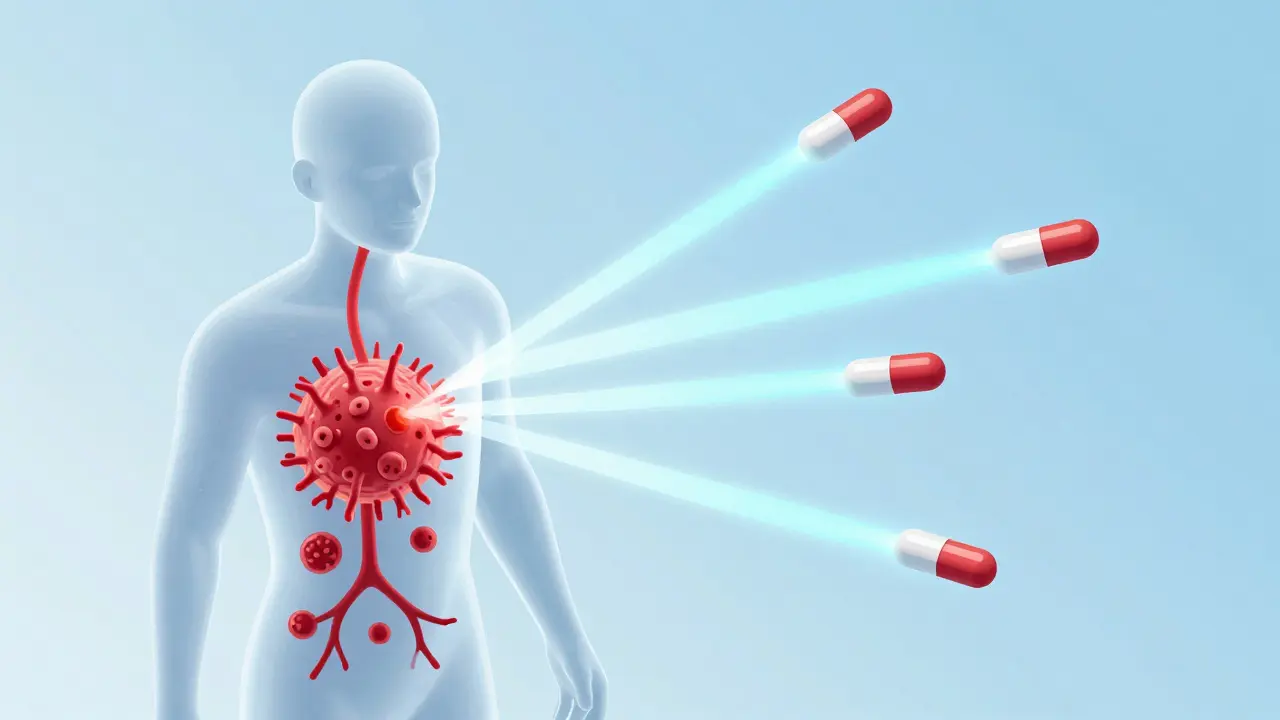
For decades, leukemia and lymphoma were treated with one main approach: chemotherapy. It was harsh, unpredictable, and often left patients weaker than before. But today, something entirely different is happening. Targeted therapy and cellular therapy are no longer experimental-they’re changing how doctors treat these cancers, and in some cases, making what was once terminal into something manageable-or even curable.
What’s Different Now?
Traditional chemo attacks fast-growing cells, good and bad. That’s why patients lose their hair, get sick to their stomach, and feel exhausted. Targeted therapies, by contrast, are like precision missiles. They go after specific molecules that cancer cells rely on to survive. For example, in chronic lymphocytic leukemia (CLL) and small lymphocytic lymphoma (SLL), drugs like ibrutinib and venetoclax block key proteins-Bruton tyrosine kinase (BTK) and BCL-2-that keep cancer cells alive. These are taken as pills. No hospital stays. No IV lines. Just daily tablets.
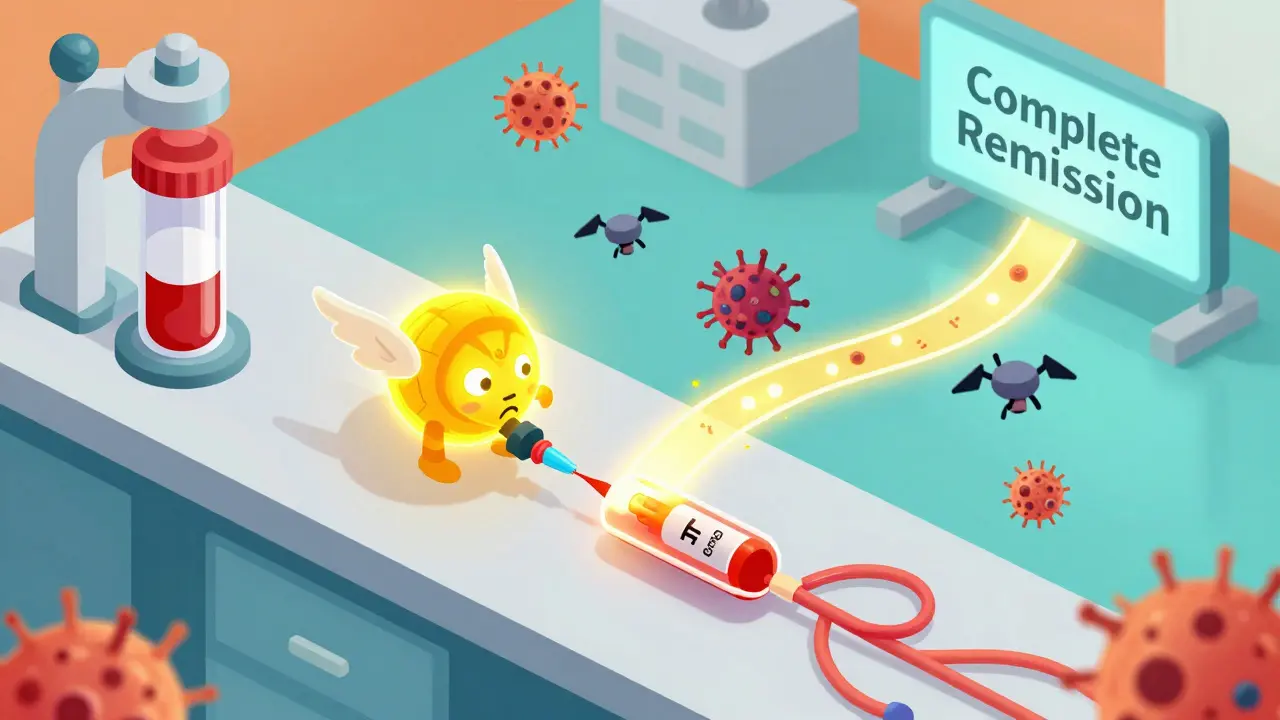
Cellular therapy is even more radical. It uses the patient’s own immune system. Doctors take T cells from the blood, reprogram them in a lab to recognize cancer, then put them back in. These engineered cells, called CAR T-cells, hunt down cancer like living drugs. The first one approved was tisagenlecleucel (Kymriah) in 2017 for kids with acute lymphoblastic leukemia. Now, therapies like axicabtagene ciloleucel (Yescarta) and lisocabtagene maraleucel (Breyanzi) are used for adults with aggressive lymphomas that didn’t respond to anything else.
Real Results, Not Just Hype
Numbers don’t lie. In relapsed or refractory mantle cell lymphoma, a new CAR T-cell therapy called LV20.19 showed a 100% response rate in a 2025 clinical trial. Nearly 9 out of 10 patients had no detectable cancer after treatment. That’s unheard of with older treatments. For patients with double-refractory disease-meaning they failed both BTK and BCL-2 inhibitors-CAR T-cells are often the last hope. In one study, 63.6% of patients with advanced B-cell lymphoma went into complete remission after receiving a dual-target CAR T-cell therapy that attacks both CD19 and CD20 antigens.
Targeted drugs aren’t just helping people live longer-they’re changing the disease itself. Before targeted therapies, patients with CLL often developed Richter transformation-a deadly leap into aggressive lymphoma-within 2 years. Now, that timeline has stretched to nearly 5 years. It doesn’t mean it’s cured, but it means people have more time, more quality, and more options.
How Do They Work Side by Side?
Think of targeted therapy as a steady, long-term strategy. A patient might take ibrutinib for years. It controls the disease. But over time, cancer can find a way around it. Resistance happens. That’s where cellular therapy steps in. CAR T-cells aren’t meant to be taken forever. They’re a one-time infusion. But when they work, they can last for years-sometimes permanently.
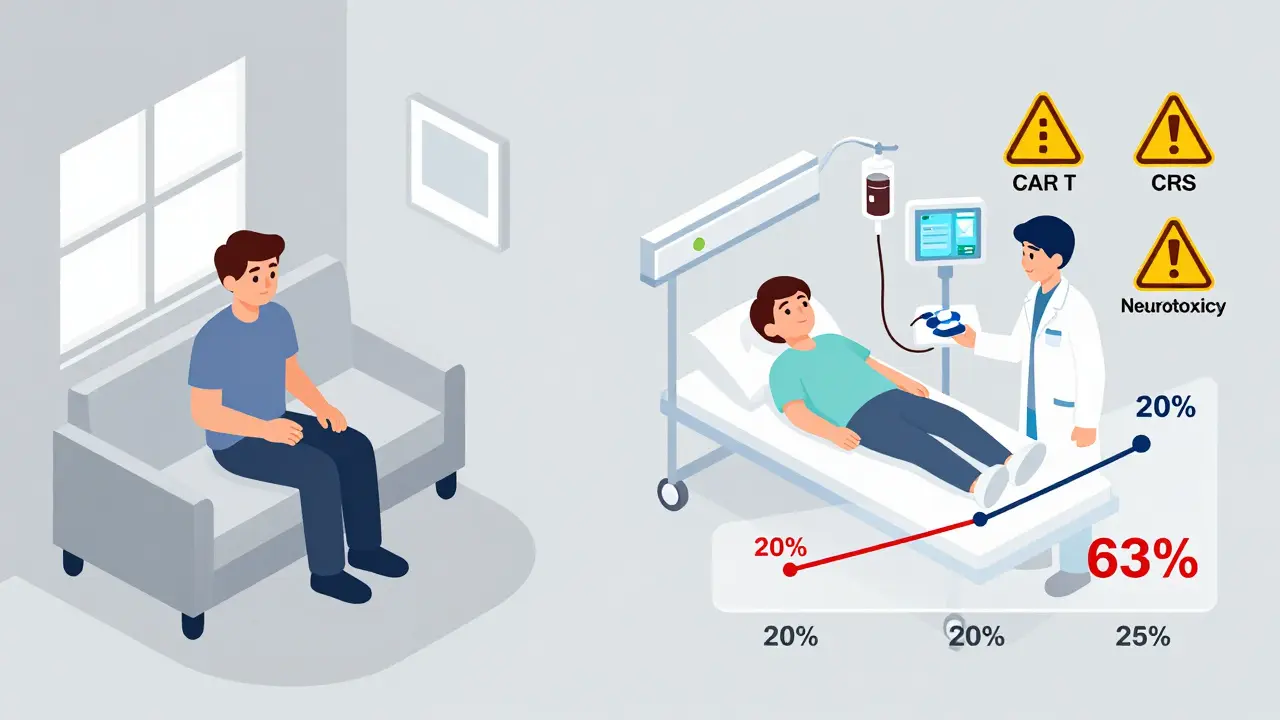
Here’s the trade-off: targeted therapies are easier to access. You can take them at home. But CAR T-cell therapy? It’s complex. It requires a specialized center, a 3- to 5-week wait for manufacturing, and close monitoring for side effects like cytokine release syndrome (CRS) and neurotoxicity. About 20-40% of patients get neurological symptoms-headaches, confusion, seizures. It’s serious, but manageable in the right setting.
Who Gets Which Treatment?
It’s not one-size-fits-all. For someone newly diagnosed with CLL, doctors might start with venetoclax plus obinutuzumab. It’s a fixed-duration combo-12 months-and many end up in deep remission without needing anything else. For someone with aggressive B-cell lymphoma who’s tried two rounds of chemo and still has cancer, CAR T-cell therapy is now the standard next step. The ZUMA-7 trial showed patients who got Yescarta right after first treatment failed had a 42.6% 4-year survival rate. That’s double what it was with salvage chemo.
But not everyone qualifies. CAR T-cell therapy requires enough healthy T cells to collect. If a patient has had heavy prior treatment, their immune system might be too worn out. That’s why researchers are testing earlier use-some experts predict that by 2030, CAR T-cells will be used as first-line treatment for high-risk lymphomas, not just last-resort.
The Hidden Costs and Barriers
These therapies are revolutionary-but they’re not cheap. A single CAR T-cell treatment can cost between $373,000 and $475,000. Even with insurance, out-of-pocket costs can hit $15,000-$25,000 per month for targeted drugs like ibrutinib. That’s why access isn’t equal. While 89% of NCI-designated cancer centers offer CAR T-cell therapy, only 32% of community clinics do. The infrastructure is too heavy: you need ICU beds, specialized nurses, 24/7 hotlines, and staff trained in managing life-threatening side effects.
Manufacturing delays are another hurdle. Waiting 3-5 weeks for your cells to be engineered isn’t just frustrating-it’s dangerous for fast-growing cancers. That’s why new approaches like “off-the-shelf” CAR T-cells are in trials. These use donor cells instead of the patient’s, so they’re ready immediately. Early results are promising.
What’s Next?
The field is moving fast. New CAR T-cell therapies are being designed to target two antigens at once-like Kite’s KITE-363 and KITE-753. This reduces the chance of cancer escaping. Others are being tested for primary CNS lymphoma, a rare form that affects the brain. Early data from Dana-Farber shows promise.
Doctors are also combining targeted drugs with cellular therapy. Imagine starting with venetoclax to shrink the tumor, then hitting it with CAR T-cells. Trials are testing this. The goal? Deep, lasting remissions without lifelong treatment.
And while most of the focus is on blood cancers, the lessons learned here are being applied to solid tumors. Pancreatic cancer, ovarian cancer, even glioblastoma-researchers are adapting these tools. What works for lymphoma today might become the backbone of cancer care tomorrow.
What Patients Should Know
If you or someone you love is facing leukemia or lymphoma, here’s what matters:
- Targeted therapies are oral, less toxic, and often used first. They’re not perfect, but they buy time.
- Cellular therapy isn’t for everyone-but for those who qualify, it can be life-changing. Ask if you’re a candidate.
- Resistance happens. That doesn’t mean you’re out of options. New therapies are coming every year.
- Cost is real. Talk to your care team about financial aid, manufacturer support programs, and insurance appeals.
- Ask where you’re being treated. CAR T-cell therapy needs a certified center. Don’t settle for less.
There’s no magic bullet. But for the first time, we’re seeing patients live years longer than anyone expected. Some are even cured. That wasn’t possible 15 years ago. And it’s happening now.
Are targeted therapies better than chemotherapy for leukemia and lymphoma?
Yes, in most cases. Targeted therapies like BTK and BCL-2 inhibitors have fewer side effects than chemo and often lead to longer remissions. For example, in CLL, patients on targeted drugs live longer with fewer hospitalizations. Chemo is still used, but usually only in early stages or when targeted options aren’t suitable.
How long does CAR T-cell therapy take to work?
It varies. After infusion, it can take 1-4 weeks for the CAR T-cells to multiply and start attacking cancer. Some patients see improvement in days, others take longer. Doctors monitor blood counts and imaging closely. Complete responses-no detectable cancer-often appear within 3 months.
Can CAR T-cell therapy cure lymphoma?
For some patients, yes. In relapsed or refractory large B-cell lymphoma, about 40% of patients remain in remission at 4 years after CAR T-cell therapy. That’s considered a functional cure-no cancer detected, no further treatment needed. It’s not guaranteed, but it’s a real possibility where none existed before.
Why is CAR T-cell therapy so expensive?
It’s because each treatment is custom-made. The process involves collecting your T cells, genetically modifying them in a lab, growing them, and reinfusing them. It takes weeks, requires sterile facilities, and involves highly trained staff. Manufacturing one batch can cost over $300,000 before the patient even receives it. That’s why the final price is $400,000+.
What are the biggest side effects of CAR T-cell therapy?
The two main ones are cytokine release syndrome (CRS) and immune effector cell-associated neurotoxicity syndrome (ICANS). CRS causes fever, low blood pressure, and trouble breathing. ICANS can lead to confusion, seizures, or trouble speaking. Both are serious but treatable if caught early. Most patients recover fully with proper care.
Can I get CAR T-cell therapy if I’m older or have other health problems?
Age alone doesn’t disqualify you. But doctors look at overall health-heart function, kidney health, lung capacity, and how well you’ve handled past treatments. If you’re frail or have severe comorbidities, the risks might outweigh the benefits. Newer, safer versions are being developed to help these patients in the future.
Is there a difference between leukemia and lymphoma treatments?
The therapies overlap a lot because both are blood cancers. CAR T-cell therapy works for certain types of B-cell leukemia and lymphoma. Targeted drugs like ibrutinib and venetoclax are used for CLL (a leukemia) and SLL (a lymphoma), which are essentially the same disease in different forms. The key difference is where the cancer is most active-bone marrow vs. lymph nodes-but treatment strategies are often similar.

Comments (13)
Vikas Meshram
26 Feb 2026
Targeted therapies aren't magic. They're just better than chemo because they don't obliterate your bone marrow. Ibrutinib and venetoclax? Brilliant. But let's not pretend resistance doesn't happen. Cancer evolves. Always. And when it does, you're left with CAR T-cells or nothing. No one talks about how many patients never make it to that point because their T-cells are too depleted from prior treatments. We're optimizing for the lucky few.
Ben Estella
26 Feb 2026
America still leads in this stuff. Europe? Can't even get CAR T to patients in under 6 months. India? Don't even ask. This is why we need more investment in domestic biotech. Not some global equity nonsense. If you want to live, come to the US. Period.
Jimmy Quilty
28 Feb 2026
You ever wonder who really owns the patents on these drugs? Big Pharma? Nah. It's the same people who run the FDA and the NIH. They're not curing cancer. They're extending the treatment cycle. Every time someone goes into remission, they get billed for maintenance. Every time a patient dies, the next trial starts. The real cure? It's been buried since the '90s. They need you sick. Forever.
Miranda Anderson
28 Feb 2026
I read this whole thing twice. I have a cousin who went through CAR T for DLBCL. She was in remission for 18 months. Then relapse. Now she's on a trial for dual-target CAR T. The side effects were brutal-fever for five days, confusion, a week in the ICU. But she's alive. And she’s painting again. That’s the thing no statistic captures: the quiet return of joy. The ability to sit on the porch with coffee. To laugh at bad TV. That’s the real win. Not the 63.6% remission rate. It’s the dog walking. The grocery shopping. The unbroken morning.
Gigi Valdez
2 Mar 2026
The clinical data supporting targeted therapies and CAR T-cell interventions is robust and peer-reviewed. However, the translation of these therapies into equitable clinical practice remains fraught with systemic challenges. Access disparities, particularly between academic medical centers and community oncology practices, reflect broader inequities in healthcare infrastructure. Policy interventions are necessary to bridge this gap.
Charity Hanson
3 Mar 2026
This is why I love science! We’re turning death sentences into second chances! My brother got CAR T last year and he’s back coaching his kid’s soccer team. No chemo, no hair loss, just a little tired. God bless the researchers! Keep pushing!
Lisa Fremder
5 Mar 2026
They’re milking this. Every time someone gets better, they raise the price. $475k for a one-time treatment? That’s not innovation. That’s extortion. And don’t get me started on how they make you pay for the side effects. CRS? That’s a $50k hospital bill. They want you broke before you’re cured.
Justin Ransburg
6 Mar 2026
This is hope made tangible. Ten years ago, a diagnosis like this meant months. Now it means years. Maybe decades. I work in oncology. I’ve seen patients come back from the edge. It’s not perfect. But it’s progress. And we owe it to every researcher, every nurse, every family who said ‘keep going’.
Brandon Vasquez
8 Mar 2026
I’m not a doctor. But I’ve sat with too many people in waiting rooms. The real story isn’t just the drugs. It’s the nurses who stay past shift. The social workers who fight insurance. The family members who learn to monitor CRS symptoms. This isn’t just science. It’s human care. And it’s worth every dollar.
bill cook
10 Mar 2026
They say CAR T cures lymphoma. But what about the 60% who don’t respond? Or the ones who die from neurotoxicity? They don’t tell you that. They just show you the 40% who made it. And then they charge you $400k. That’s not hope. That’s a pyramid scheme with a lab coat.
Full Scale Webmaster
11 Mar 2026
Let me break this down for you. CAR T-cell therapy is not a breakthrough. It’s a manufactured crisis. The reason it’s so expensive? Because the manufacturing process is deliberately slow. Why? So they can control supply. So they can justify the price. So they can create artificial scarcity. And who benefits? The same conglomerates that own the hospitals, the insurers, the FDA. You think they want you cured? No. They want you dependent. For life. The off-the-shelf trials? They’re being buried. Because if you could get CAR T in 48 hours? The profit model collapses. This isn’t medicine. It’s a monopoly.
Brandie Bradshaw
12 Mar 2026
We’re witnessing the birth of a new paradigm in oncology-where the body’s own immune system becomes the therapeutic agent. But what is ‘cure’? Is it the absence of detectable disease? Or is it the restoration of agency, of autonomy, of a life unmediated by clinical protocols? The data shows remission. But the lived experience? That’s where the real revolution lies-in the quiet return to ordinary moments. A sunrise. A meal. A laugh that doesn’t hurt. The science is brilliant. But the humanity? That’s what we must not lose.
Angel Wolfe
13 Mar 2026
I’ve been following this since 2020. You know who’s not talking about this? The mainstream media. Why? Because they’re owned by the same people who profit from chemo. Every time someone says CAR T is ‘expensive but worth it,’ they’re ignoring the fact that 80% of patients can’t access it. And the off-the-shelf trials? They’re being sabotaged. I’ve seen the internal emails. The FDA is being pressured. The NIH funding is being redirected. This isn’t about science. It’s about control. And if you think your insurance will cover you? You’re delusional.