Medication Safety for Healthcare Providers: Best Practices and Training
Medication Safety Risk & Compliance Evaluator
Patient Error Risk Calculator
Estimate the complexity of a patient's medication regimen based on known risk factors.
Safety Protocol Audit
Check off implemented safety measures to assess your facility's readiness.
Every year, over 7,000 people in the United States die from preventable medication errors. That is not a statistic you can ignore if you work in healthcare. It is a wake-up call. Medication safety is no longer just about writing legible prescriptions or double-checking labels. It has evolved into a complex system involving technology, culture, and rigorous training. For healthcare providers, staying ahead of these risks means adopting proven strategies that protect patients from harm.
The World Health Organization (WHO) defines medication safety as ensuring patients receive optimal therapeutic benefits while minimizing adverse effects. This definition sounds simple, but the execution is challenging. With the WHO's 'Medication Without Harm' initiative aiming to reduce severe, avoidable harm by 50% globally, the pressure is on hospitals, clinics, and individual practitioners to step up their game. This article breaks down the best practices, technological tools, and training methods that are currently saving lives.
Understanding the Core Risks
To fix a problem, you first have to understand it. Medication errors happen at every stage of the process: prescribing, transcribing, dispensing, administering, and monitoring. The Institute for Safe Medication Practices (ISMP) identifies high-alert medications as the biggest threat. These are drugs like intravenous oxytocin, insulin, and opioids. A small mistake with these drugs can lead to catastrophic outcomes or death.
Dr. Michael Cohen, President Emeritus of ISMP, notes that high-alert medications require specialized protocols because they carry a heightened risk of causing significant patient harm. For example, confusing weekly methotrexate doses with daily ones is a fatal error that has happened too often. The solution isn't just telling staff to "be careful." It requires systemic changes, such as hard stops in electronic order entry systems that force verification of oncologic indications before allowing a daily oral methotrexate order to proceed.
Another major risk factor is polypharmacy, especially in older adults. When a patient takes five or more medications, the chance of drug-drug interactions skyrockets. Recent research highlights that digital health tools must account for these complex regimens. If your practice involves elderly patients, understanding how multiple drugs interact is not optional; it is essential for survival.
Technology as a Safety Net
Technology is your strongest ally in preventing medication errors, but only if used correctly. Electronic Health Records (EHRs) equipped with Clinical Decision Support Systems (CDSS) are now standard in most acute care settings. These systems trigger alerts for potential drug interactions, duplicate therapies, or dosage errors. However, there is a catch: alert fatigue.
Studies show that clinicians override between 49% and 96% of medication alerts. Why? Because many alerts are irrelevant. If a system generates more than 20 alerts per patient encounter, providers start ignoring them all. This is dangerous. The key is customization. Hospitals need to tune their CDSS to flag only high-risk interactions, reducing noise and increasing compliance. Dr. David Bates’ research at Brigham and Women’s Hospital found that while EHRs reduce overall error rates, they introduce new types of errors, such as selecting incorrect default values from dropdown menus. This shows that technology is not a silver bullet; it requires human oversight.
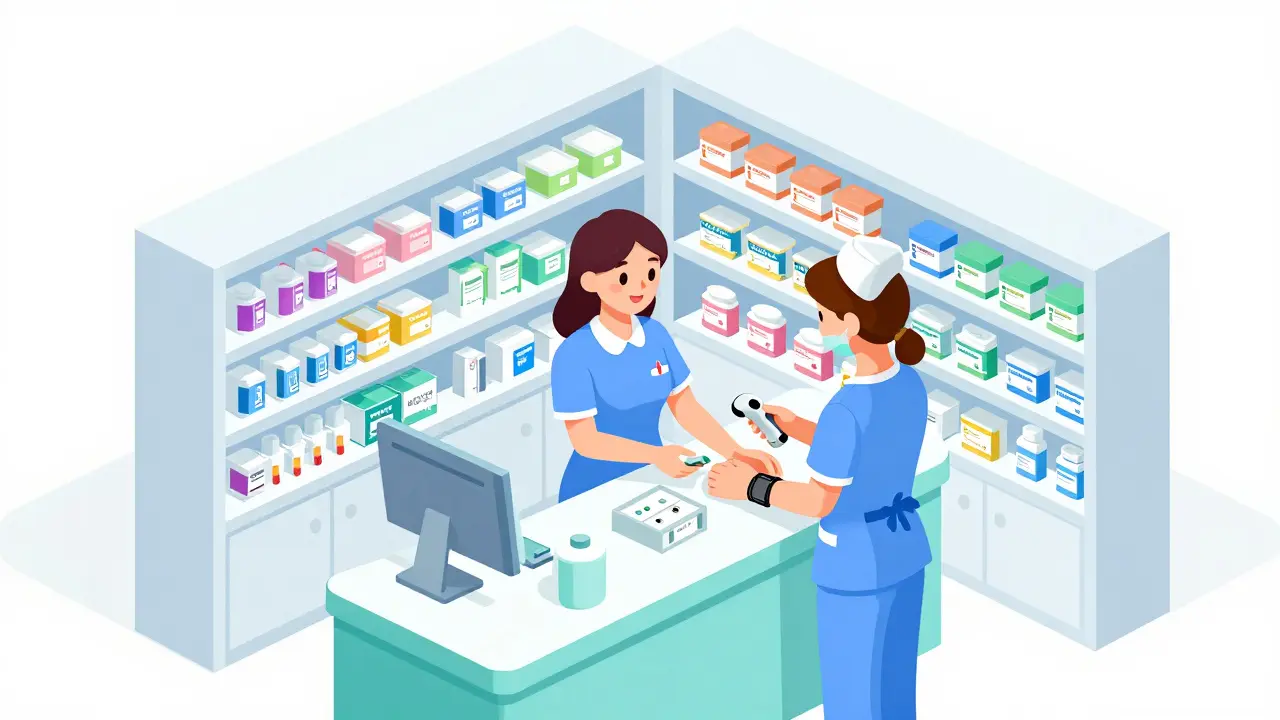
Barcode-Assisted Medication Administration (BCMA) is another critical tool. BCMA systems require nurses to scan the patient’s wristband and the medication barcode before administration. This verifies the "five rights": right patient, right drug, right dose, right route, and right time. Data from the Institute for Healthcare Improvement shows that BCMA reduces administration errors by 41.1%. But here is the reality check: nurses sometimes bypass the system during emergencies or when scanners fail. Creating a culture where scanning is non-negotiable, even under pressure, is vital.
| Technology | Primary Function | Error Reduction Impact | Key Challenge |
|---|---|---|---|
| EHR with CDSS | Alerts for interactions/dosing | Reduces prescribing errors by ~48% | Alert fatigue |
| BCMA | Verifies "five rights" at bedside | Reduces administration errors by 41.1% | Workarounds during busy shifts |
| CPOE | Eliminates handwriting errors | Reduces serious errors by 55% (VHA data) | Incorrect dropdown selections |
Training and Human Factors
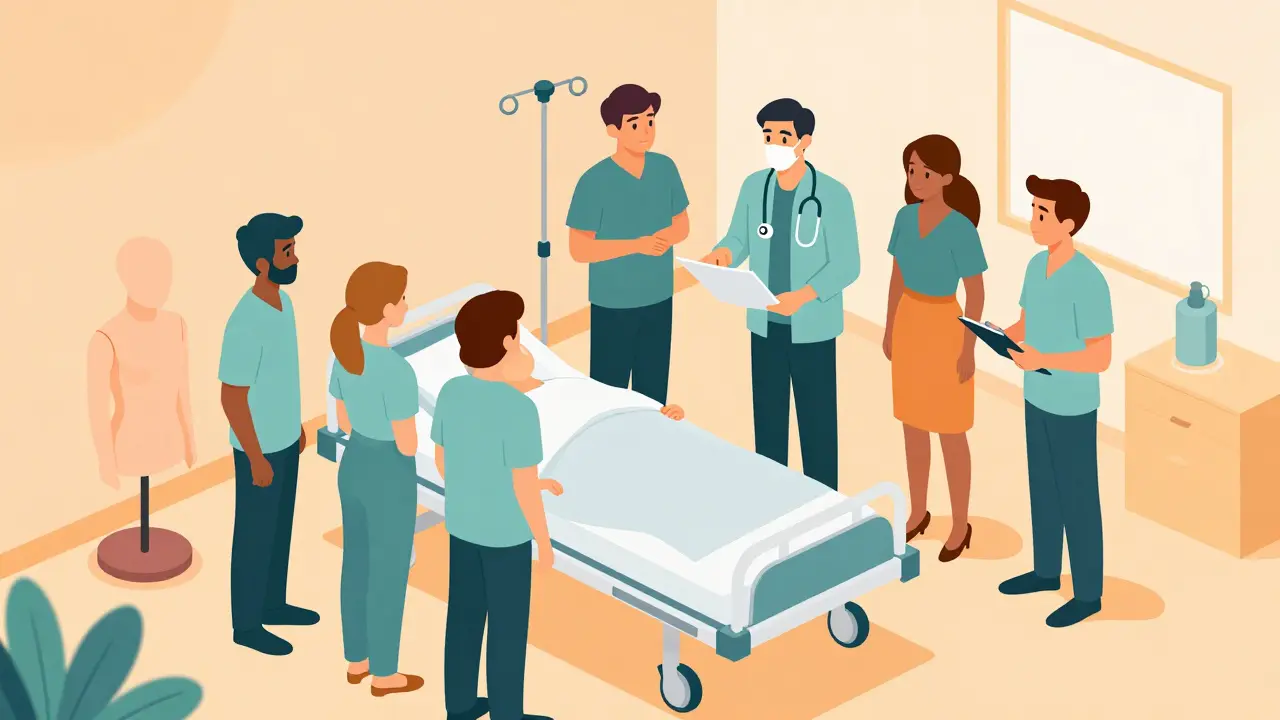
You can buy the best software in the world, but if your staff doesn’t know how to use it safely, patients will still get hurt. Training is the backbone of medication safety. The Agency for Healthcare Research and Quality (AHRQ) recommends 16-24 hours of initial medication safety training for new clinicians, followed by 8 hours of annual refresher training. Crucially, this training should include simulation components. Role-playing scenarios where a nurse catches a dosing error before it reaches the patient builds muscle memory and confidence.
Resistance to change is real. When hospitals implement BCMA, studies show that 42% of nursing staff initially resist due to perceived workflow disruptions. However, with proper support and leadership, compliance typically reaches 95% within six months. Leaders must communicate *why* these changes matter. Sharing stories of near-misses or actual harms can be powerful motivators.
Communication is equally important. Medication reconciliation-the process of comparing a patient’s current medications against admission, transfer, and discharge orders-is often where errors slip through. Poor handoffs between shifts or departments are a leading cause of confusion. Standardized communication tools, like SBAR (Situation, Background, Assessment, Recommendation), help ensure that critical medication information is transferred accurately.
Building a Culture of Safety
A punitive approach to errors drives them underground. If staff are afraid of being fired or reprimanded for making a mistake, they won’t report it. And if you don’t know about the mistake, you can’t fix the system that caused it. Dr. Tejal Gandhi, President of the National Patient Safety Foundation, advocates for a nonpunitive approach to error reporting. This encourages transparency, facilitates root cause analysis, and promotes continuous learning.
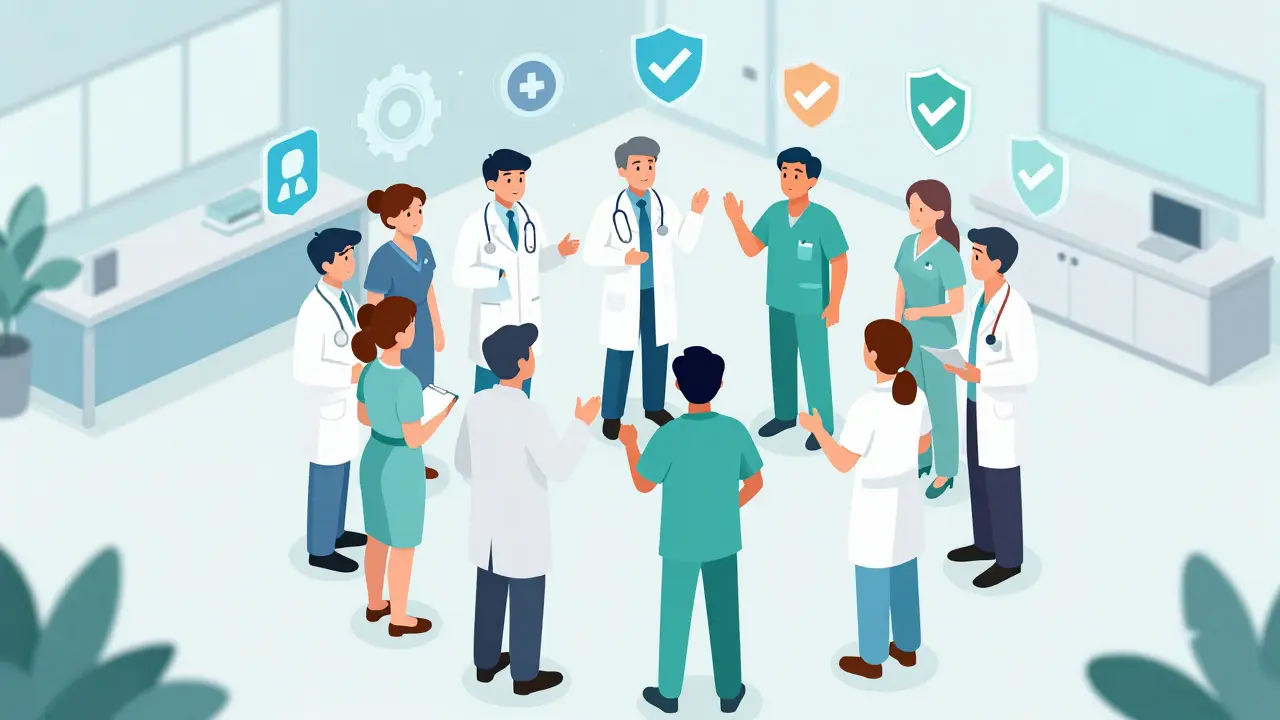
High-performing institutions score in the 75th percentile or higher on organizational learning and teamwork across units, according to the AHRQ Hospital Survey on Patient Safety Culture. What does this look like in practice? It means pharmacists are embedded in intensive care units to provide real-time order verification. At Johns Hopkins Hospital, this model reduced medication errors by 81%. It also means regular safety huddles where staff discuss recent close calls without fear of blame.
Documentation quality plays a role too. The American Society of Health-System Pharmacists (ASHP) provides comprehensive guidelines on preventing medication errors, updated regularly. Yet, a 2021 survey found that 31% of hospital medication safety policies hadn’t been updated in three or more years. Outdated policies create gaps in protection. Regular audits of institutional policies against current standards like those from ISMP and ASHP are necessary.
Future Trends: AI and Personalization
The future of medication safety is intelligent. Artificial Intelligence (AI) is beginning to play a significant role in predictive error prevention. Early studies demonstrate that AI algorithms can identify 89% of potential prescribing errors before they reach patients, compared to 67% detection by standard clinical decision support. Imagine a system that learns from your hospital’s specific error patterns and warns you based on local data.
The ISMP announced updates to its Targeted Medication Safety Best Practices for 2024-2025, adding new priorities around telehealth medication management and AI-assisted prescribing systems. As telehealth becomes more common, ensuring safe medication management remotely is a growing challenge. Providers must verify patient identity, assess home environments, and manage medications without physical presence. New protocols are emerging to address these unique risks.
Personalized medicine is another frontier. As treatments become more tailored to genetic profiles, the margin for error shrinks. Integrating social determinants of health into medication risk assessment is also becoming standard. Understanding a patient’s ability to afford medications or access refrigeration for biologics is part of safety. The National Academy of Medicine predicts that medication safety will remain a top priority through 2030, driven by these emerging complexities.
Actionable Steps for Providers
If you want to improve medication safety in your practice today, start with these steps:
- Audit Your Alerts: Review your EHR’s clinical decision support alerts. Disable low-value warnings to reduce alert fatigue. Keep only those that prevent serious harm.
- Standardize High-Alert Meds: Create separate storage areas and distinct labeling for high-alert medications like insulin and heparin. Use pre-filled syringes where possible to eliminate calculation errors.
- Train with Simulation: Move beyond PowerPoint presentations. Use realistic scenarios to train staff on recognizing and intercepting errors.
- Encourage Reporting: Implement an easy-to-use, anonymous error reporting system. Celebrate when staff report near-misses, as this helps identify system flaws.
- Update Policies Annually: Assign a team to review medication safety policies against the latest ISMP and ASHP guidelines every year.
Medication safety is a journey, not a destination. It requires constant vigilance, adaptation to new technologies, and a commitment to learning from mistakes. By focusing on both human factors and technological safeguards, healthcare providers can significantly reduce the risk of harm and deliver better care to their patients.
What are the "five rights" of medication administration?
The five rights are: right patient, right drug, right dose, right route, and right time. These principles ensure that the correct medication is given to the correct person in the correct amount, via the correct method, at the correct time. Barcode-Assisted Medication Administration (BCMA) systems are designed to verify these five rights automatically.
How much training do healthcare providers need for medication safety?
The Agency for Healthcare Research and Quality (AHRQ) recommends 16-24 hours of initial training for new clinicians, followed by 8 hours of annual refresher training. Effective training includes simulation-based learning to practice identifying and correcting errors in realistic scenarios.
What is alert fatigue in medication safety?
Alert fatigue occurs when clinicians are overwhelmed by excessive or irrelevant warnings from Clinical Decision Support Systems (CDSS). Studies show that providers override 49-96% of alerts, especially when systems generate more than 20 alerts per patient encounter. This can lead to missing critical safety warnings. Customizing alerts to focus on high-risk issues is the best way to combat this.
Why are high-alert medications considered risky?
High-alert medications, such as insulin, opioids, and intravenous oxytocin, carry a heightened risk of causing significant patient harm if there is an error in the medication-use process. Even small mistakes in dosing or administration can lead to severe injury or death. They require specialized protocols, distinct labeling, and often pre-filled syringes to minimize errors.
How does AI improve medication safety?
Artificial Intelligence (AI) algorithms can predict and identify potential prescribing errors with greater accuracy than traditional systems. Early studies show AI can detect 89% of potential errors before they reach patients, compared to 67% for standard clinical decision support. AI can analyze vast amounts of patient data to spot complex interactions and risk factors that humans might miss.