
PCOS and Weight: Breaking the Insulin Resistance Cycle with Diet

Imagine standing in front of the scale, eating less than anyone you know, yet the number stays stubbornly high. For many women with polycystic ovary syndrome, this isn't a failure of willpower. It is a physiological reality rooted in how their bodies handle energy. When we talk about PCOS and weight, we are really talking about a complex feedback loop involving your pancreas, your ovaries, and your fat cells.
The core issue here is often invisible until it manifests as difficulty losing pounds or gaining them around the midsection. This article breaks down exactly what is happening inside your body, specifically focusing on insulin resistance, and provides clear, actionable diet strategies grounded in metabolic science.
The Hidden Driver: Insulin Resistance Explained
Polycystic Ovary Syndrome (PCOS) is a hormonal disorder affecting millions of women worldwide. While the name suggests problems are only in the ovaries, it is actually a systemic metabolic condition. According to guidelines from the National Health Service (NHS), approximately 70% to 95% of people with PCOS struggle with insulin resistance. What does this actually mean? Your cells are supposed to take up glucose (sugar) from your blood using a key called insulin. In a healthy body, when you eat, insulin opens the cell doors, glucose enters, and energy is produced.In PCOS, the locks on those doors get sticky. Your pancreas has to scream louder and pump out way more insulin to get that glucose inside. Research from PMC indicates that obese females with PCOS are particularly susceptible to this. But here is the twist: high levels of circulating insulin are not just a side effect; they are a primary driver of the condition.
This excess insulin travels through your bloodstream and reaches your ovaries. There, it signals them to produce testosterone, an androgen usually associated with men. This leads to higher levels of male hormones in a female body, which messes up ovulation and creates those cystic changes in the ovaries seen on ultrasound scans. But the insulin doesn't stop there. It also tells your body to store fat aggressively.
Why You Feel Hungry and Crave Sugar
If you have ever felt ravenous an hour after a meal, even if that meal was large, you aren't imagining things. Elevated insulin levels disrupt the hunger-regulating hormones, leptin and ghrelin. Normally, leptin tells your brain you are full. With insulin resistance, your brain stops listening.
| Mechanism | Effect on Body | Result |
|---|---|---|
| Lipolysis Inhibition | Insulin blocks fat breakdown | Fat is locked in cells |
| Hunger Signals | Disrupted leptin sensitivity | Constant cravings |
| Fat Distribution | Visceral fat accumulation | Abdominal "Apple Shape" |
Cleveland Clinic experts note that this specific type of fat-the visceral fat stored deep in the abdomen-is the most dangerous kind. Unlike subcutaneous fat under the skin, abdominal fat releases inflammatory chemicals directly into the liver. This worsens insulin resistance further, creating a vicious cycle. It explains why a woman might look thin elsewhere but carries a significant belly weight, a pattern WebMD describes as distinctively different from typical female fat distribution.
Risks Beyond the Number on the Scale
Managing weight with PCOS isn't just about aesthetics. It is about long-term survival. Unmanaged insulin resistance significantly raises the risk of developing type 2 diabetes. While diabetes is often thought of as an older person's disease, the CDC reports that women with PCOS are at increased risk for it much earlier in life, sometimes in their 20s or 30s.
Beyond glucose metabolism, there is a heightened risk for cardiovascular issues, including high blood pressure and abnormal cholesterol levels. The chronic low-grade inflammation caused by high insulin and excess fat tissue damages blood vessels over time. Furthermore, irregular periods caused by this hormonal imbalance can lead to endometrial hyperplasia, a thickening of the uterine lining that increases cancer risk. These are severe medical realities, making lifestyle management critical for prevention.

Dietary Strategies That Actually Work
When standard calorie counting fails, the approach needs to shift from managing energy intake to managing hormonal response. You cannot simply treat PCOS with a generic weight loss diet because your metabolic machinery works differently. We need to flatten the blood sugar curve.
Focus on Glycemic Load Over Calorie Count
Glycemic Index (GI) is a ranking system that measures how quickly carbohydrates raise blood sugar. For PCOS management, choosing low-GI foods is essential. When you eat high-GI foods (like white bread, sugary cereals, or pastries), your blood sugar spikes, prompting a massive insulin surge. This surge drives fat storage and cravings immediately. By switching to low-GI options (quinoa, steel-cut oats, berries, legumes), you keep blood sugar stable, preventing that spike and the subsequent crash that triggers binge eating.Breakfast Composition Matters
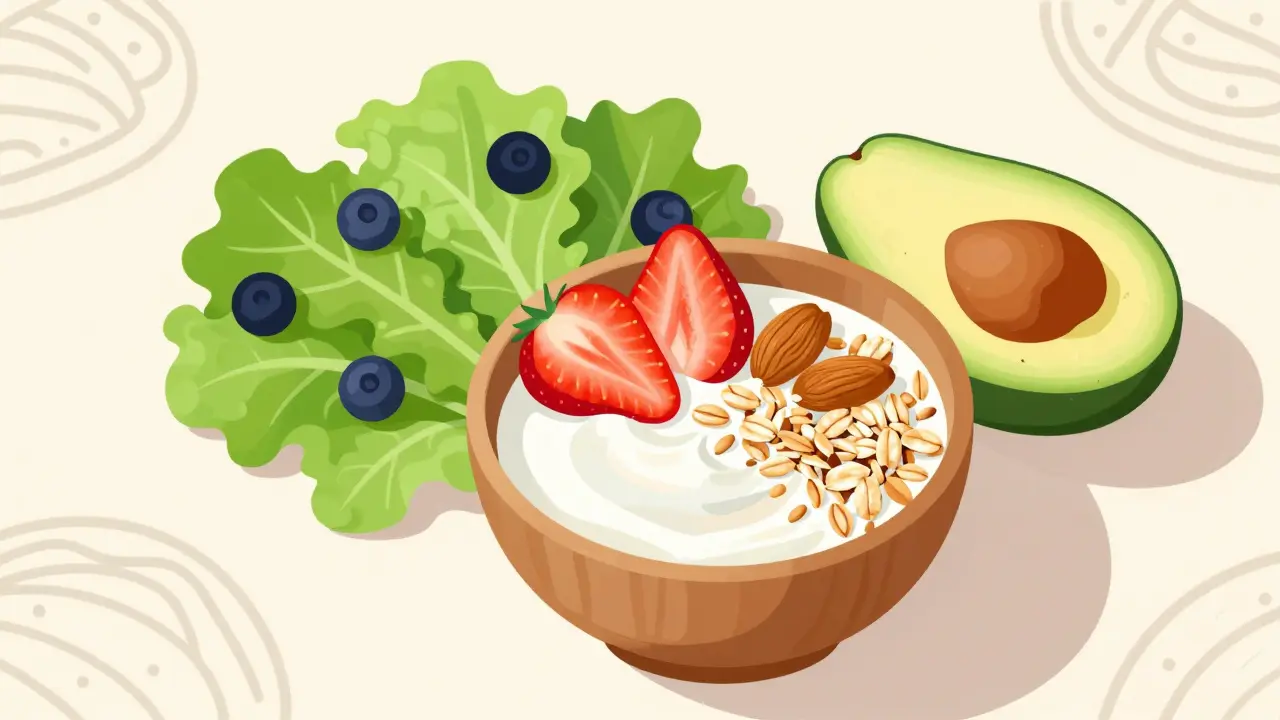
The morning meal sets the tone for your day's insulin sensitivity. Many people start the day with carbohydrates, but for someone with PCOS, a protein-first breakfast is often superior. A study cited by Fertifa suggests that starting with protein helps reduce insulin levels throughout the rest of the day. Try eggs with avocado, greek yogurt with nuts, or a vegetable omelet. This combination stabilizes blood glucose and keeps hunger hormones in check longer.
Fiber as an Insulin Modulator
Soluble fiber acts like a net in your digestive tract, slowing down the absorption of sugar into the bloodstream. This blunts the insulin response without cutting carbs entirely. Aim to include fibrous vegetables (spinach, broccoli, cauliflower) and resistant starch (cool potatoes, green bananas, oats) in every meal. This is a practical, sustainable way to improve sensitivity compared to aggressive restriction diets.
Combining Lifestyle and Medical Support
Diet alone is powerful, but sleep and stress play massive roles in cortisol production. Cortisol, the stress hormone, can trigger the release of glucose into the blood, adding fuel to the fire of insulin resistance. Poor sleep quality lowers insulin sensitivity by as much as 20% the next day according to clinical observations. Therefore, treating PCOS involves optimizing sleep hygiene and stress management alongside nutrition.
Some healthcare providers may prescribe medications like metformin. Metformin works by lowering glucose production in the liver and increasing sensitivity to insulin, essentially helping your body listen to its own signals better again. It is vital to discuss any medication with your GP or specialist, especially if you are considering pregnancy later on.
Does the keto diet work for PCOS?
Low-carb or ketogenic diets can help lower insulin levels rapidly, making them effective for some women with PCOS. However, they require careful monitoring to avoid nutrient deficiencies and ensure menstrual regularity. They are not always suitable for everyone, and sustainability is key.
Can I drink alcohol with PCOS?
Alcohol can disrupt blood sugar regulation and deplete magnesium, which is important for insulin sensitivity. Dry wines are generally preferred over cocktails or sugary mixers, but moderation is crucial to prevent insulin spikes.
Why do I crave sweets specifically?
Cravings are driven by rapid drops in blood sugar and hormonal fluctuations in cortisol and serotonin. High-protein meals and steady complex carbs help smooth out these drops, reducing the biological urge for quick sugar fixes.
Is exercise helpful for insulin resistance?
Yes, muscle activity consumes glucose independent of insulin, improving sensitivity. Strength training builds muscle mass, which burns more energy at rest, while walking after meals helps blunt glucose spikes.
How much weight do I need to lose to feel better?
Even a modest loss of 5% to 10% of total body weight can significantly restore ovulation and improve insulin levels. It is often about metabolic health rather than reaching an arbitrary size.



Comments (14)
Rohan Kumar
26 Mar 2026
lol everyone thinks diet fixes everything but why does nobody talk about the chemical environment outside the house?? 🙄🤡
Sabrina Herciu
26 Mar 2026
This point regarding the visceral fat accumulation is absolutely critical!!!! It cannot be overstated how dangerous inflammation becomes!
Tony Yorke
27 Mar 2026
Just focus on the food quality and ignore the calorie counting nonsense.
Monique Ball
28 Mar 2026
It is incredibly important to listen to your body when dealing with hormonal fluctuations. 😊 Many people forget that insulin resistance is a systemic issue rather than a local problem. You should definitely try switching your breakfast routine to something protein-rich immediately. Research has shown time and time again that protein helps stabilize glucose levels significantly. 🥚 We often overlook the power of fiber in slowing down sugar absorption during meals. Soluble fiber acts like a safety net for your bloodstream throughout the day. Stress management plays a massive role in keeping cortisol levels in check too. High cortisol can wreck havoc on your blood sugar regulation without you realizing it. Sleep quality is another huge factor that gets ignored far too often nowadays. Even twenty percent less sensitivity can occur from just one night of poor rest. Metformin is a tool that can help bridge the gap while you fix your diet habits. Medication should always be discussed with a knowledgeable specialist beforehand. Small weight loss percentages can actually restore ovulation completely in some cases. Five to ten percent change is enough to see real improvements in metabolic health markers. Remember that consistency beats perfection every single time when fighting this condition! 💪
Debra Brigman
30 Mar 2026
The dance between leptin and ghrelin is truly a symphony of biological chaos waiting to unravel.
tyler lamarre
1 Apr 2026
Most of these suggestions are common knowledge for anyone who has read a basic physiology textbook.
Aaron Olney
1 Apr 2026
this artical is crazy i cant beleive my doctor said insuline is the only thing causing this becaues i eat normal and still gain weight its insane.
gina macabuhay
2 Apr 2026
It is frankly irresponsible to suggest that lifestyle changes alone solve such a complex medical issue without stricter oversight.
Sophie Hallam
3 Apr 2026
I think we should remain open to various strategies depending on individual biology and history.
Poppy Jackson
4 Apr 2026
You really need to prioritise your wellbeing above all else when navigating this storm.
Austin Oguche
6 Apr 2026
Cultural dietary habits often play a larger role than standard guidelines acknowledge.
Jeannette Kwiatkowski Kwiatkowski
7 Apr 2026
The underlying mechanism of hepatic glucose production requires deeper analysis before implementing random restrictions.
Philip Wynkoop
8 Apr 2026
Good info here for sure :) Keep fighting the good fight.
Richard Kubíček
10 Apr 2026
Life is a journey of balance between acceptance and proactive change.