Probiotics with Antibiotics: Timing to Reduce Side Effects
Probiotic Timing & Strain Planner
Configuration
Your Daily Protocol
Click "Generate Optimal Plan" to see your personalized schedule.
Antibiotics are powerful tools for fighting bacterial infections, but they come with a significant downside: they often wreak havoc on your gut health. Diarrhea, bloating, and stomach cramps are common complaints during and after treatment. Many people turn to probiotics, which are live microorganisms that provide health benefits when consumed in adequate amounts to mitigate these side effects. However, the science behind taking probiotics alongside antibiotics is far from straightforward. In fact, recent research suggests that while probiotics can prevent some immediate symptoms, they might actually delay the natural recovery of your native gut bacteria.
The key isn't just whether you take probiotics, but when and which ones. Getting the timing right can mean the difference between a smooth recovery and prolonged digestive distress. This guide breaks down the latest evidence on spacing doses, choosing effective strains, and understanding the trade-offs involved in supporting your microbiome during antibiotic therapy.
The Core Conflict: Protection vs. Recovery
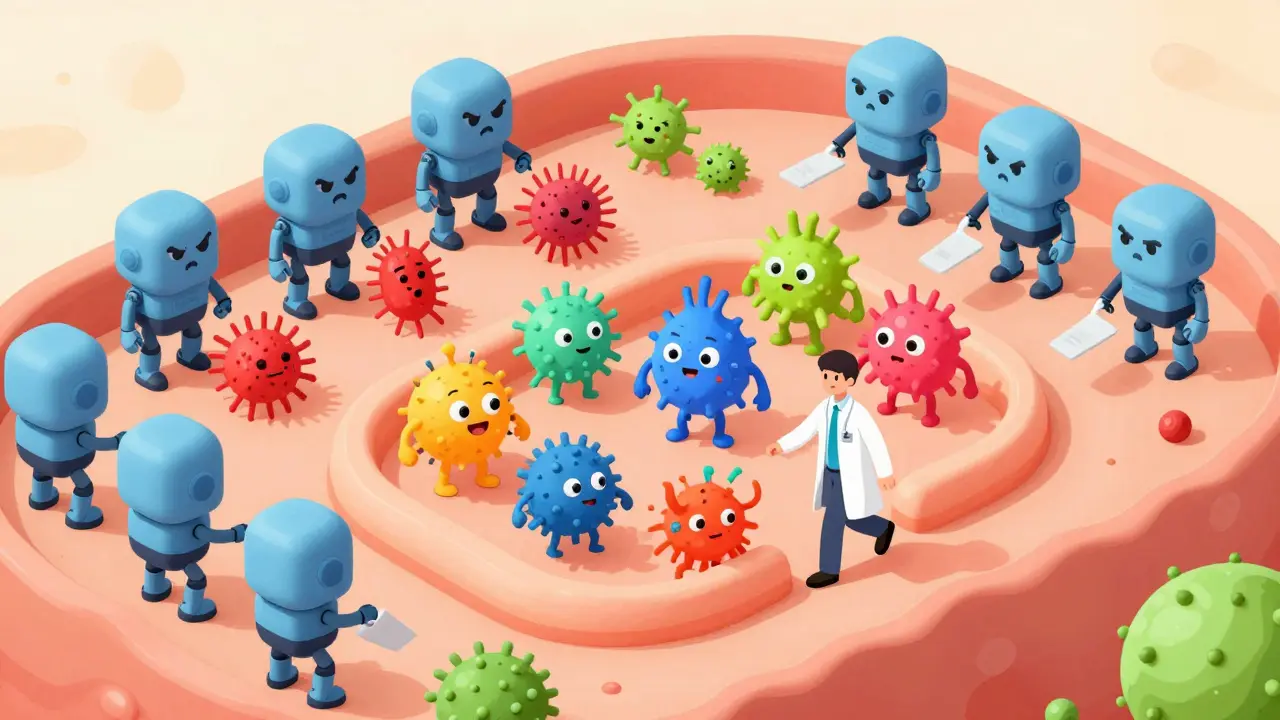
To understand why timing matters, we first need to look at what happens inside your gut. When you take an antibiotic, it doesn't distinguish between the bad bacteria causing your infection and the good bacteria living in your intestines. It wipes them all out. This state of imbalance is called dysbiosis, which refers to an imbalance in the microbial community within the body.
Historically, the logic was simple: add good bacteria back in to replace what was lost. A major systematic review published in the Journal of Medical Microbiology in 2022 supported this view, finding that probiotics could protect against some negative impacts of antibiotics on the gut microbiome. Dr. Elisa Marroquin, who led the study, compared a healthy gut to a diverse human community needing various professions to function well. Probiotics were seen as temporary workers filling those gaps.
However, newer studies complicate this picture. Research highlighted by UCLA Health in late 2023 indicated that introducing foreign bacteria might actually delay the return of your own native microbes. Think of it like trying to replant a garden immediately after a fire. If you plant non-native species too quickly, they might crowd out the seeds of your original plants that are still waiting in the soil to sprout. The 2018 study by Palleja et al., published in Nature Microbiology, found that probiotic use extended the time to microbiome restoration by 132 days compared to spontaneous recovery.
This creates a dilemma. You want to stop the diarrhea now, but you also want your gut to heal properly later. The solution lies in strategic timing and strain selection.
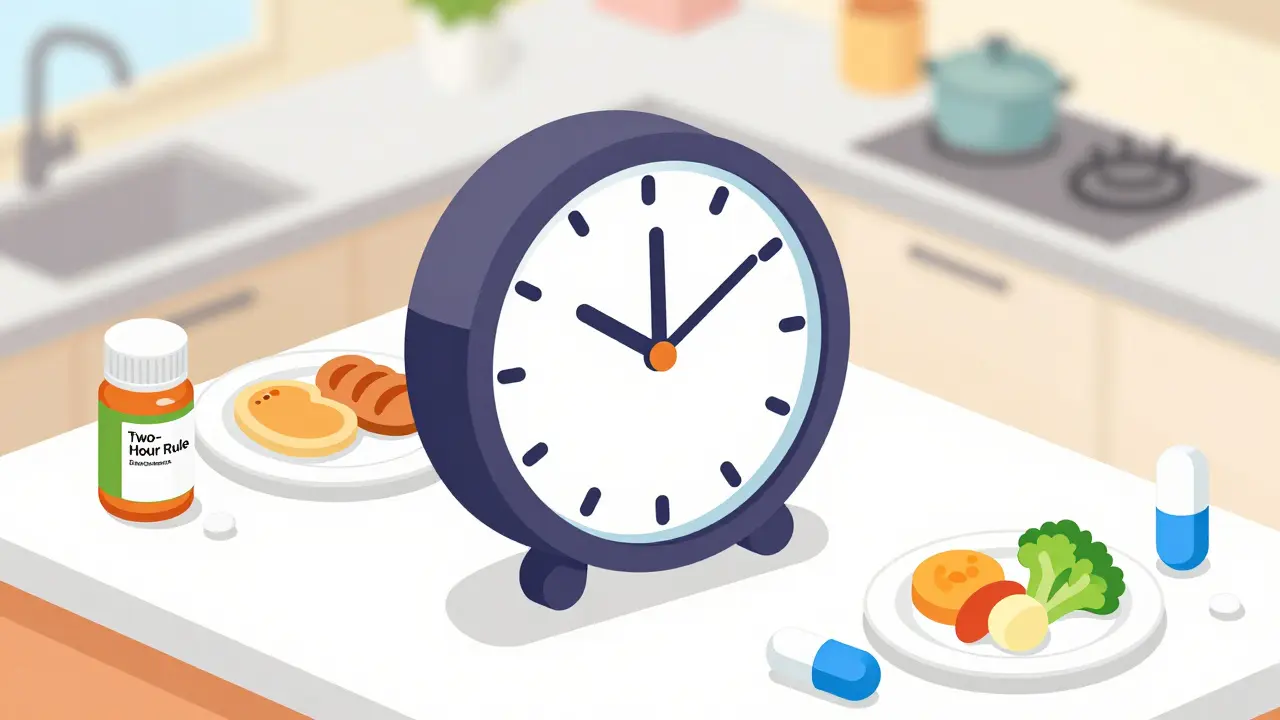
Optimal Timing: The Two-Hour Rule
If you decide to take probiotics, the most critical factor is spacing them apart from your antibiotic dose. Antibiotics work by killing or inhibiting the growth of bacteria. If you swallow a probiotic pill at the exact same time as your antibiotic, the medication will likely kill the beneficial bacteria before they can reach your intestines and do any good.
Clinical guidance from Harvard Medical School and the American Gastroenterological Association recommends taking probiotics at least 2 to 3 hours apart from your antibiotic dose. Here is a practical schedule:
- Morning Dose: Take your antibiotic with breakfast. Wait until lunchtime (2-3 hours later) to take your probiotic.
- Evening Dose: Take your antibiotic with dinner. Take your probiotic before bed, ensuring at least a 2-hour gap.
User data supports this approach. A 2023 poll on Drugs.com involving nearly 1,900 respondents showed that 42% of users took their probiotics two hours after their antibiotics, while 38% took them two hours before. Both strategies aim to avoid direct interaction in the stomach and upper intestine.
Choosing the Right Strains
Not all probiotics are created equal. With over 500 commercial strains available, only a handful have robust scientific evidence for preventing antibiotic-associated diarrhea (AAD), which is diarrhea occurring during or shortly after antibiotic treatment. Choosing the wrong strain might offer no benefit at all.
Two specific types stand out in clinical trials:
- Saccharomyces boulardii: This is a beneficial yeast, not a bacterium. Because antibiotics target bacteria, they do not kill S. boulardii. This makes it highly effective even if you accidentally take it closer to your antibiotic dose. It has been shown to significantly reduce the risk of AAD.
- Lactobacillus rhamnosus GG (LGG): This is one of the most studied bacterial strains. A 2022 Cochrane review found that LGG demonstrated greater efficacy for AAD prevention than many multi-strain formulations. However, because it is a bacterium, strict adherence to the 2-3 hour spacing rule is essential.
Other strains, such as Lactobacillus plantarum 299v, have also shown promise, with research indicating up to 37% greater microbiome preservation when taken correctly. Always check the label for the specific strain name (e.g., L. rhamnosus GG), not just the genus (Lactobacillus).
| Strain | Type | Key Benefit | Timing Sensitivity |
|---|---|---|---|
| Saccharomyces boulardii | Yeast | Highly effective against AAD; unaffected by antibiotics | Low (can be taken closer to antibiotics) |
| Lactobacillus rhamnosus GG | Bacteria | Strong evidence for AAD prevention | High (must wait 2-3 hours) |
| Multi-strain blends | Mixed | Variable results; less consistent data | High (must wait 2-3 hours) |
Dosage and Duration
How much should you take? Most clinical studies use dosages ranging from 5 to 40 billion CFU (Colony Forming Units) per day. For standard courses of antibiotics, 10-20 billion CFU is often sufficient. If you have a compromised immune system or are undergoing long-term, broad-spectrum antibiotic therapy, higher doses (up to 40 billion CFU) may be recommended under a doctor's supervision.
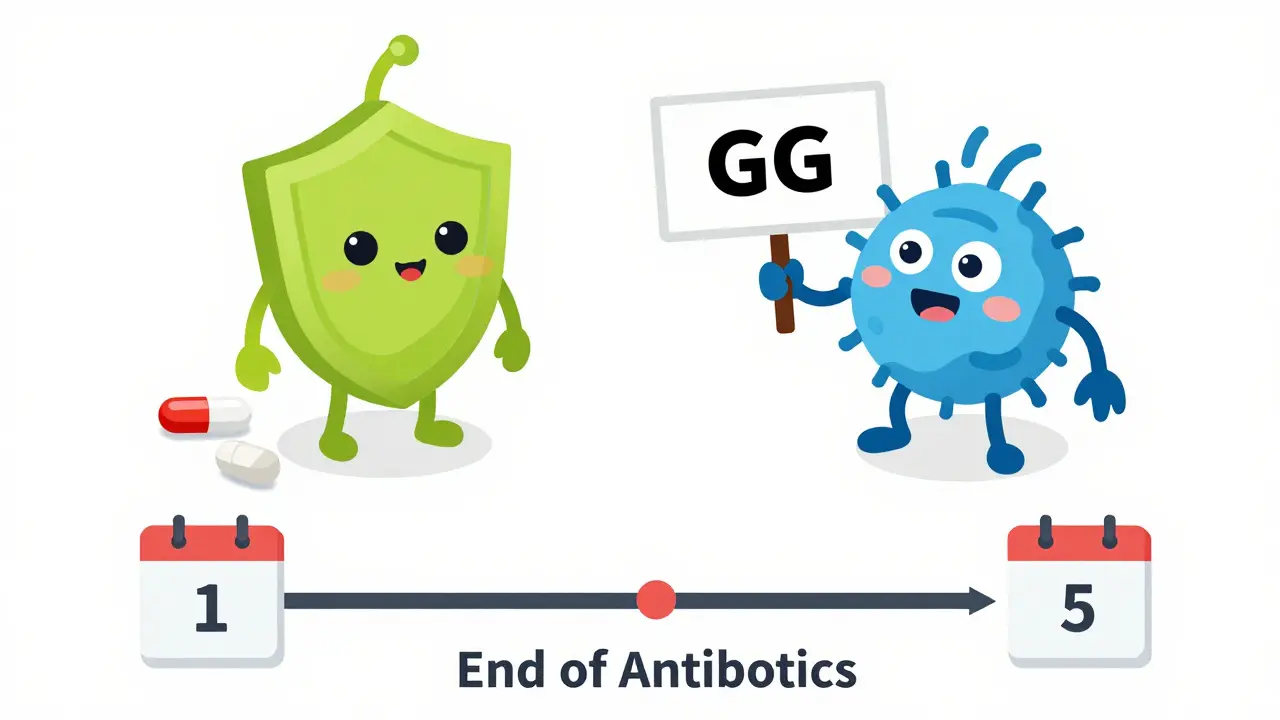
Regarding duration, do not stop taking probiotics as soon as your antibiotic course ends. Your gut needs time to stabilize. The general recommendation is to continue probiotic supplementation for 1 to 2 weeks after finishing your antibiotics. Some protocols, particularly for broad-spectrum drugs, extend this to 4 weeks. A 2024 study by John et al. administered probiotics throughout a 7-day antibiotic course and for 28 days post-treatment, showing sustained reductions in antibiotic resistance genes.
Potential Risks and Side Effects
While generally safe for healthy individuals, probiotics are not without risks. The most common side effect is temporary gas and bloating. As the new bacteria begin to ferment fibers in your gut, they produce gas as a byproduct. This usually subsides within a few days, but it can be uncomfortable.
More serious concerns exist for vulnerable populations. People with weakened immune systems, those with central venous catheters, or patients with short bowel syndrome are at risk for systemic infections caused by probiotic organisms. This is known as probiotic sepsis, though it is rare. Always consult your healthcare provider before starting probiotics if you fall into these categories.
Additionally, there is the issue of "transient colonization." Most probiotic strains do not permanently settle in your gut. They pass through, provide their benefits during transit, and are excreted. This reinforces the importance of continuing them for a few weeks after antibiotics to support the environment while your native flora regrows.
Practical Tips for Success
To maximize benefits and minimize hassle, consider these practical steps:
- Check Storage Requirements: Some strains, particularly Lactobacillus varieties, require refrigeration to maintain viability. Shelf-stable options are more convenient but may have lower initial potency. Look for products that guarantee CFU count at expiration, not just at manufacture.
- Set Reminders: Use phone alarms to ensure you hit the 2-3 hour window. Missing the timing window reduces effectiveness significantly.
- Consider Prebiotics: Eating prebiotic-rich foods (like garlic, onions, bananas, and asparagus) provides food for your native bacteria. This might help your own microbiome recover faster than relying solely on external probiotics.
- Monitor Symptoms: Keep a log of your digestive symptoms. If you experience worsening diarrhea or severe bloating, stop the probiotic and contact your doctor.
Conclusion
Taking probiotics with antibiotics is a nuanced decision. While they can effectively reduce the incidence of antibiotic-associated diarrhea, they may delay the full restoration of your unique gut ecosystem. By choosing well-researched strains like Saccharomyces boulardii or Lactobacillus rhamnosus GG and strictly adhering to the 2-3 hour separation rule, you can mitigate side effects while giving your gut the best chance to heal. Always discuss your plan with your healthcare provider, especially if you have underlying health conditions.
Can I take probiotics and antibiotics at the same time?
No, you should not take them simultaneously. Antibiotics will kill the beneficial bacteria in the probiotic supplement, rendering it ineffective. Wait at least 2 to 3 hours between taking your antibiotic dose and your probiotic dose to ensure the probiotics survive and reach your intestines.
Which probiotic is best for antibiotics?
The two most evidence-backed options are Saccharomyces boulardii (a yeast) and Lactobacillus rhamnosus GG (a bacteria). S. boulardii is often preferred because it is not killed by antibiotics, offering more flexibility in timing. L. rhamnosus GG has strong clinical data for preventing diarrhea but requires strict spacing from antibiotic doses.
How long should I take probiotics after finishing antibiotics?
It is recommended to continue taking probiotics for at least 1 to 2 weeks after completing your antibiotic course. For broad-spectrum antibiotics or if you experienced significant digestive issues, extending this period to 4 weeks may help support the restoration of your gut microbiome.
Do probiotics delay gut recovery?
Some research suggests that while probiotics reduce immediate symptoms like diarrhea, they might delay the return of your native gut bacteria. Studies indicate that spontaneous recovery without probiotics may result in a microbiome composition closer to your pre-antibiotic state faster than when probiotics are introduced, as the foreign strains can temporarily dominate the environment.
Are there side effects to taking probiotics?
Common side effects include temporary gas, bloating, and mild stomach cramps as your gut adjusts to the new bacteria. These symptoms usually resolve within a few days. Rare but serious risks include systemic infections in individuals with compromised immune systems or severe underlying health conditions.