Age-Appropriate Medications for Common Pediatric Conditions: A Guide to Safe Dosing
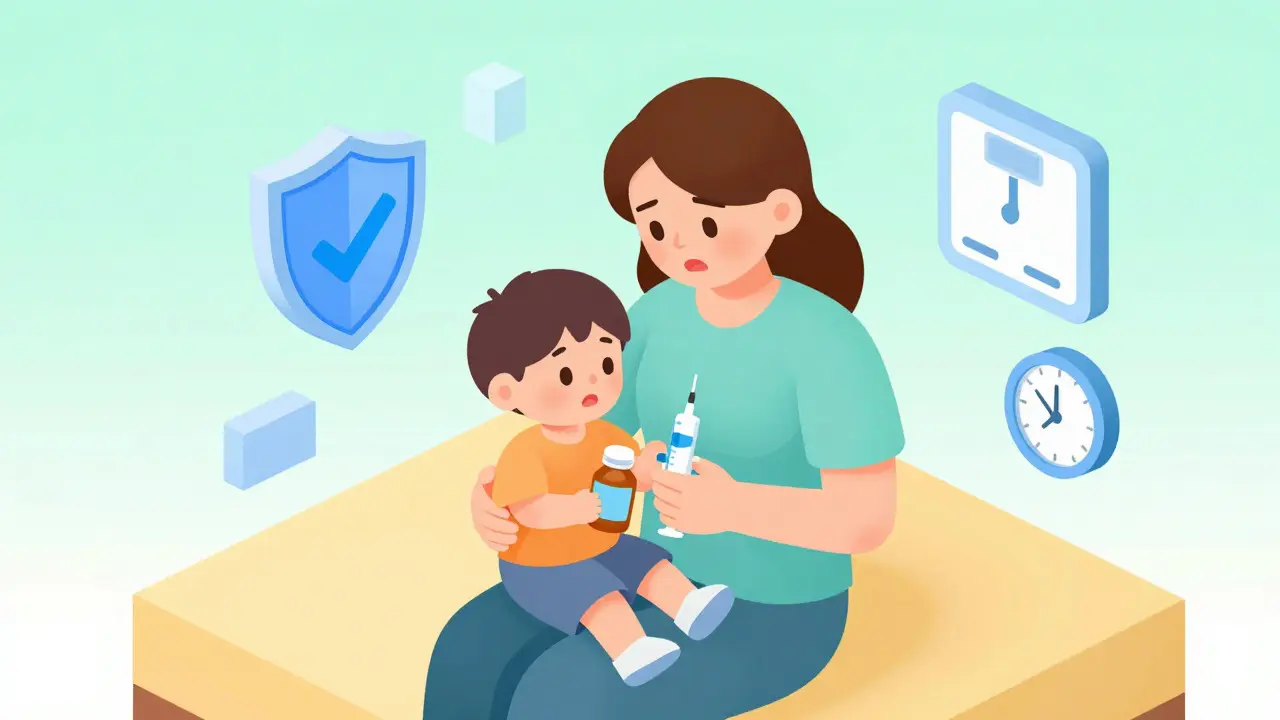
Have you ever looked at a bottle of liquid medicine and felt like you needed a chemistry degree just to measure out the right amount? You are not alone. For parents and caregivers, administering medication to a child is often a source of significant stress. The fear of giving too much or too little is real, especially when the instructions seem vague or the child refuses to swallow anything that isn’t chocolate-flavored.
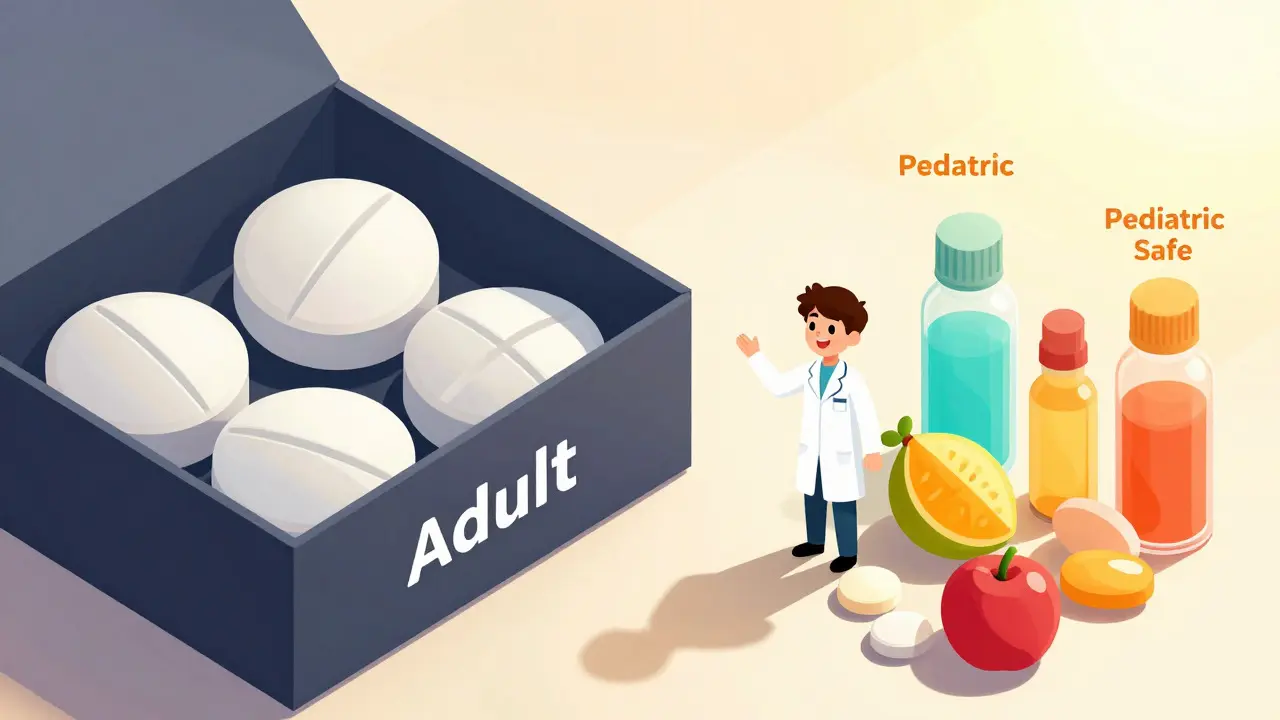
The core problem is simple but critical: children are not small adults. Their bodies process drugs differently due to immature liver and kidney function, different body composition, and ongoing developmental changes. Using adult medications scaled down by weight can lead to serious health risks, including hospitalization. This guide breaks down what makes a medication "age-appropriate," how to navigate dosing safely, and which drugs to avoid based on the latest clinical guidelines.
Why Children Need Specific Formulations
You might wonder why there isn't just one pill size that works for everyone with a dose adjustment. The answer lies in pharmacokinetics-the way the body absorbs, distributes, metabolizes, and excretes drugs. A neonate (a baby under 28 days old) has significantly lower renal clearance than an adolescent. This means a drug that clears quickly in a teenager might build up to toxic levels in a newborn if not adjusted precisely.
The World Health Organization recognized this in its 9th Essential Medicines List for Children (EMLc) published in 2023. They established separate core sets for children aged 1 month to 5 years and those aged 5 to 12 years. Neonates, for instance, often require drug concentrations 10 to 100 times lower than adults. If you try to dilute an adult tablet yourself, you risk uneven distribution, leading to inaccurate dosing.
Furthermore, physical ability matters. A toddler cannot swallow a large tablet. That is why age-appropriate formulations include liquids, chewable tablets, and orally disintegrating tablets. These aren't just marketing gimmicks; they are medical necessities to ensure the correct dose enters the system. Without these specific forms, adherence drops sharply. Studies show that taste aversion and administration difficulty cause 35% of medication non-adherence in children.
The KIDs List: Drugs to Avoid or Use With Caution
If you want to keep your child safe, you need to know which medications are risky. The Pediatric Pharmacy Association created the Key Potentially Inappropriate Drugs in Pediatrics (KIDs) List. The 2025 edition is the current standard, identifying 27 medications that require avoidance or caution. This list acts as a vital checkpoint for doctors and pharmacists.
| Medication | Recommendation | Reason for Restriction |
|---|---|---|
| Codeine | Avoid | Risk of respiratory failure due to unpredictable metabolism |
| Tramadol | Avoid | Respiratory depression and seizure risk in children |
| Montelukast | Use with Caution | Neuropsychiatric events and sleep disturbances |
| Angiotensin Receptor Blockers | Avoid (<1 month) | Risk of renal tubular dysgenesis in neonates |
| Aspirin | Avoid (<18 years) | Risk of Reye's syndrome during viral infections |
Notice the distinction between "Avoid" and "Use with Caution." "Avoid" means strong evidence shows life-threatening or life-altering adverse effects. For example, codeine and tramadol are metabolized into morphine by the liver. Some children are "ultra-rapid metabolizers," meaning their bodies convert the drug to morphine too quickly, causing dangerous breathing suppression. The Mayo Clinic warns that opioids like these should never be given to children unless absolutely necessary and monitored closely.
Montelukast, often used for asthma and allergies, carries a "Use with Caution" label for all patients 18 years and younger. Recent data links it to sleep disturbances and behavioral changes. While not always fatal, these side effects can significantly impact a child's quality of life and school performance. Always discuss these risks with your pediatrician before starting long-term treatment.
Dosing by Weight, Not Just Age
One of the biggest misconceptions is that age determines dosage. While age groups help categorize development, weight is the primary driver for dosing calculations. Clinicians use milligrams per kilogram (mg/kg) to determine the precise amount. However, maximum doses exist to prevent toxicity in larger children who approach adult weights.
For pain management, acetaminophen is a common choice. The standard dose for infants and children under 12 years is 4-10 mg/kg/dose every 6-8 hours. But here is the catch: the maximum single dose is 600 mg. If you have a heavy 10-year-old, calculating strictly by weight might exceed this limit, so you cap it. Conversely, for ibuprofen, the risk of gastrointestinal issues like gastritis increases with higher doses, occurring in 5-10% of cases even at therapeutic levels.
Antibiotics require even more precision. Amoxicillin, a first-line treatment for ear infections, is dosed at 25-35 mg/kg/day divided into three doses. For a severe infection, the dose might jump to 80-90 mg/kg/day. The duration also varies; a typical course is 7 days, but some conditions require 10-14 days. Inaccurate dosing leads to treatment failure or antibiotic resistance. The CDC reports that inappropriate antibiotic prescribing occurs in 30% of pediatric outpatient visits, contributing to global antimicrobial resistance.
Navigating Formulation Challenges
Even with the right dose, getting the medicine into the child is a hurdle. Liquid formulations are preferred for children under 5, but they come with challenges. Taste is a major factor. Bitter antibiotics can trigger gag reflexes, leading to vomiting and loss of the dose. Manufacturers now invest heavily in flavoring. Fruit-flavored oseltamivir suspension, for example, increased adherence by 58% in children aged 2-7 during recent flu seasons.
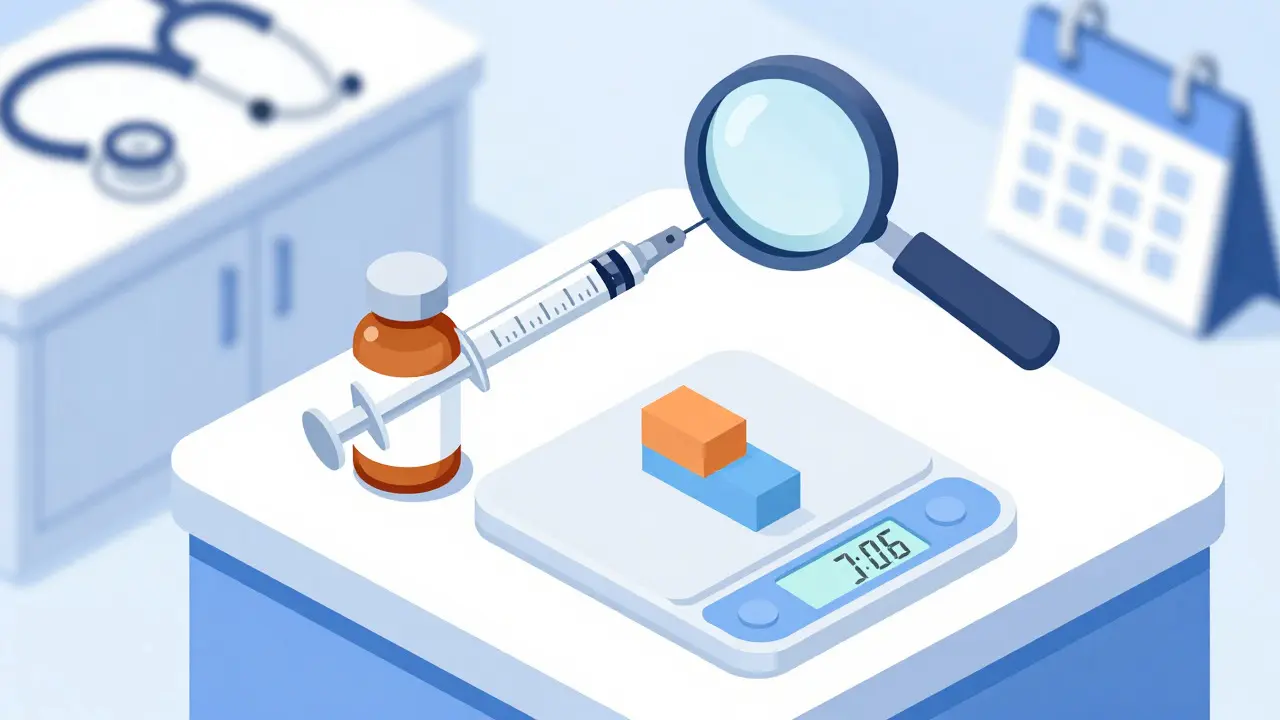
Measurement errors are another critical issue. A study from the Children's Hospital of Philadelphia found that 42% of caregivers made dosing errors using household spoons or outdated syringes. Always use the measuring device provided with the medication. If none is included, ask your pharmacist for an oral syringe marked in milliliters (mL). Never use a kitchen teaspoon, as sizes vary wildly and can lead to overdosing.
For older children, chewable tablets offer a middle ground. They are easier to swallow than large pills but still require accurate splitting if the dose is lower than the tablet strength. Orally disintegrating tablets dissolve on the tongue, which helps children who struggle with swallowing. When choosing a formulation, consider the child's age, ability to cooperate, and taste preferences.
Regulatory Safeguards and Future Innovations
The landscape of pediatric medications has improved thanks to regulations like the Pediatric Research Equity Act (PREA). Passed in 2003 and amended since, PREA mandates that drug sponsors conduct pediatric studies for new drugs. Before this, off-label prescribing was rampant, affecting up to 90% of neonates. Now, 89% of new molecular entities have pediatric data, ensuring safer options for kids.
The FDA requires age-appropriate assessments across six distinct age groups, from preterm neonates to young adults. This ensures that safety and efficacy are proven for each stage of development. Despite progress, 40% of pediatric drug development programs still fail due to formulation issues, highlighting the complexity of creating medicines that work for growing bodies.
Innovation continues to push boundaries. Researchers are exploring 3D-printed personalized dosage forms, which could allow for exact dosing tailored to a child's specific weight and needs. Nanoparticle delivery systems are also in trials to improve bioavailability in neonates. These advancements promise a future where medication is safer, more effective, and easier to administer.
Is it safe to give adult medication to a child?
Generally, no. Adult medications often contain higher doses and ingredients not tested for children. Children metabolize drugs differently, so adult formulations can lead to toxicity or ineffective treatment. Always consult a pediatrician or pharmacist before giving any adult medication to a child.
What is the KIDs List?
The KIDs List is a guideline maintained by the Pediatric Pharmacy Association that identifies medications potentially inappropriate for pediatric use. It categorizes drugs as "Avoid" or "Use with Caution" based on evidence of adverse effects, helping clinicians make safer prescribing decisions.
How do I measure liquid medicine accurately?
Always use the measuring device provided with the medication, such as an oral syringe or dosing cup marked in milliliters. Avoid using household teaspoons, as their volume varies. Hold the syringe at eye level to read the meniscus accurately and ensure the correct dose.
Why is weight more important than age for dosing?
Weight correlates better with body mass and metabolic capacity than age. Two children of the same age can have vastly different weights, affecting how they process drugs. Dosing by weight (mg/kg) ensures the concentration in the blood remains within a therapeutic range, minimizing risks of under-dosing or toxicity.
Can I crush adult tablets for my child?
Only if approved by a pharmacist. Some tablets are extended-release or enteric-coated, meaning crushing them releases the entire dose at once, which can be dangerous. Additionally, crushed tablets may taste bitter, leading to refusal. Always check if a pediatric-specific formulation exists first.
What are the risks of aspirin for children?
Aspirin is linked to Reye's syndrome, a rare but serious condition causing swelling in the liver and brain, primarily in children recovering from viral infections like flu or chickenpox. It is generally avoided in children under 18 years old unless specifically prescribed for certain conditions like Kawasaki disease.