How to Prevent Steroid-Induced Osteoporosis: A Practical Guide for Patients
Steroid Osteoporosis Risk Estimator
Enter your current medication details and lifestyle habits below.
Ready to Analyze
Input your data to see your estimated fracture risk category and recommended interventions.
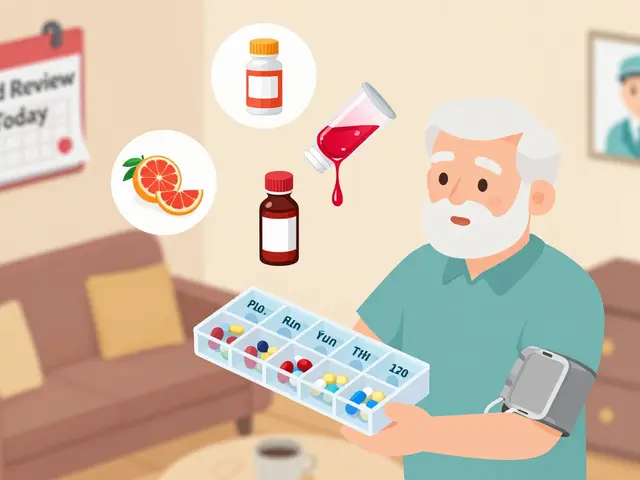
Starting a course of corticosteroids can feel like a lifeline when you are battling inflammation or an autoimmune flare-up. But there is a hidden cost that often goes unnoticed until it is too late: your bones are quietly breaking down. Glucocorticoid-induced osteoporosis (GIOP) is not just a side effect; it is the most common form of secondary bone disease in medicine. If you are taking prednisone or similar steroids for more than three months, your risk of fracture doesn't just creep up-it spikes. In fact, studies show that within the first six months of treatment, your fracture risk can increase by 70% to 100%. The good news? This damage is largely preventable if you act early.
The Silent Mechanism: How Steroids Attack Your Bones
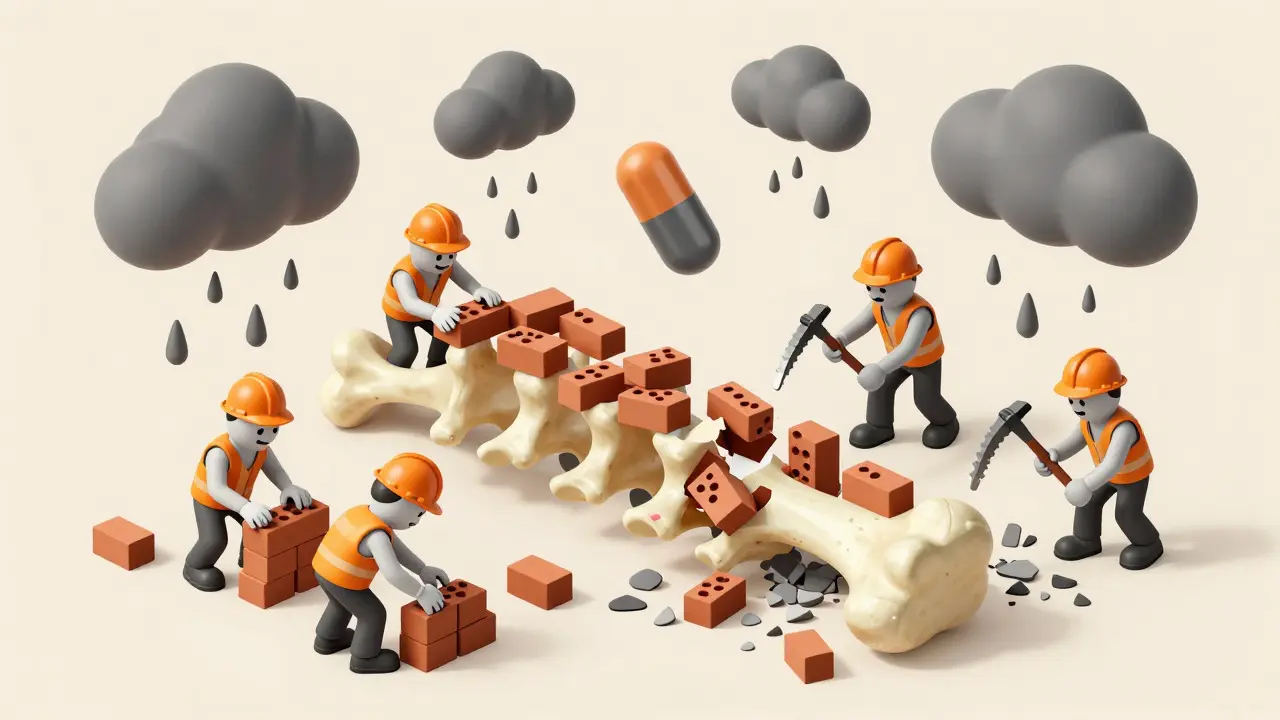
To protect your bones, you first need to understand how steroids sabotage them. It isn’t just about "weakness." Glucocorticoids are powerful anti-inflammatory medications that disrupt the delicate balance of bone remodeling. Think of your skeleton as a construction site where two teams work constantly: builders (osteoblasts) who lay down new bone, and demolition crews (osteoclasts) who break down old bone. Steroids throw a wrench into this process on both sides.
First, they suppress the builders. Research published in Frontiers in Endocrinology confirms that glucocorticoids inhibit osteoblast function and trigger their death through apoptosis. At the same time, they keep the demolition crew working overtime by increasing osteoclast survival. The result? Bone resorption outpaces formation. Additionally, steroids reduce your gut’s ability to absorb calcium by roughly 30% and cause your kidneys to flush more calcium into your urine. You are losing bone faster while absorbing less of the raw material needed to repair it.
The timeline is aggressive. During the first year of therapy, bone mineral density (BMD) can drop by 5% to 15%, particularly in the lumbar spine where trabecular bone is most vulnerable. This rapid loss means waiting for symptoms is a dangerous strategy. By the time you feel pain or suffer a fracture, significant structural damage has already occurred.
Identifying Your Risk Level
Not everyone on steroids faces the same level of danger. Clinical guidelines from the Royal Osteoporosis Society and the American College of Rheumatology (ACR) help categorize risk based on dose and duration. You enter the high-risk category if you meet these criteria:
- Dose: Taking the equivalent of 2.5 mg of prednisone daily or more.
- Duration: Using the medication for three months or longer.
If your daily dose reaches 7.5 mg or higher, your fracture risk doubles. A meta-analysis highlights a stark correlation: for every 1 mg increase in your daily prednisone equivalent, your lumbar spine BMD decreases by 1.4% annually. Age, gender, and prior fractures also compound this risk. Women generally face higher baseline risks, but men on long-term steroids are often under-diagnosed and undertreated, receiving preventive interventions at less than half the rate of women.
The Foundation: Lifestyle and Nutrition Basics
Before jumping to prescription drugs, every patient must establish a solid non-pharmacological foundation. The BBC working group strongly recommends using the lowest effective steroid dose for the shortest possible time. Reducing your dose from above 7.5 mg to 7.5 mg or below can cut fracture risk by 35% within six months alone.
Nutrition plays a critical role here. You cannot out-supplement a poor diet, but supplementation is essential when absorption is compromised. The Cleveland Clinic Journal of Medicine specifies clear targets:
- Calcium: Aim for 1,000-1,200 mg daily. Try to get this from food first (dairy, leafy greens, fortified foods), then use supplements to fill the gap.
- Vitamin D: Take 600-800 IU daily to maintain serum levels above 20 ng/mL. Some experts suggest 800-1,000 IU for optimal fracture prevention.
Data shows that combining 1,000 mg of calcium with 500 IU of vitamin D prevents annual lumbar spine BMD loss by 0.72% compared to placebo groups who lost 2.0%. It’s not a cure-all, but it stops the bleeding.
Physical activity is equally vital, though steroids make it harder. Glucocorticoids impair your skeletal response to mechanical loading, reducing the effectiveness of weight-bearing exercise by about 25%. However, you should still aim for 30 minutes of weight-bearing activity on most days. Walking, light jogging, or resistance training signals your bones to stay strong. Avoid smoking entirely, as it independently reduces fracture risk by 25-30%, and limit alcohol to fewer than three units per day.
Pharmacological Interventions: When Supplements Aren’t Enough
If you are at moderate to high risk, lifestyle changes alone are insufficient. This is where pharmacological intervention becomes necessary. The choice of medication depends on your specific fracture risk profile.
| Medication Class | Example Drug | Dosing Frequency | Key Benefit |
|---|---|---|---|
| Bisphosphonates | Risedronate, Alendronate | Daily or Weekly | Reduces vertebral fracture risk by 70% |
| Bisphosphonates (IV) | Zoledronic Acid | Annual Infusion | Increases lumbar spine BMD by 4.5% vs placebo |
| RANK Ligand Inhibitor | Denosumab | Every 6 Months | Increases lumbar spine BMD by 7.0% |
| Anabolic Agent | Teriparatide | Daily Injection | Best for severe cases; increases BMD by 9.1% |
Bisphosphonates are typically the first line of defense. Risedronate, taken as 5 mg daily or 35 mg weekly, has been shown to reduce vertebral fracture risk by 70% in patients on glucocorticoids. For those who struggle with daily pills or have gastrointestinal issues, zoledronic acid offers an annual intravenous infusion. Denosumab, given as a subcutaneous injection every six months, is another potent option that significantly boosts bone density.
For patients with severe osteoporosis (T-score ≤ -2.5) or those who have already suffered a fracture, teriparatide is often the superior choice. As an anabolic agent, it actually builds new bone rather than just slowing breakdown. Head-to-head trials indicate it produces 2.3 times greater BMD gains than alendronate in high-risk steroid users. However, its daily injection requirement and cost make it a second-line option for most.
The Implementation Gap: Why You Might Be Overlooked
Here is the frustrating reality: despite clear guidelines, care is fragmented. A JAMA study revealed that only 62% of patients on long-term glucocorticoids received any documented osteoporosis prevention. Even worse, only 31% had bone mineral density testing, and merely 15% received optimal, guideline-concordant care. Why?
Communication breaks down between specialists. Only 22% of primary care providers feel adequately informed about osteoporosis prevention when a rheumatologist manages the steroid prescription. Patient misconceptions also play a role; 45% of people believe osteoporosis is an inevitable consequence of steroid therapy, leading to fatalism rather than action. Adherence drops sharply over time-bisphosphonate adherence falls from 65% at six months to 45% at one year, often due to gastrointestinal side effects.
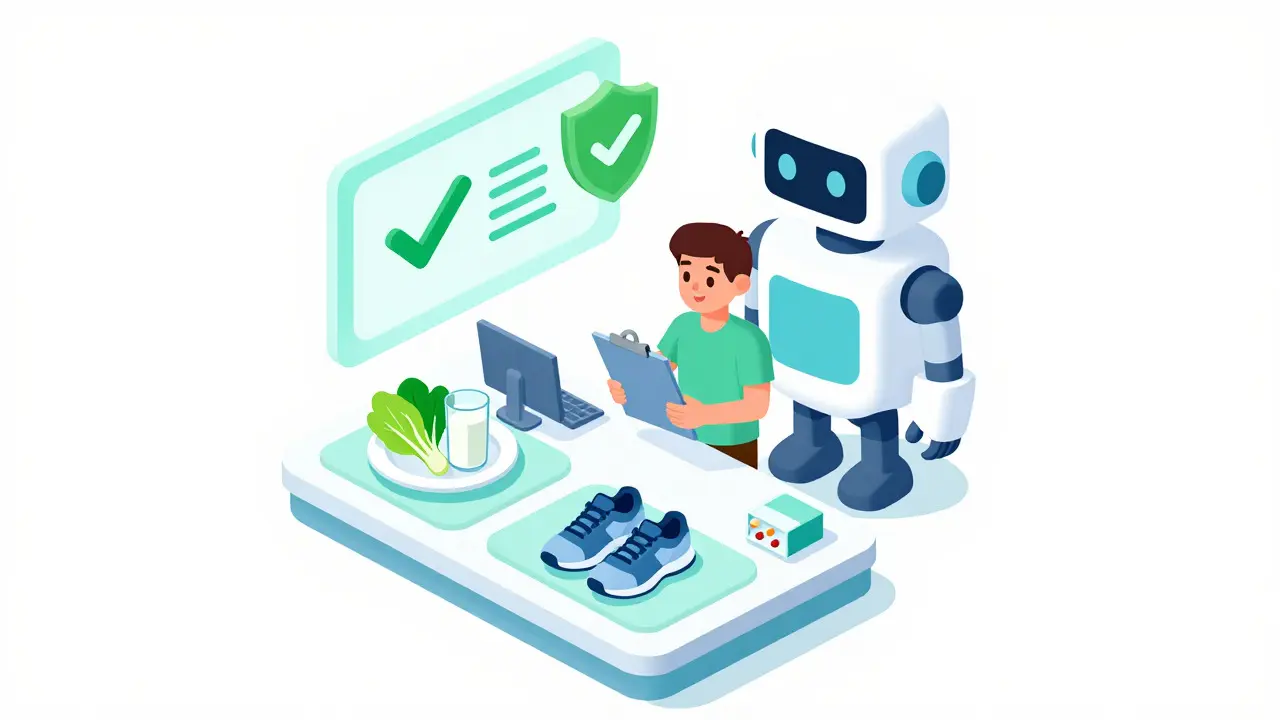
To bridge this gap, you must be your own advocate. Ask your doctor specifically about GIOP at the start of your steroid regimen. Request a baseline DEXA scan. Ensure your chart reflects a plan for calcium, vitamin D, and potential bisphosphonate therapy. Systems that use electronic health record alerts to flag steroid prescriptions exceeding 2.5 mg/day have increased intervention rates from 40% to 92%, proving that structured attention saves bones.
Monitoring and Long-Term Strategy
Prevention is not a one-time event. Dr. Mary Bouxsein, Director of the Center for Advanced Orthopedic Studies at Harvard Medical School, emphasizes that the window of opportunity is the first three to six months of therapy. This is when bone loss is most rapid. Fifty percent of glucocorticoid-related fractures occur within the first year.
Your monitoring schedule should include:
- Baseline DEXA Scan: Before or immediately upon starting long-term steroids.
- Frequent Follow-ups: Repeat BMD testing every 1-2 years while on therapy.
- Vitamin D Levels: Blood tests to ensure you are maintaining levels ≥20 ng/mL.
- Meds Review: Regularly assess if your steroid dose can be tapered further.
With appropriate intervention, you can see BMD improvements of 3% to 8% within 12 months. It is reversible, but only if you catch it early.
How quickly does steroid-induced osteoporosis develop?
Bone loss begins almost immediately. Within the first 3 to 6 months of starting glucocorticoid therapy, fracture risk can increase by 70% to 100%. Significant bone mineral density decline (5-15%) typically occurs during the first year of treatment.
What is the minimum dose of prednisone that requires bone protection?
Guidelines recommend initiating prevention strategies for patients taking the equivalent of 2.5 mg of prednisone daily or more for a duration of three months or longer. Fracture risk doubles at doses of 7.5 mg/day or higher.
Are bisphosphonates safe for everyone on steroids?
Bisphosphonates are generally safe and are the first-line treatment for moderate to high-risk patients. However, they can cause gastrointestinal side effects, which lead to discontinuation in some users. Patients with kidney impairment may need alternative options like denosumab or teriparatide.
Can exercise reverse steroid-induced bone loss?
Exercise helps slow bone loss but is rarely sufficient on its own. Steroids reduce the skeletal response to mechanical loading by about 25%. Weight-bearing exercise should be combined with nutritional supplementation and, for high-risk patients, pharmacological therapy.
Why do so many patients fail to receive proper prevention?
Studies show only 15% of chronic glucocorticoid users receive optimal care. Barriers include poor communication between specialists, lack of provider awareness, patient misconceptions that bone loss is inevitable, and fragmented healthcare systems that miss automated alerts for risk stratification.