
Lupus Arthritis and Hydroxychloroquine: How This Common Drug Reduces Joint Inflammation and Prevents Flares
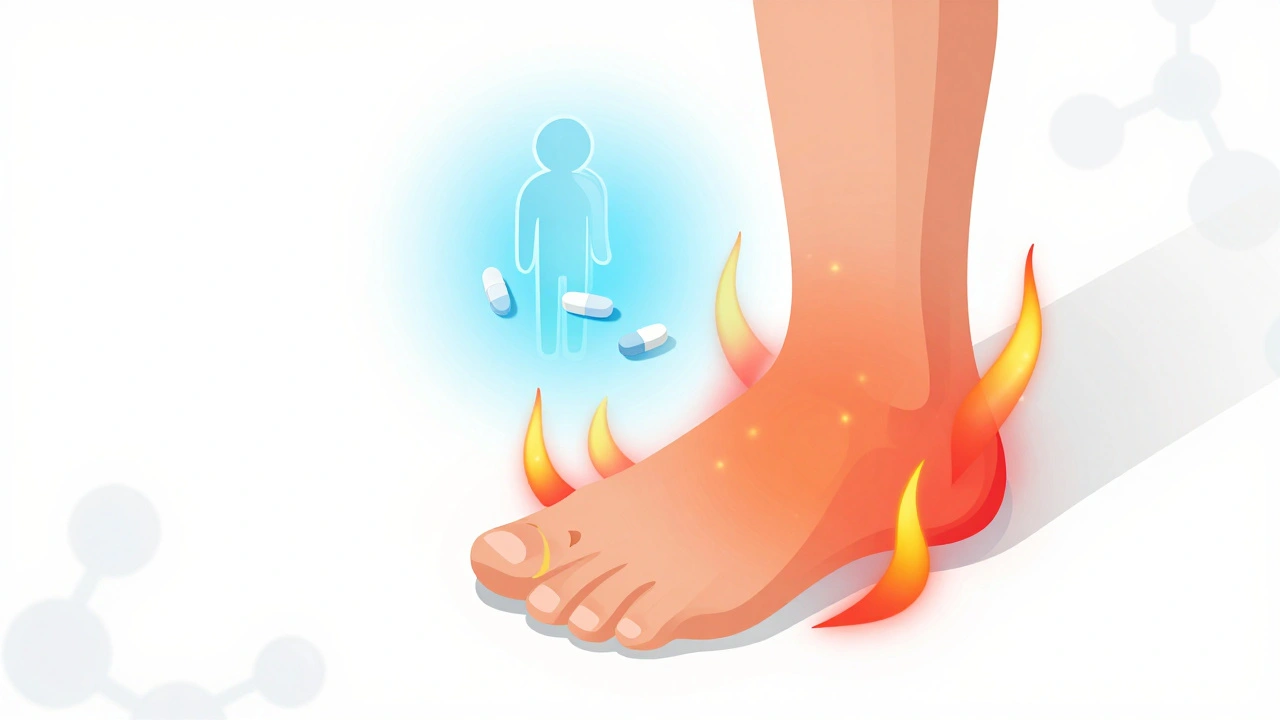
When your hands swell up in the morning, your knees ache for no reason, and your joints feel stiff even after rest, it’s not just aging-it could be lupus arthritis. This isn’t the same as osteoarthritis or rheumatoid arthritis. It’s a symptom of systemic lupus erythematosus (SLE), an autoimmune disease where your immune system attacks your own tissues. About 90% of people with lupus experience joint pain and swelling at some point, often in the small joints of the fingers, wrists, and knees. The pain is real, but here’s the good news: there’s a medication that’s been helping millions for over 70 years-hydroxychloroquine, sold under the brand name Plaquenil.
What Makes Lupus Arthritis Different?
Lupus arthritis doesn’t destroy bone the way rheumatoid arthritis does. You won’t see joint deformities or erosion on X-rays. Instead, it causes inflammation in the lining of the joints, leading to pain, stiffness, and swelling. Symptoms often come and go with disease flares. Many patients describe it as feeling like their joints are full of hot sand-tender, achy, and worse in the morning. Unlike gout or psoriatic arthritis, lupus arthritis is usually symmetrical-both wrists or both knees hurt at the same time. It’s not just about the joints, though. This inflammation is a signal that the whole immune system is on high alert.Hydroxychloroquine: The Quiet Hero of Lupus Treatment
Hydroxychloroquine was originally made in 1946 to fight malaria. But in the 1950s, doctors noticed something strange: patients with lupus and rheumatoid arthritis who took it for malaria felt better. Their joints stopped aching. Their rashes faded. Their energy returned. Today, it’s the most commonly prescribed drug for lupus. According to the American College of Rheumatology, 85 to 90% of SLE patients take it. Why? Because it doesn’t just treat symptoms-it changes the course of the disease.How Hydroxychloroquine Works Inside Your Body
It’s not a simple painkiller. Hydroxychloroquine works deep inside your immune cells. It blocks special sensors called Toll-like receptors (TLR7 and TLR9) that normally sound the alarm when they detect foreign invaders. In lupus, these sensors get confused and trigger attacks on your own cells. By calming them down, hydroxychloroquine reduces the production of inflammatory chemicals like interferons and TNF-alpha by 25-40%. This means less swelling, less pain, and fewer flares. It also lowers harmful reactive oxygen species, improves blood fat levels, and even helps prevent blood clots-a major risk for people with lupus who have antiphospholipid antibodies.Why It’s Better Than Steroids and Biologics
Corticosteroids like prednisone give quick relief-sometimes in days-but they come with serious long-term risks: bone loss, weight gain, diabetes, and increased infection risk. Hydroxychloroquine doesn’t do that. In fact, studies show it can actually improve bone density by 3-5% over two years. Biologics like belimumab work well for severe cases, but they cost over $45,000 a year. Hydroxychloroquine? Between $600 and $1,200 annually, even as a brand name. Generics are even cheaper. And unlike biologics, which suppress your immune system broadly, hydroxychloroquine fine-tunes it. It reduces flares by over 50%, cuts hospitalizations, and lowers the chance of dying from lupus by nearly half.
Real People, Real Results
On patient forums like the Lupus Foundation of America’s community, 68% of users say they saw moderate to significant improvement in joint pain after 3 to 6 months on hydroxychloroquine. One user, LupusWarrior87, wrote: “After four months on 300mg Plaquenil, I went from needing 10mg prednisone daily to zero steroids. My morning stiffness disappeared.” Another on Reddit, SLESurvivor, said it took five months to notice a difference-but now, two years in, they credit the drug for staying off high-dose steroids entirely. These aren’t isolated stories. In a 2023 survey of over 3,500 lupus patients, 76% reported reduced joint swelling, and 68% said they had fewer flares.The Catch: It Takes Time and Needs Monitoring
Hydroxychloroquine doesn’t work overnight. You need to take it daily for at least three months before you feel the full effect. Many people stop too early because they don’t see immediate results. That’s a mistake. Studies show 62% of patients improve by 12 weeks, and 85% by six months. The biggest concern? Eye health. Long-term use can rarely cause retinal damage. That’s why the American Academy of Ophthalmology recommends a baseline eye exam within the first year, then yearly after five years of use. Dosing is also critical: no more than 5 mg per kilogram of body weight per day (max 400 mg). For a 70 kg person, that’s 350 mg daily. Too much raises the risk. But with proper dosing and monitoring, the risk of vision loss is less than 1% after 10 years.Who Shouldn’t Take It?
Most people tolerate hydroxychloroquine well. But if you have pre-existing retinal disease, severe liver problems, or a history of cardiac arrhythmias, your doctor may avoid it. Pregnant women can take it-studies show it’s safe for the baby and even reduces the risk of lupus flares during pregnancy. Kids with lupus are often started on it early because it’s gentler on bones than steroids. The only real downside? Side effects like nausea, dizziness, or vivid dreams. These usually fade after a few weeks. Taking it with food helps. If you’re on other medications, check for interactions. Hydroxychloroquine can affect how your body processes certain heart drugs or diabetes pills.
What About Generic Versions?
Hydroxychloroquine has been generic since 2007. But not all generics are the same. A 2022 study in JAMA Internal Medicine found that some generic brands led to 18% lower blood levels than the brand-name Plaquenil. That means less effectiveness. The American College of Rheumatology now advises sticking with the same manufacturer-if you start with one brand, don’t switch unless your doctor approves it. If cost is an issue, ask your pharmacist about the most bioavailable generic. Don’t just grab the cheapest one off the shelf.What’s Next for Hydroxychloroquine?
Researchers are still uncovering new benefits. A 2023 study found that hydroxychloroquine may help normalize immune system signals linked to lupus activity. Other trials are testing it in combination with newer drugs like anifrolumab-and early results show even better control of symptoms. There’s also work underway to identify biomarkers that predict who will respond best to the drug. For now, it remains the backbone of lupus treatment. Even as new biologics arrive, hydroxychloroquine isn’t being replaced-it’s being strengthened.Getting Started and Staying on Track
If your doctor prescribes hydroxychloroquine for lupus arthritis, here’s what to do:- Take it daily, even if you feel fine. Missing doses can trigger flares.
- Take it with food to reduce stomach upset.
- Get your first eye exam within a year of starting.
- Keep a symptom journal-note joint pain, fatigue, rashes.
- Don’t stop without talking to your rheumatologist.
- Ask about the Lupus Foundation’s “Plaquenil Passport” app-it helps track doses and appointments.
Hydroxychloroquine isn’t magic. But for millions of people with lupus arthritis, it’s the difference between living with constant pain and living with control. It’s not the fastest option, but it’s the safest, most proven, and most cost-effective. And after seven decades, it’s still saving lives.





Comments (13)
Jennifer Patrician
4 Dec 2025
Hydroxychloroquine was originally developed by the pharmaceutical industry to control the population of autoimmune patients. The real reason it works? It’s a low-dose chloroquine derivative that subtly alters your gut microbiome to suppress immune responses - but only if you’re white. Non-white patients? They metabolize it differently. That’s why the FDA quietly approved it for lupus in 1955 - same year they started pushing it in poor communities. You think this is medicine? It’s social engineering with a prescription label.
And don’t get me started on the eye exams. They’re not for your safety. They’re to make sure you don’t go blind before the insurance stops paying for it. They want you on it for life - because the alternative is expensive biologics. And who pays for those? You do. In pain. In debt. In silence.
Mark Curry
4 Dec 2025
It’s funny how we call it a ‘quiet hero’ when it’s really just a very old tool that somehow still works. Like finding a hammer in your grandpa’s garage and using it to fix a modern TV. We don’t understand why it works - we just know it does. Maybe the immune system doesn’t need to be crushed. Maybe it just needs to be reminded to stop screaming at itself.
Kinda makes you wonder if we’ve been treating autoimmunity wrong for the last 50 years. Not with suppression, but with… recalibration. Hydroxychloroquine doesn’t shut the system down. It whispers. And sometimes, whispering works better than shouting.
Manish Shankar
4 Dec 2025
It is with profound respect for the medical community that I acknowledge the enduring efficacy of hydroxychloroquine in the management of systemic lupus erythematosus. The scientific literature, particularly the American College of Rheumatology guidelines, provides robust evidence supporting its use as a disease-modifying agent. The cost-effectiveness, coupled with its low toxicity profile relative to corticosteroids, renders it an indispensable component of long-term therapeutic strategies. I commend the author for presenting this information with clarity and precision.
May all patients have access to such a well-studied, affordable, and life-sustaining intervention.
Lynette Myles
6 Dec 2025
Plaquenil doesn’t reduce flares. It masks them. The inflammation is still there. Your immune system is still attacking. You’re just numbing the signal. That’s not treatment. That’s suppression. And suppression is just delayed destruction.
Annie Grajewski
6 Dec 2025
so like… hydroxychloroquine is just the lupus version of a placebo with a 70 year warranty? 😅 i took it for 8 months and my joints still felt like they were filled with wet sand and angry bees. but hey, at least i didn’t gain 30 lbs like my cousin did on prednisone. also my eye doc said ‘you’re fine’ then gave me a free tote bag. suspicious.
also why is everyone on reddit calling it ‘the quiet hero’ like it’s in a disney movie? it’s a malaria drug that got lost and wandered into rheumatology. no one even knows how it works. it just… works. weird.
Katie Allan
7 Dec 2025
I’ve seen patients go from wheelchairs to walking again on this drug. Not because it’s magic, but because it’s gentle. It doesn’t burn your body down to rebuild it - it helps your body remember how to calm down. That’s not just medicine. That’s dignity.
If you’re on it and it’s helping - don’t stop. If you’re scared of the side effects - talk to your doctor. But don’t let fear silence your hope. You’re not alone in this.
Kylee Gregory
8 Dec 2025
It’s interesting how the same drug that was once dismissed as a ‘malaria curiosity’ became the cornerstone of lupus care. Maybe we don’t need more powerful drugs - maybe we just need better understanding. Hydroxychloroquine doesn’t fix the immune system. It gives it space to find its own balance. And sometimes, that’s all you need.
I wonder if we’ve been too focused on ‘curing’ autoimmunity instead of learning to live with it - gently, wisely, and with patience.
Lucy Kavanagh
8 Dec 2025
Let’s be real - hydroxychloroquine was pushed by Big Pharma because it’s cheap. But who controls Big Pharma? The same people who invented the ‘lupus epidemic’ to sell more drugs. You think this is about health? No. It’s about control. The FDA approved it in 1955 because they needed a way to pacify the rising number of women with autoimmune issues - women who were too loud, too emotional, too sick to stay quiet.
And now they want you to take it for life. For your own good. Right.
Ask yourself: why does the US government fund research on hydroxychloroquine but not on natural anti-inflammatories? Coincidence? I think not.
Chris Brown
10 Dec 2025
It is deeply troubling that so many patients are being misled into believing hydroxychloroquine is a benign, universally beneficial treatment. The data on retinal toxicity is not ‘less than 1%’ - it is a ticking time bomb for those who take it beyond five years. And yet, doctors continue to prescribe it without adequate counseling. This is not medicine. This is negligence dressed in white coats.
Furthermore, the promotion of generics without bioequivalence testing is a scandal. Patients are being sacrificed on the altar of cost-cutting. I urge every patient to demand brand-name Plaquenil - and to refuse all generics unless proven identical in clinical trials. This is not paranoia. This is accountability.
sean whitfield
12 Dec 2025
70 years of use and we still don’t know how it works? That’s not science. That’s witchcraft with a prescription.
Also why is everyone acting like this drug is a miracle? I’ve seen people on it for 10 years still in wheelchairs. The only thing it’s good for is making doctors feel like they’re doing something. Meanwhile, the real cause? Gut dysbiosis. Mold exposure. Heavy metals. Nobody wants to talk about that. Too expensive. Too messy.
Hydroxychloroquine is the opioid of lupus. You think it’s helping? You’re just numb.
Mellissa Landrum
13 Dec 2025
ok but like… why is this drug even legal? i heard it was banned in europe for a while because it was causing heart issues. and now we’re telling people to take it daily for life? what even is this? the government is just trying to keep people alive long enough to pay taxes.
also my cousin’s aunt’s neighbor took it and started seeing ghosts. literally. said the walls were whispering. doc said ‘that’s just side effects’ like that’s normal??
plaquenil = government mind control. i’m not taking it.
luke newton
13 Dec 2025
Everyone here is acting like this is some noble medical breakthrough. Let me remind you - hydroxychloroquine was used to treat malaria in colonial Africa. Now it’s being pushed on American women with lupus. Who benefits? The same corporations that profited from selling quinine to native populations. History doesn’t repeat - it just rebrands.
And now you’re supposed to be grateful? For being dosed with a drug that was once used to control colonized people? This isn’t healing. It’s legacy.
James Moore
14 Dec 2025
Let’s not romanticize hydroxychloroquine - it’s not a ‘hero.’ It’s a Band-Aid on a hemorrhage. The fact that we’re still using a 1946 malaria drug as the primary treatment for a 21st-century autoimmune epidemic speaks volumes about how broken our medical system is. We’ve got CRISPR, AI diagnostics, and personalized immunotherapies - and yet, the gold standard for lupus is still a drug developed during WWII to kill parasites in soldiers? That’s not progress. That’s stagnation.
And don’t get me started on the ‘generic’ issue. The JAMA study showed 18% lower bioavailability? That’s not a difference - that’s a betrayal. Pharmacies are playing Russian roulette with patients’ health, and no one’s holding them accountable. The FDA? Asleep. The AMA? Complicit. The patients? Just trying to survive.
Hydroxychloroquine isn’t saving lives. It’s buying time. And time is the one thing we can’t afford to waste.