
Medicaid Generic Drug Policies: How States Are Cutting Prescription Costs
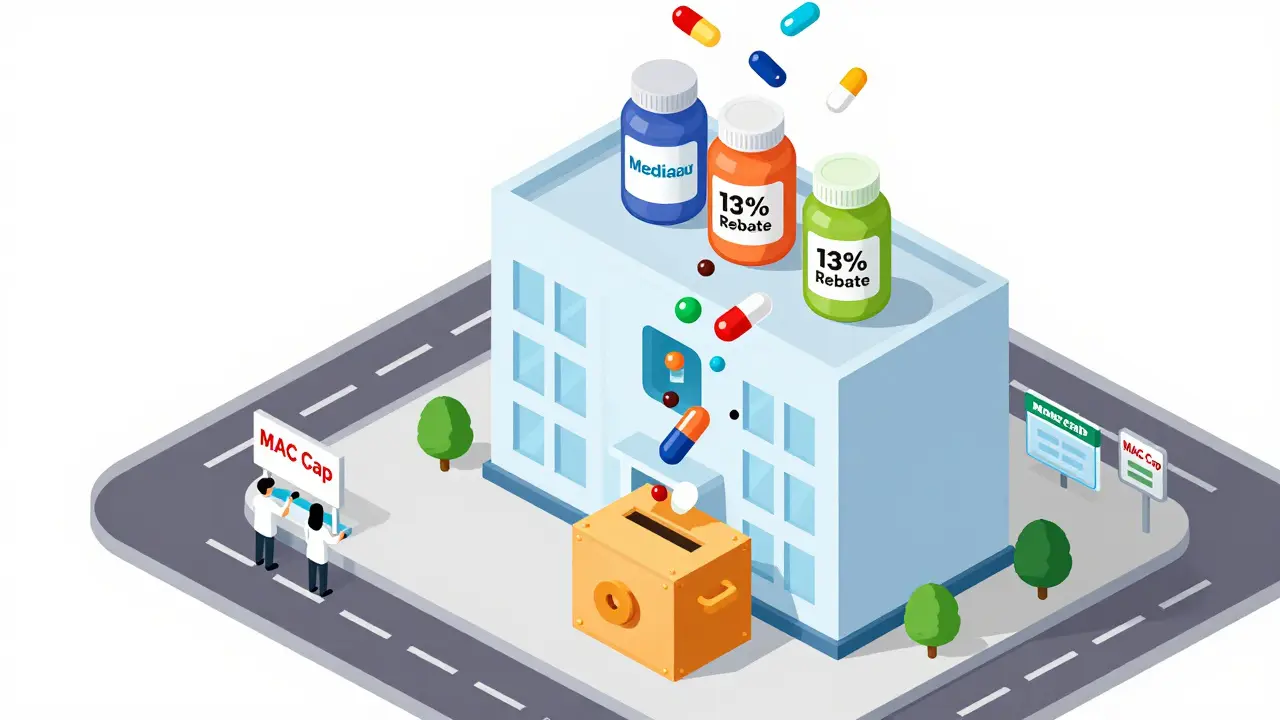
Medicaid spends billions on prescription drugs every year-but most of that money isn’t going to brand-name pills. In fact, generic drugs make up 84.7% of all Medicaid prescriptions, yet they account for just 15.9% of total drug spending. That’s the power of generics. But even with that kind of savings, states are still scrambling to do more. With drug prices rising and shortages growing, Medicaid programs are turning to smarter, tougher, and sometimes controversial strategies to keep costs down without leaving patients without medicine.
How the Federal System Already Saves Money
The foundation of Medicaid’s drug savings isn’t new. Since 1990, the Medicaid Drug Rebate Program (MDRP) has forced drugmakers to give states discounts in exchange for including their drugs on state formularies. For generic drugs, manufacturers must pay a rebate of at least 13% of the Average Manufacturer Price (AMP), or the difference between AMP and the best price they offer elsewhere-whichever is higher. This isn’t optional. It’s federal law.That means every time a Medicaid beneficiary fills a generic prescription, the state gets a cut back from the manufacturer. It’s automatic. It’s predictable. And it’s why generics are so much cheaper than brand-name drugs in Medicaid. But here’s the catch: states can’t negotiate extra rebates for generics like they can for brand-name drugs. The rebate formula is locked in. So if a generic drug’s price jumps 50% overnight, the state still only gets that 13% cut. That’s where states start looking for other ways to fight back.
Maximum Allowable Cost Lists: The Most Common Tool
Forty-two states use something called a Maximum Allowable Cost (MAC) list. Think of it as a price cap. If a pharmacy tries to bill Medicaid for a generic drug at $15, but the state’s MAC list says the maximum they’ll pay is $8, the pharmacy either eats the difference or finds a cheaper supplier. These lists are updated regularly-31 states refresh them quarterly or more often-to keep up with falling prices.It works. In 2023, states saved hundreds of millions using MAC lists. But it’s not perfect. About 68% of states update their lists monthly or less, which means sometimes pharmacies get paid less than what they actually paid for the drug. Independent pharmacies report that 74% have had claims denied or delayed because the MAC price didn’t match the real cost. That’s a problem when a small pharmacy can’t afford to wait weeks for payment.
Mandatory Generic Substitution and Therapeutic Interchange
Forty-nine states require pharmacists to substitute a generic version when it’s available-unless the doctor specifically says no. That’s not new. But what’s changing is how states push those substitutions further. Nineteen states now use therapeutic interchange: if a brand-name drug is prescribed, the state will pay for a cheaper generic in the same drug class, even if the doctor didn’t prescribe it. This isn’t just about cost-it’s about clinical equivalence.For example, if a patient is prescribed a brand-name statin, the state’s pharmacy benefit manager might automatically switch them to a generic version that’s proven to work just as well. The patient doesn’t need to see the doctor again. The system does it. This approach cuts costs without sacrificing outcomes. But it also means patients and doctors need to trust the system-and not all do.
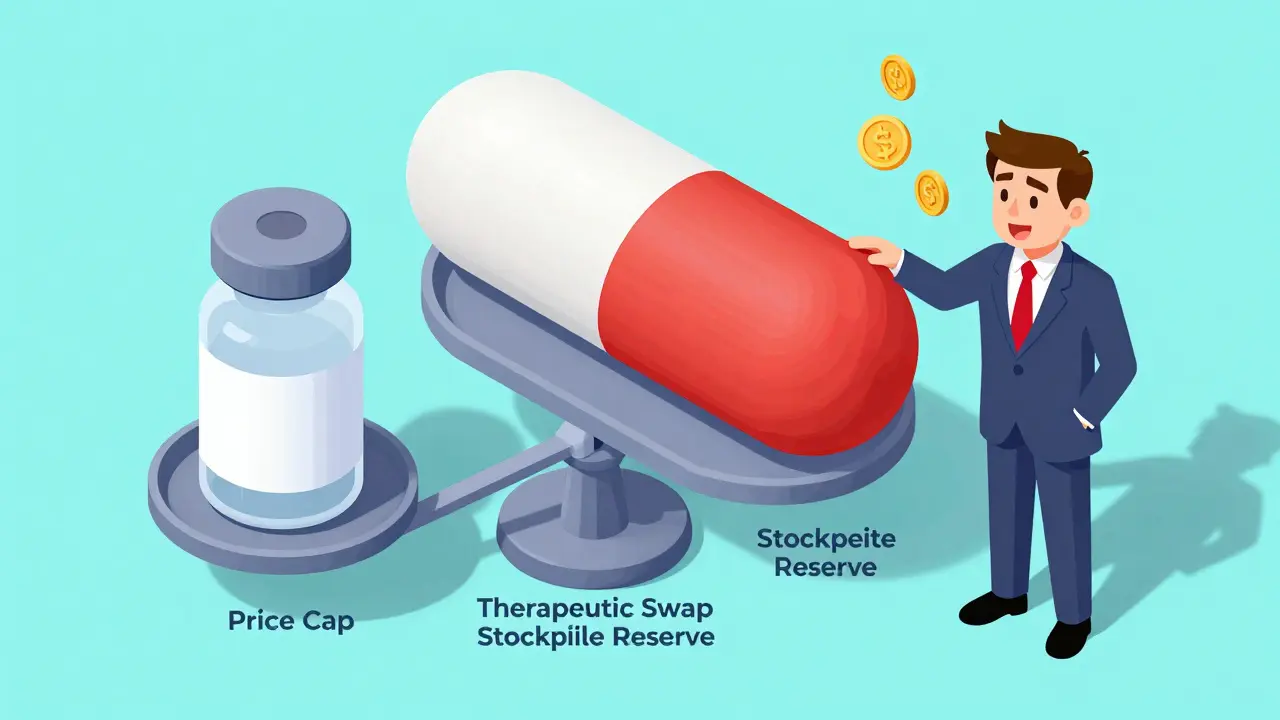
Targeting Price Gouging on Generics
Here’s where things get interesting. Some states aren’t just managing prices-they’re punishing them. Maryland passed a law in 2020 that makes it illegal for manufacturers to raise the price of a generic drug without a valid reason. If a drug’s price spikes 100% and there’s no new clinical data to justify it, the state can fine the company. Other states like California and Colorado are following suit.This targets a real problem: when a single company owns the only supply of a generic drug, they can hike prices without competition. The FDA says three companies now control 65% of the generic injectable market. That kind of consolidation turns a cheap drug into a profit machine. States are finally pushing back.
Pharmacy Benefit Managers: The Hidden Middlemen
Thirty-three states contract with Pharmacy Benefit Managers (PBMs) like OptumRx or Magellan to handle their pharmacy benefits. PBMs negotiate prices, manage formularies, and process claims. But here’s the issue: they often keep a cut of the savings. And they don’t always share what they pay pharmacies for generics.Twenty-seven states have responded by demanding transparency. Nineteen now require PBMs to report the actual cost they pay for generic drugs. That’s a big shift. Before, states didn’t know if PBMs were pocketing the difference between what they paid the pharmacy and what they billed Medicaid. Now, they’re starting to see the real numbers-and they’re not happy.
Supply Chain Shortages and Strategic Stockpiling
In 2023, 23 states reported shortages of critical generic drugs. Some lasted over 147 days. Insulin. Antibiotics. Blood pressure meds. All of them essential. And when they disappear, prices spike-even for generics.Twelve states passed laws in 2024 to build emergency stockpiles. Oregon and Texas are creating regional reserves for high-demand generics. New Hampshire set up a risk pool to cover shortages. The goal? Keep the drugs flowing even if one manufacturer fails. The Congressional Budget Office warns that if shortages continue, states might end up paying more for brand-name substitutes-undoing all the savings.

The Big Trade-Off: Savings vs. Access
Every strategy has a downside. MAC lists can delay payments to pharmacies. Price caps can make manufacturers quit the market. Therapeutic interchange can confuse patients. And when PBMs don’t disclose their pricing, it’s impossible to know who’s really saving money.Dr. Mark Duggan from Stanford says reforming the federal rebate system for generics could unlock billions more in savings. But the Pharmaceutical Care Management Association warns that too much control could shrink the supply. If manufacturers can’t make a profit on a $2 generic, they’ll stop making it. Then the state pays $200 for the brand-name version instead.
That’s the tightrope states walk. Cut too hard, and patients lose access. Don’t cut enough, and Medicaid budgets collapse.
What’s Next? GLP-1 Drugs, Gene Therapies, and the Federal Shift
New pressures are coming. GLP-1 weight-loss drugs like Ozempic and Wegovy cost $12,000 a year. Thirteen states now cover them under Medicaid-but only with strict prior authorization. The federal government might soon require all Medicaid and Medicare plans to cover them. That could add $1.2 billion a year to state budgets.Meanwhile, the Centers for Medicare & Medicaid Services (CMS) has dropped its own drug pricing model and is now looking to states for solutions. A new Medicaid cell and gene therapy model launching in 2025 could set rules that apply to high-cost generics too.
By 2026, 22 states plan to have strategic stockpiles for critical generics. Fifteen more are expected to pass laws targeting generic pricing in 2025. But legal battles are coming. Drugmakers are already suing states over price controls. The outcome could reshape how all Americans get their medications.
Bottom Line: Generics Are the Backbone-But They’re Under Siege
Medicaid’s success in controlling drug costs isn’t magic. It’s built on generics. And now, states are fighting to protect that advantage. From MAC lists to stockpiles, from price gouging laws to PBM transparency, they’re using every tool they have. But the system is fragile. A single manufacturer pulling out of the market can trigger a cascade of shortages. A federal policy shift can wipe out years of savings.The goal isn’t to make drugs cheaper at any cost. It’s to make sure life-saving medicines stay affordable, available, and reliable. That’s the real challenge-and the real test-for every state Medicaid program today.
How do Medicaid generic drug rebates work?
Under the Medicaid Drug Rebate Program (MDRP), drug manufacturers must pay states a rebate for every generic drug sold to Medicaid beneficiaries. The minimum rebate is 13% of the Average Manufacturer Price (AMP), or the difference between AMP and the best price offered elsewhere-whichever is higher. This rebate is automatic and federally required, but states cannot negotiate additional rebates for generics like they can for brand-name drugs.
What is a Maximum Allowable Cost (MAC) list?
A MAC list is a state-set price cap for generic drugs. If a pharmacy tries to bill Medicaid for a generic at more than the MAC price, the state will only pay up to the MAC limit. Forty-two states use MAC lists to control spending, and 31 update them quarterly or more often to reflect falling prices. But delays in updates can cause pharmacies to lose money or face claim denials.
Why are generic drug shortages a problem for Medicaid?
When a generic drug runs out, patients may be forced onto more expensive brand-name alternatives, increasing Medicaid spending. In 2023, 23 states reported shortages of critical generics, with an average duration of 147 days. Three companies control 65% of the generic injectable market, making supply fragile. Twelve states have passed laws to stockpile essential generics to prevent future disruptions.
How are states fighting price gouging on generic drugs?
States like Maryland, California, and Colorado have passed laws that penalize manufacturers for raising prices on generic drugs without new clinical data or justifiable reasons. These laws target situations where a single company controls the market and hikes prices unfairly. Maryland’s 2020 law allows the state to fine companies for unjustified price spikes of 100% or more.
Do Pharmacy Benefit Managers (PBMs) help or hurt Medicaid’s cost control efforts?
PBMs manage pharmacy benefits for 33 states, negotiating prices and processing claims. But they often keep a portion of savings without disclosing how much they pay pharmacies for generics. In 2024, 19 states began requiring PBMs to report actual acquisition costs to increase transparency. This helps states ensure savings are passed on to the program-not pocketed by middlemen.
Will new federal rules on GLP-1 drugs affect Medicaid spending?
Yes. GLP-1 weight-loss drugs like Ozempic and Wegovy cost about $12,000 per year. Thirteen states already cover them under Medicaid with prior authorization. If federal rules require all Medicaid and Medicare plans to cover these drugs, KFF estimates state Medicaid programs could face an additional $1.2 billion in annual costs-potentially offsetting decades of savings from generic drug policies.

Comments (8)
Dan Gaytan
24 Dec 2025
Love seeing states finally crack down on generic price gouging 😊 I’ve seen insulin jump from $10 to $150 overnight-no new science, no new packaging, just greed. Maryland’s law? Long overdue. Let’s hope more states follow suit. 🙌
Usha Sundar
25 Dec 2025
MAC lists are a joke. Pharmacies get screwed. Patients get confused. Everyone loses.
claire davies
27 Dec 2025
Oh honey, this whole system is a tangled ball of yarn and half-baked policies 🧶. I mean, we’ve got states stockpiling insulin like it’s toilet paper during a pandemic, while PBMs quietly pocket the difference between what they pay pharmacies and what they charge Medicaid-like, hello? Transparency? Anyone? 🤔 And don’t even get me started on how one company controls 65% of injectable generics. It’s not capitalism, it’s a monopoly masquerading as a market. But hey-at least we’re talking about it now. Progress, baby. Slow, messy, but progress. And if we can get PBMs to show their receipts, maybe we can actually save some lives instead of just balancing budgets. 🌱
Chris Buchanan
28 Dec 2025
So let me get this straight-we’ve got states fighting tooth and nail to save pennies on $2 generics… while people are getting billed $12K for Ozempic? 😂 Brilliant. Next up: state-funded diet plans to avoid needing the drug in the first place? Maybe just tell people to eat less cake? 🎂💊
Raja P
30 Dec 2025
MAC lists are necessary but poorly timed. I’ve had claims denied because the price updated two weeks ago and the pharmacy didn’t know. It’s not the pharmacy’s fault-it’s the system. We need real-time updates, not quarterly guesses.
Joseph Manuel
31 Dec 2025
The empirical evidence supporting therapeutic interchange is inconclusive. While cost reduction is statistically significant, clinical equivalence across all patient subpopulations remains unverified in longitudinal studies. Furthermore, the absence of standardized outcome metrics undermines the validity of state-level policy adoption. Without controlled trials, these interventions risk violating the principle of non-maleficence.
Harsh Khandelwal
2 Jan 2026
Bro… PBMs are just middlemen for Big Pharma. They’re all in on the scam. The ‘rebates’? Fake. The ‘savings’? Smoke and mirrors. They’re printing money while grandma waits 3 weeks for her blood pressure med. And now they want us to trust them with transparency? LMAO. The whole system’s rigged. 🤫💊
Andy Grace
3 Jan 2026
Interesting stuff. I’ve seen the shortages firsthand-my mum’s asthma inhaler vanished for five months. The stockpiling idea feels practical, but I worry about waste. Maybe we need better forecasting instead of hoarding. Also, the PBM thing… yeah, that’s wild. No wonder costs keep climbing.