
DMARDs and Biologic Medications: What You Need to Know About Immunosuppressive Therapy

When your immune system turns against your own body, it doesn’t just cause discomfort-it can destroy joints, damage organs, and wreck your daily life. That’s what happens in autoimmune diseases like rheumatoid arthritis, psoriatic arthritis, and ankylosing spondylitis. Traditional painkillers might ease the symptoms, but they don’t stop the damage. That’s where DMARDs and biologic medications come in. These aren’t just more pills-you’re changing how your immune system works. And understanding how they work, when they’re used, and what to expect can make all the difference in your treatment.
What Are DMARDs, Really?
DMARD stands for disease-modifying antirheumatic drug. That’s a mouthful, but the idea is simple: they don’t just mask pain. They slow or stop the immune system’s attack on your body. Before DMARDs, doctors could only treat symptoms. Now, they can actually change the course of the disease. The first DMARDs, like methotrexate, were developed in the 1940s and 1950s. They weren’t designed for autoimmune diseases at first-but doctors noticed patients with rheumatoid arthritis improved. That’s how medicine often works: someone stumbles on an effect, then figures out why.
Today, DMARDs are split into three groups. The first is conventional synthetic DMARDs. These are the old-school pills you take daily or weekly. Methotrexate is the most common-it’s been used for over 40 years and is still the first-line treatment for most people with rheumatoid arthritis. Leflunomide, hydroxychloroquine, and sulfasalazine are others. They work by broadly calming down the immune system. Think of them like turning down the volume on a loudspeaker instead of finding the exact speaker that’s too loud.
Biologics: The Precision Tools
Biologic DMARDs, or just "biologics," came on the scene in the early 1990s. These aren’t made from chemicals in a lab-they’re made from living cells. That’s why they’re so specific. Instead of hitting the whole immune system, they target one part of it. For example, TNF blockers like adalimumab and infliximab stop a protein called tumor necrosis factor that drives inflammation. Others, like rituximab, wipe out B cells-the immune cells that make antibodies attacking your joints. Tocilizumab blocks interleukin-6, another key player in inflammation.
These drugs are powerful. They often work faster than conventional DMARDs. Some people notice improvement in weeks, not months. But that power comes with risk. Because they’re so targeted, they leave you more vulnerable to infections. Tuberculosis, pneumonia, and even fungal infections can become serious problems. That’s why doctors test for TB before starting biologics and ask you to report any fever, cough, or sore throat right away.
How Do Doctors Decide Which One to Prescribe?
No one starts on a biologic right away. Most rheumatologists begin with methotrexate. It’s cheap-sometimes as little as $4 a month-and it works for about half of patients. If your symptoms don’t improve after 3 to 6 months, or if your joint damage keeps getting worse on blood tests and scans, then they’ll consider adding or switching to a biologic.
It’s not just about how bad your symptoms are. Doctors look at your disease activity score (DAS28), which measures joint swelling, pain, and blood markers of inflammation. If your score stays high after trying methotrexate, you’re a candidate for biologics. About 30% of rheumatoid arthritis patients eventually need them. For some, it’s the difference between walking normally and needing a cane.
There’s also a newer class called JAK inhibitors-drugs like tofacitinib and upadacitinib. These are pills, not injections, and they block a different part of the immune pathway. They’re often used when biologics don’t work or when patients don’t want injections. But they come with their own warnings: increased risk of blood clots and certain cancers, especially in older adults or smokers.
Cost and Access: The Hidden Hurdle
Here’s the hard truth: biologics are expensive. Without insurance, you could pay $1,000 to $5,000 a month. Even with insurance, copays can hit $500 or more. That’s why many patients wait months for prior authorization-insurance companies require proof that cheaper options failed first. Some patients skip doses because they can’t afford them. Others switch to biosimilars-copies of biologics that are 15% to 30% cheaper. Humira, for example, now has several biosimilars on the market. They work the same way, but cost a lot less.
Conventional DMARDs? Methotrexate is a bargain. It’s been around so long, generic versions are everywhere. But even with low cost, side effects can be tough. Nausea, fatigue, mouth sores-about 20% to 30% of people on methotrexate have them. That’s why doctors often prescribe folic acid alongside it. It doesn’t stop the drug from working, but it cuts down on side effects.
What to Expect When You Start
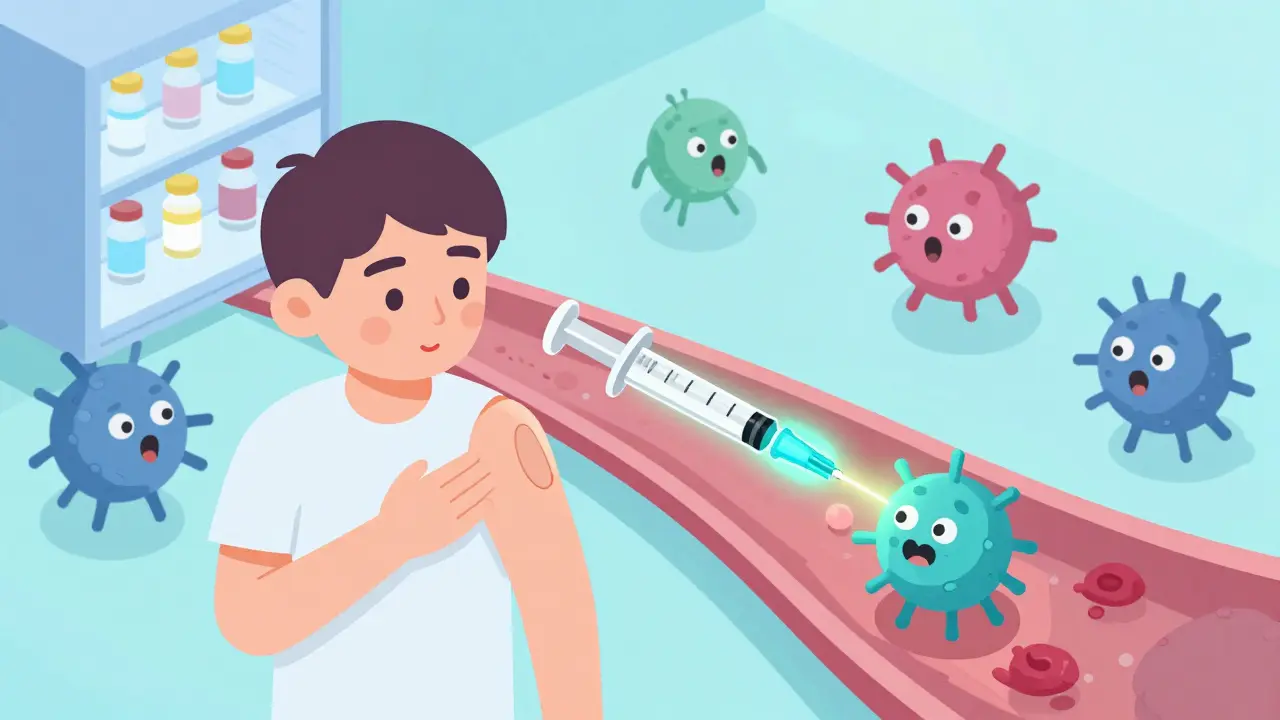
If you’re starting a biologic, you’ll likely get a nurse or pharmacist to show you how to inject it. Most are given under the skin-like insulin shots. You’ll learn to store them in the fridge, rotate injection sites, and handle needles safely. Injection site reactions-redness, swelling, itching-are common. They usually fade after a few weeks.
Regular blood tests are non-negotiable. Every 4 to 8 weeks, you’ll need a CBC and liver panel. These check for low white blood cell counts, liver damage, or signs of infection. Biologics don’t need blood tests as often, but infection risk stays high. That’s why you’re told to avoid crowds during flu season, wash your hands often, and skip the raw eggs or undercooked meat.
It takes time. Even with biologics, most people don’t feel great until 3 to 6 months in. Some feel better sooner. Others need to try a few different ones before finding the right fit. It’s trial and error. But when it works, the results are life-changing. One study showed patients improved by 70% in joint pain and mobility after six months on a biologic. That’s not just less pain-it’s going back to work, playing with your kids, hiking again.

Risks You Can’t Ignore
Every drug has trade-offs. With DMARDs, the biggest risk is infection. Biologics can reactivate old infections like hepatitis B or TB. That’s why screening is mandatory. They also carry a small risk of lymphoma and other cancers. The FDA requires black box warnings on all biologics for this reason. Heart failure is another concern-especially if you already have heart problems.
Another issue: some people develop antibodies against the biologic. That means the drug stops working. It’s not your fault. It’s just how the immune system reacts to foreign proteins. When that happens, you switch to a different biologic with a different target. It’s not failure-it’s part of the process.
And then there’s the mental toll. Managing a chronic disease is exhausting. Forgetting a dose. Worrying about side effects. Dealing with insurance delays. It’s not just physical-it’s emotional. Support groups, online forums, and patient education programs help. You’re not alone.
What’s Next?
The future of DMARDs is getting smarter. New drugs are being tested to target even more specific parts of the immune system-like interleukin-17 or interleukin-23-without wiping out the whole system. Some are oral, some are once-monthly injections. Others aim to reduce infection risk while keeping effectiveness high.
But the biggest challenge isn’t science-it’s access. Biologics are still out of reach for millions around the world. In low-income countries, methotrexate is often the only option. Even in the U.S., not everyone can afford the copays. The goal isn’t just better drugs-it’s better access.
For now, DMARDs and biologics remain the best tools we have to stop autoimmune diseases from destroying lives. They’re not perfect. They’re not risk-free. But for many, they’re the only thing standing between a life of pain and a life of movement.
Are DMARDs and biologics the same thing?
No. DMARDs is the umbrella term for all drugs that change how autoimmune diseases progress. Biologics are a type of DMARD, but not all DMARDs are biologics. Conventional DMARDs like methotrexate are pills that broadly suppress the immune system. Biologics are made from proteins and target very specific parts of the immune system. JAK inhibitors are another type of DMARD-oral pills that block a different pathway than biologics.
Why do I need blood tests if I feel fine?
DMARDs can affect your liver, kidneys, and bone marrow without you noticing. Low white blood cell counts mean you’re more likely to get sick. Liver enzyme changes can signal damage before you feel pain. Blood tests catch these problems early. Skipping them is risky-even if you feel great. Most doctors require them every 4 to 8 weeks, especially in the first year.
Can I stop taking DMARDs if I feel better?
Most doctors advise against stopping, even if your symptoms disappear. Autoimmune diseases don’t go away-they go quiet. Stopping the drug can cause a flare-up, sometimes worse than before. Some patients can reduce the dose under close supervision, but stopping completely often leads to disease returning. Think of it like managing high blood pressure-you don’t stop the pill just because your numbers are normal.
Do biologics cause weight gain?
Biologics themselves don’t cause weight gain. But when inflammation drops, your body doesn’t burn as many calories fighting itself. You might feel more energetic, eat more, and gain weight as a result. Some patients also take steroids alongside biologics, and steroids definitely cause weight gain. If you’re gaining weight, talk to your doctor about diet, activity, and whether steroid use can be reduced.
What happens if a biologic stops working?
It’s more common than you think. About 30% to 50% of patients lose response over time. This can happen because your body makes antibodies against the drug, or because your disease changes. The solution isn’t to give up-it’s to switch. Your doctor can try a different biologic that targets another part of your immune system. Many patients find success with a second or even third biologic. It’s not failure. It’s fine-tuning.
Can I get vaccines while on DMARDs?
Yes-but not all of them. Live vaccines like MMR, chickenpox, and the nasal flu spray are dangerous because your immune system is suppressed. You need to get them before starting treatment. Inactivated vaccines like the flu shot, pneumonia shot, and COVID boosters are safe and strongly recommended. Always check with your rheumatologist before getting any vaccine.
What Should You Do Next?
If you’re on DMARDs or thinking about starting them, here’s what to do:
- Know your numbers. Ask for your DAS28 score and CRP levels. Don’t just rely on how you feel.
- Ask about biosimilars. They’re cheaper and just as effective.
- Get a folic acid prescription if you’re on methotrexate. It cuts nausea and mouth sores.
- Keep a symptom journal. Note pain levels, energy, and any infections. It helps your doctor adjust your treatment.
- Connect with a patient community. You’ll learn practical tips you won’t find in medical journals.
DMARDs and biologics aren’t magic. But they’re the closest thing we have to stopping autoimmune diseases in their tracks. The goal isn’t perfection-it’s progress. And with the right approach, you can get back to living, not just surviving.





Comments (9)
Lisa Davies
16 Dec 2025
Just started my first biologic last month and already I can pick up my kid without wincing 😭💖 Thank you for this breakdown - it’s like a roadmap when you’re lost in the fog of chronic pain.
Benjamin Glover
16 Dec 2025
Typical American medical overreach. In the UK, we start with methotrexate and only escalate if absolutely necessary. No one here is prescribed biologics like they’re Starbucks lattes.
Sai Nguyen
18 Dec 2025
India has no access to these drugs. We get methotrexate and pray. Your ‘life-changing’ biologics? A luxury for the rich. Stop pretending this is healthcare.
Nupur Vimal
19 Dec 2025
Biologics don't cause weight gain but inflammation drop means you eat more and gain weight anyway and steroids definitely do so if you're gaining weight talk to your doctor about diet and activity and whether steroid use can be reduced
Cassie Henriques
21 Dec 2025
Interesting that you mention JAK inhibitors but omit the FDA’s 2021 black box warning regarding venous thromboembolism and malignancy risk in patients >50 with CV risk factors. The risk-benefit calculus shifts dramatically in the elderly - especially with concomitant corticosteroid use. Are we really optimizing outcomes or just chasing remission metrics?
Michelle M
21 Dec 2025
It’s funny how we treat autoimmune disease like a machine you fix with a new part - but it’s not a car. It’s your body, your immune system, your life. These drugs aren’t just chemicals. They’re negotiations with your own biology. And sometimes, the best outcome isn’t zero pain - it’s peace with the process.
John Samuel
23 Dec 2025
To everyone struggling with access, cost, or fear - you are not alone. I’ve been on 4 different biologics over 12 years. I’ve cried in pharmacy lines. I’ve skipped doses. I’ve begged for help. But I’m still here. And so are you. Reach out. Talk to someone. There are people who will meet you where you are - no judgment. 💪❤️
RONALD Randolph
23 Dec 2025
Wrong. Methotrexate is NOT the first-line standard in evidence-based practice - it’s a relic. The 2023 EULAR guidelines now recommend early combination therapy with biologics for high-disease-activity RA patients. The outdated ‘step-up’ model is dangerous. And yes - I checked the references.
Jake Sinatra
24 Dec 2025
Thank you for including the mental toll. No one talks about the exhaustion of managing a chronic condition - the guilt of missing work, the anxiety over side effects, the isolation. This isn’t just medicine. It’s a lifestyle overhaul. And for that, we need compassion - not just prescriptions.