How to Get Clarification on Confusing Medication Instructions

You're standing at your kitchen counter, looking at a prescription bottle, and the label says something like "Take one tab po q am." If you aren't a medical professional, that looks like a secret code rather than health advice. This kind of ambiguity isn't just frustrating; it's dangerous. According to the Institute for Safe Medication Practices (ISMP), unclear instructions are a primary driver of the roughly 1.5 million medication-related injuries that happen every year in the U.S.
Whether it's a confusing abbreviation or a conflict between what your doctor said and what the pharmacy printed, you shouldn't have to guess when it comes to your health. The goal is simple: you need to know exactly what to take, when to take it, and why you're taking it. If any part of that is fuzzy, you need to stop and get a clear answer before the first dose hits your system.
The Common Culprits of Medication Confusion
Most confusion stems from a gap between clinical shorthand and patient understanding. Doctors and pharmacists often use abbreviations to save time, but these can be misinterpreted. For example, the ISMP warns against using "q.d." or "QD" for "daily," because a tired eye might misread it as "q.i.d." (four times a day). That's a massive difference in dosage.
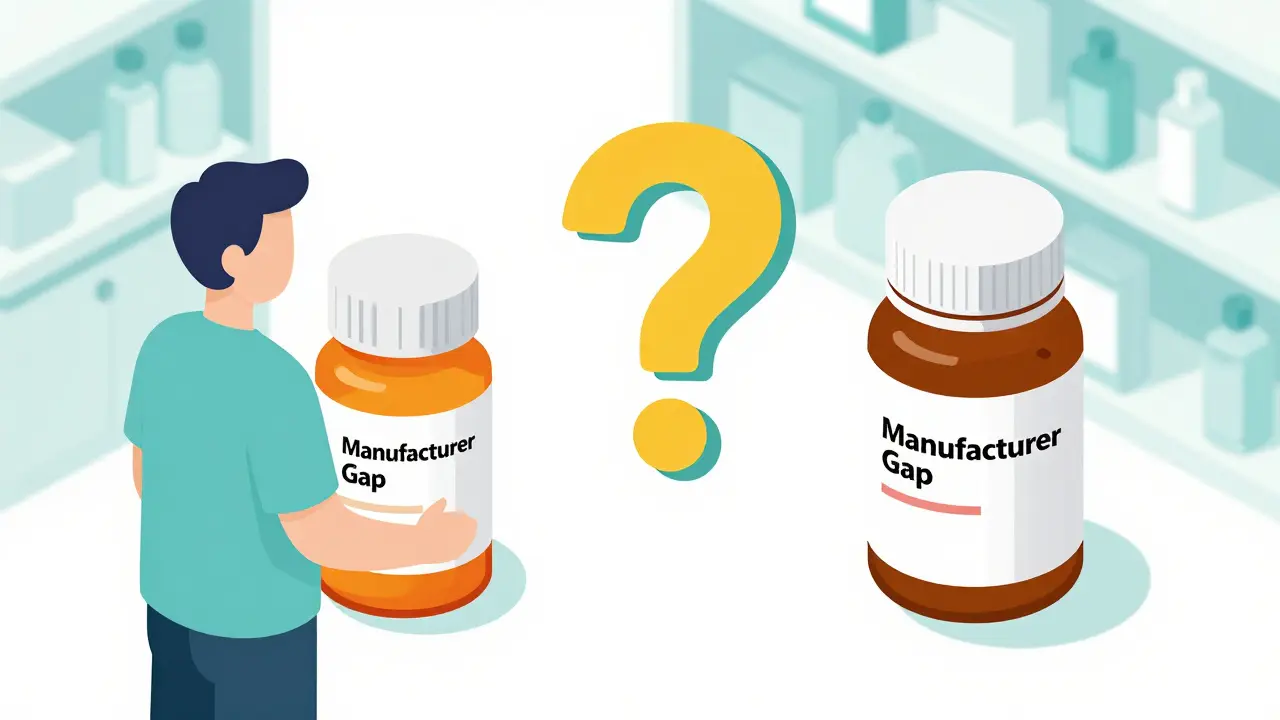
Another source of stress is the "Manufacturer Gap." You might notice that a generic version of your drug has slightly different instructions than the brand-name version you used last year. The National Institutes of Health (NIH) has noted that different manufacturers sometimes provide varying guidelines for the same drug. While often minor, these differences can impact how a drug works or how you experience side effects.
Then there are the vague instructions, like "take as needed." As experts at Massachusetts General Hospital point out, "as needed" isn't a license to take a pill whenever you feel like it. You need to know the maximum daily limit and the minimum time you must wait between doses to avoid an accidental overdose.
How to Ask the Right Questions
When you feel confused, don't just ask "What does this mean?" Be specific. This forces the provider to give you a concrete answer rather than a generic one. If you're staring at a label and feeling lost, use these specific prompts:
- "I see the label says 'twice daily.' Does that mean every 12 hours, like 8 am and 8 pm, or just once in the morning and once in the evening?"
- "The instructions say 'take as needed.' What is the absolute maximum number of pills I can take in 24 hours?"
- "Should I take this on an empty stomach, or is it better with a meal to avoid nausea?"
- "I noticed the instructions on this generic bottle are different from my previous brand-name one. Which one is correct for my specific condition?"
If you're taking a high-risk medication-such as opioids or certain acne treatments like isotretinoin-you are entitled to a Medication Guide. This is a FDA-mandated paper handout designed to explain serious risks and essential usage instructions. If your pharmacist didn't hand you one for a high-risk drug, ask for it immediately.
| The Confusing Term | What it Usually Means | Why it's Risky |
|---|---|---|
| PO | By mouth (per os) | Could be confused with other routes if not read carefully |
| BID | Twice a day | People often forget if this means "every 12 hours" or "just twice" |
| q am | Every morning | Easy to misread as another frequency |
| PRN | As needed | Lacks a clear limit on dosage frequency |
Safe Steps to Verify Your Medication
To ensure you aren't taking the wrong dose, implement a verification system. The Montana Department of Public Health suggests a simple but effective habit: compare the actual medication bottle you just picked up to your original prescription copy. If the dosage or frequency doesn't match exactly, do not take the medication. Call the pharmacy or your doctor to resolve the discrepancy first.
For those managing complex schedules-like taking one pill every morning for a week and then switching to twice a day-don't rely on memory. The Centers for Disease Control and Prevention (CDC) recommends setting digital timers or using a physical pill organizer. This removes the "Did I already take that?" guesswork that often leads to double-dosing.
Timing is also a hidden factor in how well a drug works. For instance, some cholesterol medications are best taken at bedtime because the body produces more cholesterol overnight. If your instructions just say "once daily," ask your doctor if there's a specific time of day that maximizes the drug's effectiveness.

When to Be Especially Concerned
Not all confusion is equal. There are a few red flags that should trigger an immediate call to your provider:
- Conflicting Directions: Your doctor told you one thing, but the pharmacy label says another.
- Illegible Handwriting: If the instructions are handwritten and you are guessing at a number or a word, stop.
- Missing Information: The label tells you *how much* to take, but not *when* or *how* (e.g., with water, with food).
- Unexpected Changes: You've taken the same drug for years, but the new bottle has a different dose without a known change in your prescription.
Remember, pharmacists are your most accessible resource. They are trained to catch these errors. If you're at the pharmacy counter and the instructions feel vague, ask the pharmacist to write the instructions in plain English on the bottle or a separate sheet of paper. They can translate "1 tab po q am" into "Take one tablet by mouth every morning."
What should I do if the pharmacy label and my doctor's instructions don't match?
Do not take the medication until you have spoken with either the pharmacist or the prescribing doctor. This is a critical safety check to prevent medication errors. Ask the pharmacist to verify the prescription order from the doctor's office to see where the discrepancy occurred.
What is a Medication Guide and do I always get one?
A Medication Guide is an FDA-mandated patient information leaflet for high-risk drugs that could cause serious adverse reactions if not used correctly. You don't get them for every drug-only for those the FDA has specifically flagged as needing extra caution, like certain opioids or oral contraceptives.
How do I handle 'take as needed' instructions safely?
Ask your provider for three specific pieces of information: the intended goal of the drug (what symptom is it treating?), the maximum number of doses allowed in 24 hours, and the minimum amount of time that must pass between each dose.
Why do different brands of the same generic drug have different instructions?
Different manufacturers may have slightly different guidelines approved by regulatory bodies. While the active ingredient is the same, the instructions for use or contraindications can vary. If you notice a difference, ask your clinician to review both sets of instructions to determine the most appropriate way for you to take the medication.
Are abbreviations like 'QD' or 'BID' safe to follow?
While common in the medical world, abbreviations are prone to human error. Organizations like the ISMP recommend writing out words (e.g., "daily" instead of "QD") to prevent dangerous mistakes. If you see an abbreviation you don't recognize, always ask for a plain-language translation.
Next Steps for Your Safety
If you're currently managing a complex medication list, take thirty minutes this weekend to do a "Medication Audit." Lay out all your bottles and read every label. If you find any term you can't define or a timing instruction that feels vague, jot it down. Call your pharmacist and go through the list one by one.
For those using a digital health portal, you can often message your provider directly. Instead of a phone call, send a photo of the confusing label and ask, "Can you clarify exactly what this means for my daily routine?" Having a written response in your portal provides a permanent record you can refer back to whenever you're unsure.